Top
Latest
Government-Owned Company to Develop 454 MW Kimathangka Arun Hydropower Project with Domestic Capital
Government-Owned Company to Develop 454 MW Kimathangka Arun Hydropower Project with Domestic Capital Nepal has taken a significant step toward strengthening domestic investment in large-scale hydropower development, with a financial modality finalized for the 454-megawatt Kimathangka Arun semi-reservoir hydropower project located in Bhote Khola Rural Municipality–2 of Sankhuwasabha district. The project will be developed entirely with domestic capital, marking a strategic shift toward self-reliance in energy infrastructure financing. The total estimated cost of the project, including interest during construction, stands at Rs 97.94 billion. The project will be implemented directly by the government-owned Electricity Generation Company Limited (EGCL), whose shareholders consist primarily of the Government of Nepal and other public sector institutions. The financial structure has been designed with a 70 percent debt component and 30 percent equity, reflecting a balanced risk-sharing approach for a project of this scale.
Dipesh Ghimire
3 min read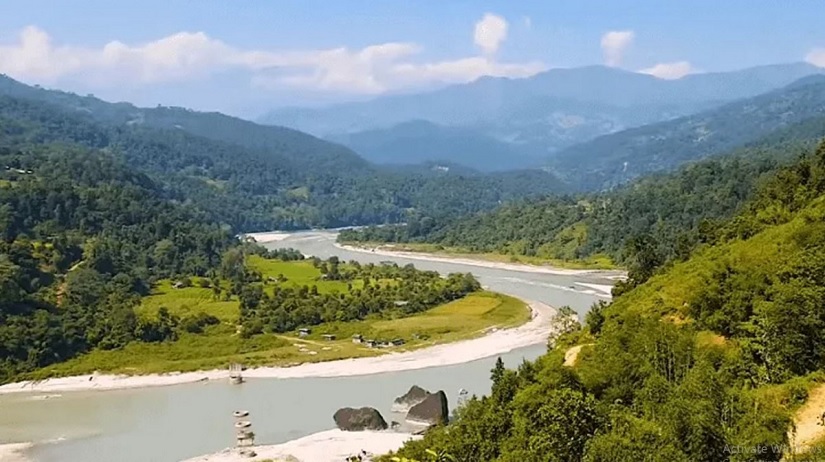
Nepal has taken a significant step toward strengthening domestic investment in large-scale hydropower development, with a financial modality finalized for the 454-megawatt Kimathangka Arun semi-reservoir hydropower project located in Bhote Khola Rural Municipality–2 of Sankhuwasabha district. The project will be developed entirely with domestic capital, marking a strategic shift toward self-reliance in energy infrastructure financing.
The total estimated cost of the project, including interest during construction, stands at Rs 97.94 billion. The project will be implemented directly by the government-owned Electricity Generation Company Limited (EGCL), whose shareholders consist primarily of the Government of Nepal and other public sector institutions. The financial structure has been designed with a 70 percent debt component and 30 percent equity, reflecting a balanced risk-sharing approach for a project of this scale.
Under the proposed financing plan, approximately Rs 68.55 billion will be raised through loans, while Rs 29.38 billion will come from equity investments. The debt portion will be arranged through co-financing from major domestic institutions, including the Hydroelectricity Investment and Development Company Limited (HIDCL), Employees Provident Fund, Citizen Investment Trust, Social Security Fund, insurance companies, and commercial banks and financial institutions. This structure highlights the growing role of institutional long-term funds in national infrastructure development.
The equity portion will be mobilized through a diversified share issuance strategy. Shares will be allocated to the company’s founding shareholders, non-resident Nepalis and Nepalis employed abroad, residents of project-affected districts, members of ultra-poor households, and the general public. This approach aims not only to raise capital but also to ensure broader public ownership and social acceptance of the project.
Energy, Water Resources and Irrigation Minister Kulman Ghising, while reviewing the proposed investment model along with its financial analysis, directed officials to update the project’s cost estimates and immediately proceed with financial closure accordingly. He emphasized that although EGCL holds licenses for multiple hydropower projects, it has yet to begin construction on any, and developing the Kimathangka Arun project internally is crucial for the company’s long-term revenue generation and institutional sustainability.
Minister Ghising further instructed that the proposed investment framework and the company’s institutional equity plan be promptly endorsed by the board of directors and submitted for approval. His remarks signal the government’s intent to accelerate stalled hydropower projects and improve execution capacity within state-owned energy entities.
So far, Rs 731.4 million has already been spent on project studies and pre-construction activities. Land acquisition for the project office and staff residential camp has been completed, while compensation rates for land required for the dam, reservoir, powerhouse, and other permanent structures have been determined. An additional Rs 450 million is estimated to be required for compensation and resettlement.
Once operational, the Kimathangka Arun project is expected to generate approximately 2.69 billion units (2,690.97 GWh) of electricity annually. Seasonal generation estimates indicate 473.1 million units during winter peak hours, 353.3 million units during winter off-peak hours, and 1.86 billion units during the monsoon season. Based on prevailing power purchase rates, annual revenue from electricity sales is projected at Rs 16.91 billion.
The current shareholding structure of EGCL includes a 30 percent stake held by the Government of Nepal, 10 percent each by the Nepal Electricity Authority, Employees Provident Fund, and Nepal Telecom, 5 percent by the Citizen Investment Trust, 4 percent by HIDCL, and 2 percent by Rastriya Beema Company. A total of 29 percent of shares have been earmarked for public issuance.
Analysts view the Kimathangka Arun project as a test case for Nepal’s ability to execute large hydropower projects using domestic resources. If implemented as planned, it could reduce reliance on foreign capital, deepen domestic financial markets, and set a precedent for future large-scale infrastructure investments driven by national institutions.
Advertisement
Written by
Dipesh Ghimire