Top
Government Questions Effectiveness of Senior Citizen Welfare Program Despite Wide Coverage
Government Questions Effectiveness of Senior Citizen Welfare Program Despite Wide Coverage Kathmandu — Nepal’s social security allowance program currently supports more than two million senior citizens, but the government has admitted that the health and social services linked to the scheme are falling short of expectations. Officials say that while financial assistance has reached a large section of elderly citizens, gaps in service delivery and accessibility continue to undermine the program’s overall impact. The issue was raised during a meeting of the parliamentary Public Policy and Delegated Legislation Committee held at Singha Durbar on Sunday. At the meeting, officials from the Ministry of Women, Children and Senior Citizens acknowledged that the support system surrounding the allowance program has not been as effective as originally planned.
Dipesh Ghimire
3 min read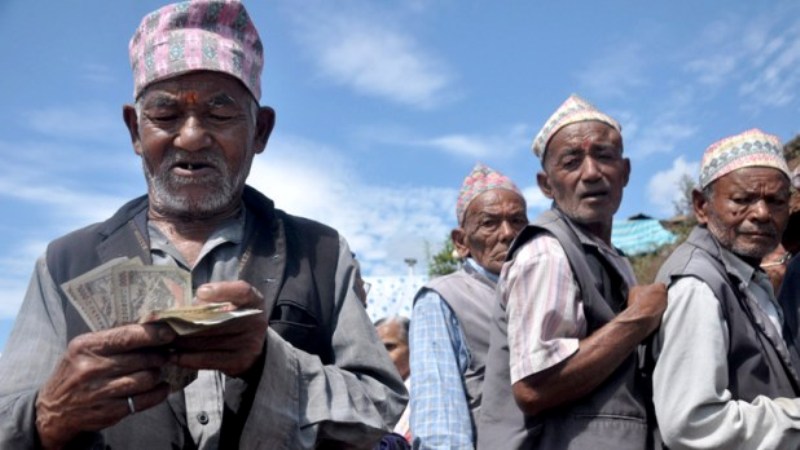
Kathmandu — Nepal’s social security allowance program currently supports more than two million senior citizens, but the government has admitted that the health and social services linked to the scheme are falling short of expectations. Officials say that while financial assistance has reached a large section of elderly citizens, gaps in service delivery and accessibility continue to undermine the program’s overall impact.
The issue was raised during a meeting of the parliamentary Public Policy and Delegated Legislation Committee held at Singha Durbar on Sunday. At the meeting, officials from the Ministry of Women, Children and Senior Citizens acknowledged that the support system surrounding the allowance program has not been as effective as originally planned.
According to ministry data, a total of 2,009,169 senior citizens are currently benefiting from the social security allowance. Among them, around 1.66 million are aged above 70 and receive the benefit under the general category. In addition, about 161,000 Dalit senior citizens aged 60 and above, 171,000 single women, and more than 17,000 elderly people from designated regions are also enrolled in the program.
All beneficiaries receive a monthly allowance of Rs. 4,000. While this amount provides basic financial support, experts say it is insufficient to cover rising healthcare and living expenses, particularly in urban areas and for those with chronic illnesses.
The government has also introduced several non-cash benefits for senior citizens. These include reserving at least two seats for elderly passengers on public transport and providing a 50 percent discount on passenger fares. In the health sector, public, community, and private hospitals are required to arrange separate outpatient and inpatient services, including designated wards, for senior citizens.
Currently, 94 hospitals across 77 districts offer a 50 percent discount on treatment fees for elderly patients. However, officials admit that access and service quality remain inconsistent. Many senior citizens, especially in remote areas, still struggle to reach hospitals or receive timely and adequate care.
The government has also introduced a free health insurance facility of up to Rs. 100,000 for citizens aged above 70. Despite this provision, ministry officials say implementation has been weak due to administrative delays, limited awareness, and coordination problems among service providers. As a result, many eligible beneficiaries are unable to fully utilize the insurance coverage.
During the meeting, officials also informed lawmakers that the government is preparing legal provisions to deny public services to individuals who fail to fulfill their responsibilities toward elderly family members. The proposal aims to discourage neglect and promote family-based care, which remains a key pillar of social support in Nepal.
Another ministry secretary, Shraddha Shrestha, said the government is working on a new national policy and legal framework to strengthen family responsibility toward senior citizens. She noted that the existing system lacks strong enforcement mechanisms to protect elderly people from neglect and abuse.
Shrestha added that the government plans to integrate the knowledge, skills, and experience of senior citizens into productive and social development activities. According to her, policies are being designed to encourage elderly participation in community programs, mentoring, and local economic initiatives, helping them remain socially and economically engaged.
Analysts say the government’s admission reflects growing pressure on Nepal’s social protection system as the population ages. With life expectancy increasing and family structures changing, traditional support networks are weakening, placing greater responsibility on state-run welfare programs.
They argue that while expanding cash allowances has helped reduce immediate financial hardship, long-term solutions must focus on strengthening healthcare infrastructure, improving insurance implementation, and ensuring dignity and accessibility for senior citizens. Without such reforms, experts warn that the gap between policy commitments and real-life benefits will continue to widen.
As Nepal’s elderly population continues to grow, policymakers face the challenge of transforming the social security allowance from a basic welfare tool into a comprehensive support system. Stakeholders agree that improving coordination, accountability, and service quality will be critical to ensuring that senior citizens receive not only financial assistance but also the care and respect they deserve.
Advertisement
Written by
Dipesh Ghimire