Top
NEPSE
ISIN Controversy Heats Up Nepal's Securities Market – Hidden Agenda or Legal Reform?
ISIN Controversy Heats Up Nepal's Securities Market – Hidden Agenda or Legal Reform? The Nepali capital market is facing serious turbulence over a controversial move by CDS and Clearing Ltd. (CDSC) to assign two International Securities Identification Numbers (ISINs) for promoter and public shares of listed companies. This dual identification system has triggered backlash from private sector stakeholders, legal experts, and even parliamentary committees, raising deep concerns about regulatory overreach and possible political interference.
Dipesh Ghimire
3 min read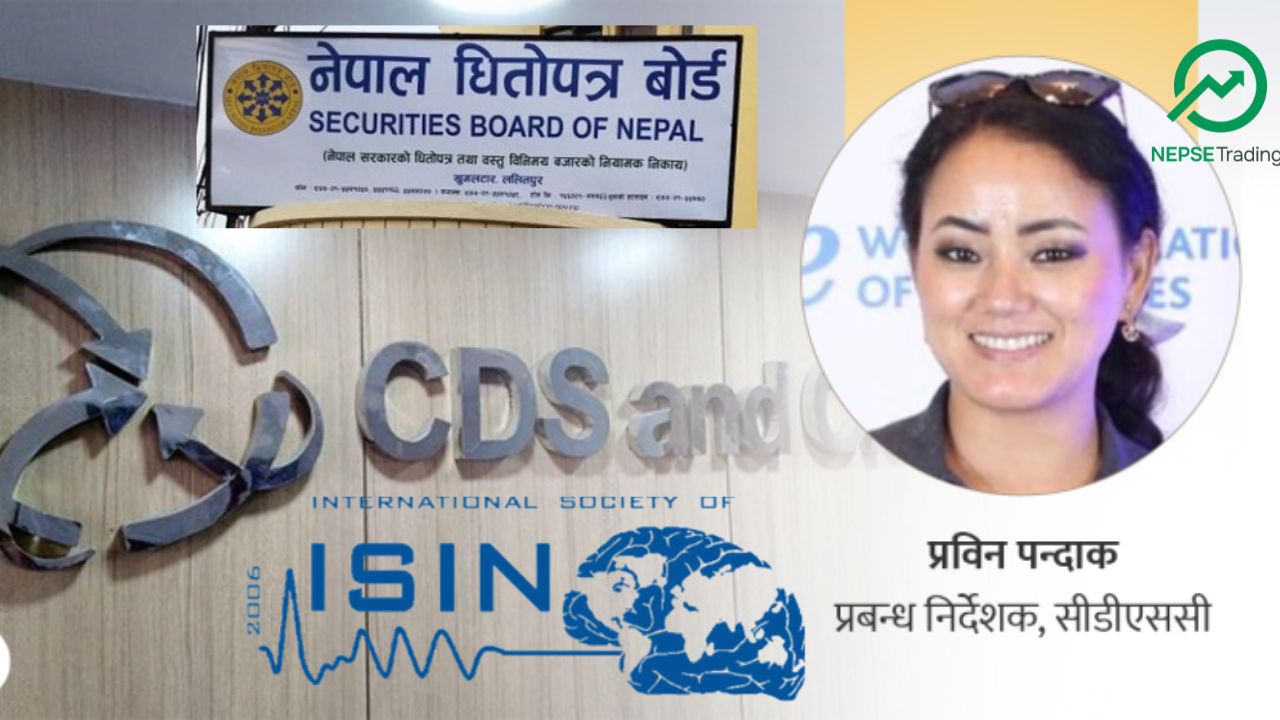
The Nepali capital market is facing serious turbulence over a controversial move by CDS and Clearing Ltd. (CDSC) to assign two International Securities Identification Numbers (ISINs) for promoter and public shares of listed companies. This dual identification system has triggered backlash from private sector stakeholders, legal experts, and even parliamentary committees, raising deep concerns about regulatory overreach and possible political interference.
Background and Current Dispute
ISINs are unique alphanumeric identifiers used worldwide to dematerialize and track securities like shares in digital form. Traditionally, one ISIN per company share class has been standard. However, in Nepal, while banks and insurance firms already use separate ISINs for promoter and public shares due to regulatory lock-in periods, CDSC recently proposed extending this system to all listed companies via its 2082 Dematerialization Operation Guideline.
The real controversy began when CDSC sent the draft to the Securities Board of Nepal (SEBON) without wider consultation and began assigning dual ISINs in practice. Companies like Emerging Nepal have already raised objections, claiming that two ISINs with different names create market confusion and legal ambiguity, especially in secondary trading.
Allegations of Overreach and Political Influence
Critics allege that CDSC, under Acting CEO Prabin Pandak Limbu (appointed in late 2081), acted beyond its legal mandate by altering ISIN issuance and naming structures. Legal analysts point out that nowhere in CDSC’s foundational regulations is it authorized to rename companies or assign separate ISINs without explicit statutory support.
There are also allegations that Pandak's appointment was politically influenced. Ties with ruling party figures and a discretionary Rs. 50,000 salary increment, allegedly without proper board approval, have cast shadows over her neutrality.
Private Sector and Investor Backlash
The Independent Power Producers’ Association (IPPAN), Nepal Chamber of Commerce, and foreign investor lobbies have strongly opposed the new ISIN system. They argue it will:
Create dual pricing confusion for the same company's shares,
Complicate demat account tracking for investors,
Increase regulatory unpredictability,
Deter Foreign Direct Investment (FDI) due to market inconsistency.
IPPAN stated the move contradicts international capital market practices and poses systemic risks. Similarly, Nepal Chamber warned that the guideline undermines investor confidence, especially in a developing capital market like Nepal.
Legal Ambiguity and Governance Crisis
The regulatory basis of the move remains shaky. Under the Securities Registration and Issuance Regulation, 2073, shares issued post-IPO are under lock-in for three years, but the law does not prescribe the use of separate ISINs or different names for promoter and public holdings.
The draft guideline does not hold legal authority unless approved by SEBON, yet CDSC has already begun implementing it selectively. The Parliamentary Public Accounts Committee has sought clarification, and SEBON remains under pressure to halt or revise the draft.
Interpretation and Implications
This ISIN controversy reflects a broader issue in Nepal’s capital market – a clash between modernization efforts and poor regulatory coordination. Instead of streamlining market operations, dual ISINs may complicate settlement cycles, confuse pricing, and fragment investor perception of company value.
If enforced, this change could lead to:
Delay in new IPO listings,
Demat reconciliation issues,
Legal battles over share identity and classification,
Reduced IPO participation due to trust deficit.
The fundamental problem lies in regulatory opacity and perceived capture of institutions by vested interests. Without clarity, investor protection and market integrity will remain at risk.
Nepal’s capital market urgently needs legislative and operational clarity. While aligning with global standards is crucial, any policy change like ISIN restructuring must be based on legal mandates, broad stakeholder consensus, and transparency—not political maneuvering or bureaucratic overreach. The future of IPO activity, foreign investment inflow, and market maturity may hinge on how this ISIN controversy is resolved.
Advertisement
Written by
Dipesh Ghimire