Top
Latest
Popular
dipesh
Dipesh Ghimire
Israel–Iran Conflict Pushes Oil Prices Up, Threatens Global Stability
Israel–Iran Conflict Pushes Oil Prices Up, Threatens Global Stability The recent escalation between Israel and Iran has sent shockwaves through the global financial and energy markets. The missile strike by Israel on Iran’s nuclear facility, followed by Iran’s retaliation with drones and missiles, has heightened fears of a prolonged conflict in the Middle East. With no signs of immediate de-escalation, the global oil market has responded swiftly, triggering volatility in stock markets and sparking inflationary concerns.
Dipesh Ghimire
2 min read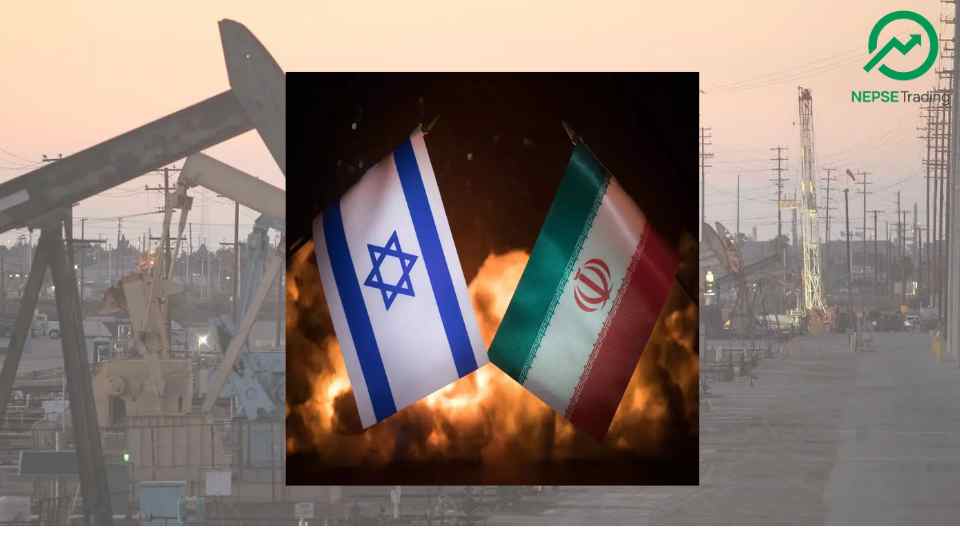
The recent escalation between Israel and Iran has sent shockwaves through the global financial and energy markets. The missile strike by Israel on Iran’s nuclear facility, followed by Iran’s retaliation with drones and missiles, has heightened fears of a prolonged conflict in the Middle East. With no signs of immediate de-escalation, the global oil market has responded swiftly, triggering volatility in stock markets and sparking inflationary concerns.
Shortly after Israel’s attack, oil prices surged, with some companies increasing prices by over 10 percent. As per BBC reports, the price of crude oil rose to over 78 dollars per barrel on Friday before slightly retreating to 74.50 dollars. Even so, this remains about 10 dollars higher than just a month ago. The reason: concerns over disruptions in Iranian oil exports — Iran being one of the largest producers and exporters within the OPEC bloc.
Stock markets in several Gulf nations dropped sharply on Sunday, reflecting investor fears of further escalation and its potential impact on global trade and energy supplies. Analysts are drawing comparisons to the early days of Russia’s invasion of Ukraine, when energy prices surged and food costs skyrocketed across the world.
This renewed tension holds particular significance for developing nations like Nepal. As a country entirely dependent on imported fuel, Nepal is highly vulnerable to fluctuations in global oil prices. A continued price hike would directly impact transportation costs, increase the price of goods and services, and put added pressure on the government’s foreign currency reserves.
Increased fuel prices also have a cascading effect — raising the cost of public transport, pushing food prices up, and amplifying inflation. For a country like Nepal, where inflation management is already a challenge, this could further deepen economic hardship for low- and middle-income families.
Meanwhile, Israeli officials have indicated that Iran’s oil infrastructure could become a direct military target. If such attacks occur, the consequences could be globally disruptive — with severe supply chain shocks and prolonged high fuel prices worldwide. Sources cited by the Times of Israel suggest that a wider offensive could lead to long-term damage, not just regionally, but to the global economy.
Iran, which produces over 3.3 million barrels of oil per day and exports more than 2 million, plays a critical role in balancing global oil supply. Any significant disruption to this flow could sharply reduce supply and increase prices at petrol stations globally — including in countries like Nepal that import fuel via India, based on international rates.
The ongoing conflict has reminded the world of the fragile link between geopolitics and economics. Unless global powers intervene diplomatically to cool down tensions, the economic consequences may quickly spiral into another wave of inflation, reminiscent of the post-Ukraine war scenario.
As the world watches developments unfold in the Middle East, energy-importing nations like Nepal brace for the possibility of rising fuel bills, costlier goods, and renewed economic pressure.
Advertisement
Written by
Dipesh Ghimire