Top
Ministry of Communications and Information Technology Urges Increased Capital Expenditure for Public Benefit
Ministry of Communications and Information Technology Urges Increased Capital Expenditure for Public Benefit The Ministry of Communications and Information Technology has directed its agencies to increase capital expenditure and ensure that their performance directly benefits the public. During the second-quarter review meeting of the fiscal year 2082/83, held under the Ministry-level Development Problem Resolution Committee, Secretary Lakshmi Kumari Basnet emphasized the need for identifying and addressing issues to ensure outcome-based performance. Secretary Basnet underscored the importance of enhancing inter-agency coordination to make service delivery more efficient and effective. She also stressed the priority of resolving outstanding financial discrepancies (referred to as "beruju") and mentioned that the Ministry would create a work plan to ensure regular monitoring of these issues.
Dipesh Ghimire
3 min read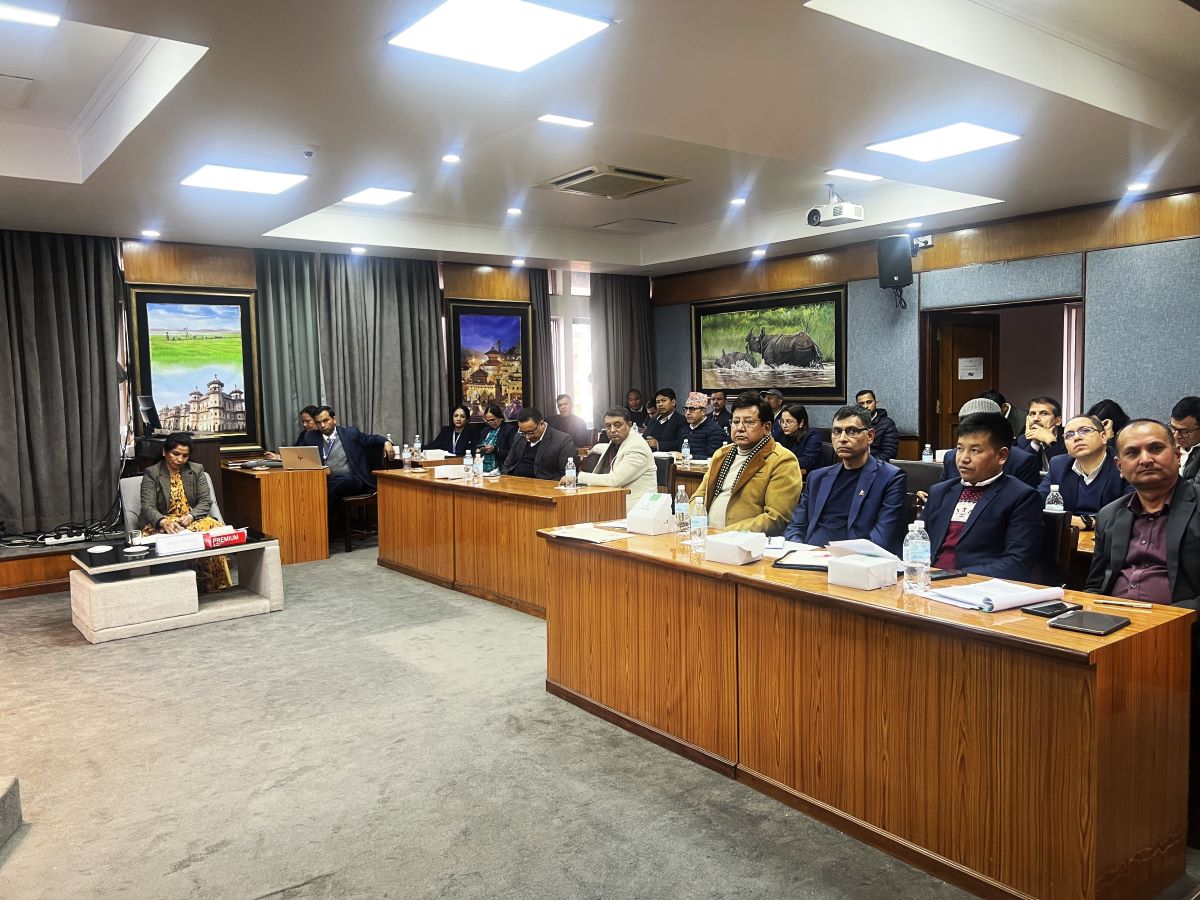
The Ministry of Communications and Information Technology has directed its agencies to increase capital expenditure and ensure that their performance directly benefits the public. During the second-quarter review meeting of the fiscal year 2082/83, held under the Ministry-level Development Problem Resolution Committee, Secretary Lakshmi Kumari Basnet emphasized the need for identifying and addressing issues to ensure outcome-based performance.
Secretary Basnet underscored the importance of enhancing inter-agency coordination to make service delivery more efficient and effective. She also stressed the priority of resolving outstanding financial discrepancies (referred to as "beruju") and mentioned that the Ministry would create a work plan to ensure regular monitoring of these issues.
Budget Shortfalls and Coordination Challenges
Secretary Basnet highlighted that budget shortages, lack of coordination, and procedural complexities have hindered the expected results in some Ministry agencies. She urged the agencies to prioritize implementable plans and ensure that these plans are submitted on time to be included in the Ministry’s plan bank.
The meeting also featured discussions on how these challenges have impacted the overall performance, particularly in terms of the timely execution of key projects and the proper allocation of resources.
Satisfactory Performance in the National News Agency
Sandeep Rai, the Managing Director of the National News Agency (Rastriya Samachar Samiti - RSS), reported that the agency’s performance for the current fiscal year has been satisfactory. He mentioned that temporary and contract-based employees have been included in the Social Security Fund and that institutional and policy reforms have been made. Rai pointed out the need for better coordination between the various agencies within the Ministry to improve overall efficiency.
Focus on Resource Allocation for Public Service Broadcasting
Mahendra Bista, the Chairman of Public Service Broadcasting Nepal (PSBN), stressed the need to ensure resource allocation according to the organization’s objectives. Similarly, Kamala Kharel, the Deputy Secretary at the Ministry of Finance, emphasized the importance of controlling current expenditure and practicing fiscal discipline, especially as liabilities continue to rise compared to revenue generation.
Challenges Due to Lack of Inter-Ministerial Coordination
The heads and representatives of various communication-related bodies, including RSS, PSBN, Gorkhapatra Corporation, Advertising Board, Film Development Board, Nepal Post, Nepal Telecommunications Authority (NTA), Nepal Telecom, Social Security Fund, and the Department of Information and Broadcasting, shared their progress reports. They highlighted that the lack of coordination between Ministries has negatively impacted the performance and timely execution of tasks.
Financial Progress of the Ministry’s Agencies
The Ministry's second-quarter review revealed that out of the 19 agencies under its jurisdiction, eight achieved over 30% financial progress. Three agencies managed to achieve 40% progress, and one agency reached 70% progress. However, two agencies recorded less than 10% progress, raising concerns over their ability to meet targets by the year’s end.
Expenditure Analysis: Need for Increased Capital Spending
As of the semi-annual period, the Ministry and its subordinate agencies had spent 87.93% of their current expenditure budget, but only 15.83% of the capital expenditure budget. This stark contrast between current and capital expenditure is a key issue, and the Ministry has emphasized the need to ramp up capital spending.
The Ministry is keen on ensuring that capital expenditure is utilized effectively, especially given that many of the key development projects rely on such funds. There is a strong push for capital expenditure to be increased in the coming months to accelerate progress on important projects that are vital for public welfare.
Conclusion and Future Directions
The second-quarter review of the Ministry of Communications and Information Technology reveals both achievements and challenges. The emphasis on capital expenditure growth reflects the government's recognition of the need for long-term, sustainable development that benefits the public. Moving forward, the Ministry is committed to improving coordination, increasing financial progress, and ensuring that its agencies focus on implementable and impactful projects. The focus remains on resolving outstanding financial issues and ensuring that all agencies contribute effectively to national development goals.
Advertisement
Written by
Dipesh Ghimire