Nepal Airlines
Nepal Airlines and the Weight of Its Own History: Can One Good Month Change Everything?
The honest position is that Nepal Airlines is in a better place today than it was a year ago, and the people now leading it appear more capable of sustaining that improvement than previous leadership teams. Whether that is enough to overcome thirty years of accumulated institutional dysfunction — the debt, the fleet, the workforce, the political dependencies — in thirty-six months is a genuinely open question. The corporation deserves credit for the improvement it has achieved. It also deserves scrutiny proportional to the public resources it consumes and the strategic importance of a functioning national carrier to Nepal's economy and connectivity.
Dipesh Ghimire
8 min read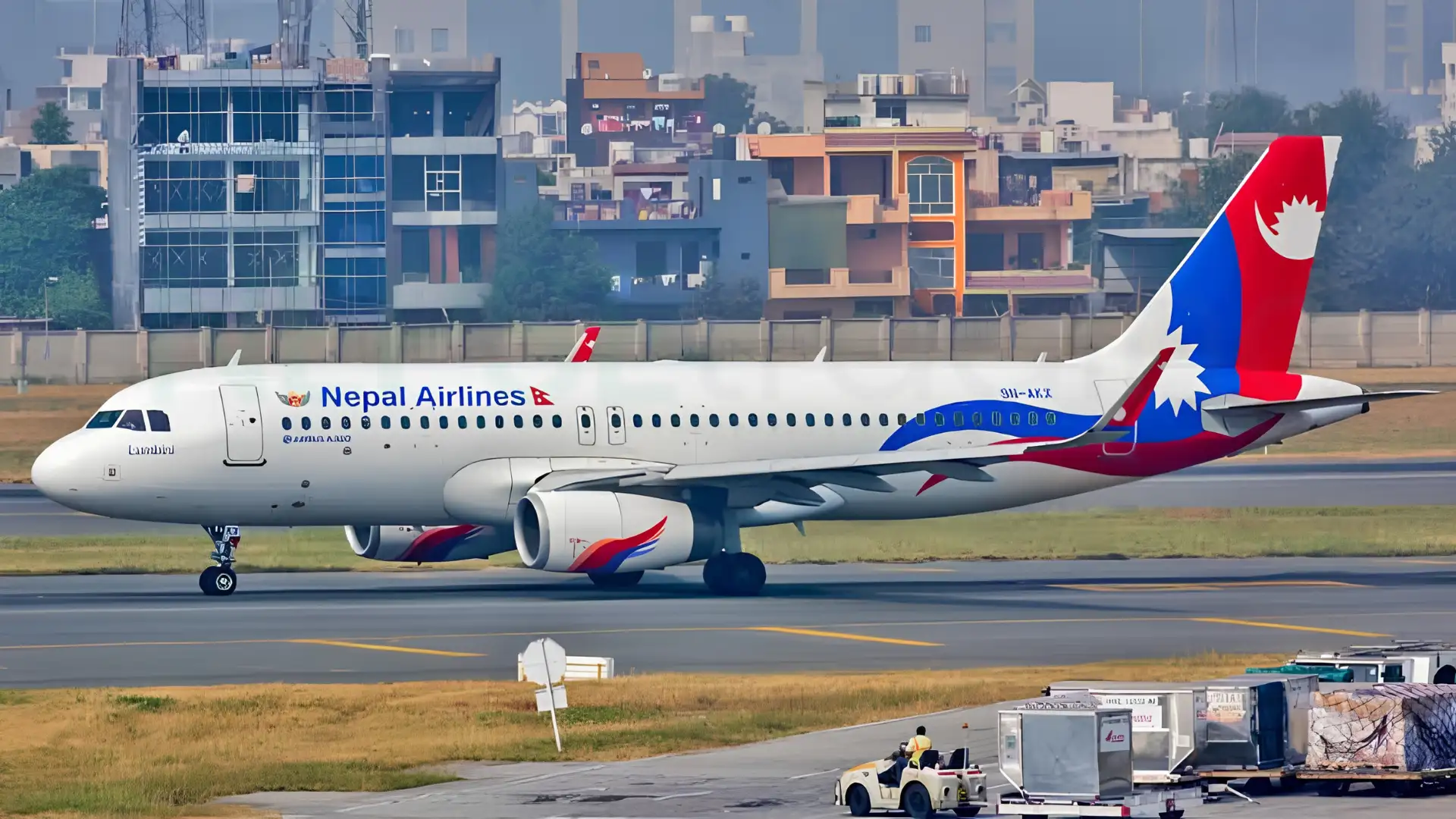
Every few years, Nepal Airlines Corporation gets a new leader who arrives with a plan, a timeline, and a vocabulary of reform. Every few years, that leader departs — sometimes quietly, sometimes not — and the corporation returns to its familiar state of financial hemorrhage, operational incoherence, and institutional paralysis. The question that hangs over this week's announcement of a 32 percent revenue increase and improved seat occupancy is not whether the numbers are real. It is whether this time is genuinely different — or whether Nepal is watching the opening chapter of a story whose ending it has already read many times before.
The numbers themselves are worth taking seriously. Revenue for Ashad of the current fiscal year rose 32 percent compared to the same month last year. Seat occupancy climbed from approximately 75 percent to 85.4 percent — a ten percentage point improvement that represents real operational progress. These are not trivial movements. In the airline industry, seat occupancy above 80 percent is generally considered the threshold at which a carrier begins to cover its fixed costs per flight meaningfully. Moving from 75 to 85.4 percent in a single year suggests that either significantly more passengers are choosing Nepal Airlines, or the airline is flying smarter routes with better load management, or both. Any of those explanations would be genuinely positive.
The Leadership Change That Preceded the Numbers
To understand what changed operationally, one must first understand what changed institutionally. On Jestha 5, a new seven-member board of directors was constituted for the corporation. Five of its members were selected through open competition — a departure from the standard practice of appointing politically connected individuals to state enterprise boards regardless of their sector knowledge. Two members represent the Ministry of Culture, Tourism and Civil Aviation. The open competition element is not merely a procedural detail. It signals that whoever designed this restructuring was at least attempting to insulate the board from the kind of direct political interference that has historically made coherent airline management nearly impossible.
Then on Ashad 30 — just days before the end of the fiscal year — the cabinet appointed Maheshwar Bhakta Shrestha as Executive Chairman and General Manager simultaneously. Combining both roles in a single person is a deliberate concentration of authority that cuts through the divided accountability that had previously allowed neither the board chair nor the management head to be fully responsible for outcomes. Shrestha is described as an aviation sector expert, which matters in an industry where technical knowledge is not optional. His predecessors at Nepal Airlines have included individuals whose qualifications for running a national carrier were difficult to identify.
Fifteen Days, Three Board Meetings, and a Three-Year Promise
Shrestha's first fifteen days in office included three board meetings and consultations across multiple levels of the organization. The output of those meetings was a set of reform priorities, action plans, and strategic directions. He then made a public commitment that is either admirably bold or dangerously overconfident depending on one's reading of Nepal Airlines' institutional DNA: the corporation will be financially self-sufficient within three years.
That target requires examination. Financial self-sufficiency for Nepal Airlines would mean an airline that covers its operating costs, services its debt obligations, maintains its fleet, and pays its staff — all without requiring government cash injections or subsidized loans. The corporation currently does none of these things sustainably. It operates an aging fleet that requires expensive maintenance and frequent wet-lease arrangements to supplement capacity. It carries a workforce that has historically been sized for political employment rather than operational necessity. It flies routes whose economics are shaped by political considerations as much as commercial ones. And it competes against private carriers and international airlines that are not burdened by any of these constraints.
Three years is a short time to dismantle that inheritance. It is not impossible — airlines have turned around faster under the right conditions. But those conditions typically include access to new aircraft, the ability to restructure the workforce, freedom to exit unviable routes, and protection from political interference in commercial decisions. Whether Shrestha will have all of those conditions, or any of them consistently, is a question that the current announcement does not answer.
What the 32 Percent Revenue Figure Does Not Tell Us
The revenue improvement is the centerpiece of this announcement, and it deserves more scrutiny than it is likely to receive. A 32 percent increase in Ashad revenue compared to the previous Ashad sounds substantial. But the interpretation depends entirely on what the baseline was — and that baseline has not been disclosed.
If Nepal Airlines had an unusually poor Ashad last year due to a specific disruption — a grounded aircraft, a route suspension, an operational incident — then a 32 percent recovery could reflect a return to normal rather than genuine improvement beyond historical performance. If last year's Ashad was itself a weak month in a weak year, the comparison base is low and the percentage gain is correspondingly inflated. Conversely, if last year's Ashad was a reasonable operating month and this year's improvement is measured against that, then 32 percent is a genuinely impressive figure.
The corporation has not published absolute revenue numbers, which means the public cannot place this percentage in proper context. An airline that went from Rs 100 million to Rs 132 million in monthly revenue has improved differently than one that went from Rs 500 million to Rs 660 million — even though both represent the same percentage gain. Transparency about absolute figures is the minimum standard for assessing whether this announcement reflects transformation or merely a good month.
Seat Occupancy: The One Number That Is Clearly Positive
Of all the metrics cited in this announcement, the seat occupancy figure is the most straightforwardly interpretable. Moving from 75 percent to 85.4 percent is meaningful regardless of baseline complications, because seat occupancy is a ratio rather than an absolute — it measures how efficiently the airline is using what it already has.
In practical terms, this improvement means that for every hundred seats Nepal Airlines flew in Ashad of this year, 85 were filled compared to 75 a year earlier. Those additional ten filled seats per hundred represent revenue that required no additional aircraft, no additional fuel burn beyond what was already planned, and no additional crew. The marginal cost of filling an empty seat is very low in airline economics — mostly the cost of the meal and the reduced luggage allowance. The marginal revenue of that seat, at Nepal Airlines' average fare levels, could be several thousand rupees. Across thousands of departures over a month, this efficiency gain compounds into a significant revenue improvement.
The question is whether this occupancy improvement reflects better commercial management — smarter pricing, better scheduling, improved booking systems, more effective marketing — or whether it reflects a temporary demand spike that will normalize. If the new management has genuinely improved how the airline prices and fills its seats, that improvement is durable. If it reflects favorable seasonal demand in Ashad that would have materialized under any management, the sustainability is less clear.
The Structural Problems That One Month Cannot Solve
Behind the encouraging headline numbers lies an institutional reality that a single fiscal year's improvement cannot address. Nepal Airlines' structural problems are well-documented and deeply entrenched. The fleet is aging — a mix of Airbus and Boeing aircraft that require constant maintenance attention and periodic wet-lease arrangements to cover capacity gaps when aircraft are grounded for servicing. Fleet renewal requires capital that the corporation does not have and cannot easily borrow given its financial history.
The workforce has been built over decades by hiring patterns that prioritized political accommodation over operational need. Overstaffing is a persistent cost burden, and restructuring it is politically explosive in a country where state enterprise employment carries significant social weight. The routes Nepal Airlines flies are not always the routes that commercial logic would choose — some exist because they serve political constituencies rather than viable passenger markets, and their economics drag on the overall financial performance.
Perhaps most fundamentally, Nepal Airlines has historically operated in an environment where its leadership had limited authority to make commercial decisions without political approval. Pricing decisions, route decisions, fleet decisions, procurement decisions — all have been subject to oversight and interference that would be inconceivable in a commercially managed airline. Whether the new governance structure, with its open-competition board and combined executive authority, genuinely insulates management from that interference will only become clear when the first commercially sensible but politically inconvenient decision needs to be made.
What Success Would Actually Look Like
Shrestha's stated vision — a competitive, transparent, and credible national flag carrier — is the right aspiration. The path to it, however, requires specificity that the current announcement does not yet provide. Which routes will be added, and which will be exited if they are not commercially viable? How will the fleet be renewed, and on what timeline? What is the plan for workforce restructuring, and how will it navigate the political resistance that such restructuring always generates? What financial targets — not just revenue growth percentages, but actual profit and loss positions — will the corporation publish and be held accountable for?
Without answers to these questions, the three-year self-sufficiency target is a commitment without a mechanism. It may be sincere. It may even prove correct. But Nepal Airlines has had sincere commitments before. What it has rarely had is a detailed, publicly accountable plan with measurable milestones and genuine consequences for missing them.
A Cautious Reading of an Encouraging Moment
None of this skepticism should obscure what is genuinely positive about the current situation. A 32 percent revenue increase and an 85.4 percent seat occupancy rate are real improvements, and the institutional changes that preceded them — the open-competition board, the combined executive authority, the rapid initial action — are structurally more promising than Nepal Airlines' typical leadership transitions. Maheshwar Bhakta Shrestha has the professional background to understand what the airline actually needs, which is more than can be said for all of his predecessors.
The honest position is that Nepal Airlines is in a better place today than it was a year ago, and the people now leading it appear more capable of sustaining that improvement than previous leadership teams. Whether that is enough to overcome thirty years of accumulated institutional dysfunction — the debt, the fleet, the workforce, the political dependencies — in thirty-six months is a genuinely open question. The corporation deserves credit for the improvement it has achieved. It also deserves scrutiny proportional to the public resources it consumes and the strategic importance of a functioning national carrier to Nepal's economy and connectivity.
One good month is a beginning. Nepal Airlines needs to make it a pattern before anyone calls it a turnaround.
Advertisement
Written by
Dipesh Ghimire