Nepal's Capital Market
Nepal's Capital Market at a Crossroads: Government Signals Major Policy Shift
For ordinary investors who have watched their portfolios suffer through years of policy paralysis and market volatility, the signals from Monday's meeting offer cautious hope. The roadmap exists. The political will appears to be there. What remains to be written is the chapter on delivery.
Dipesh Ghimire
5 min read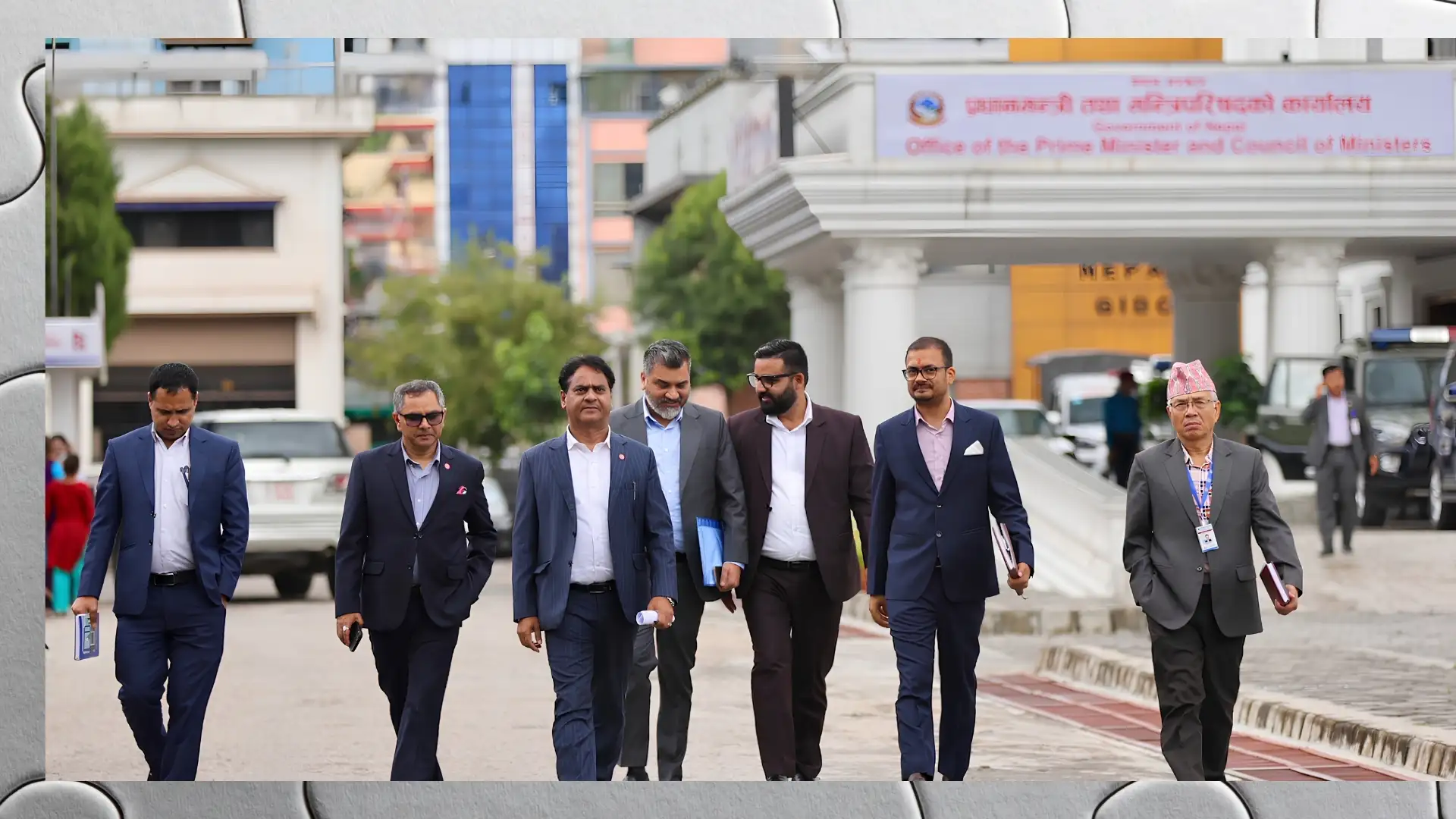
Nepal's capital market is entering a potentially transformative phase. After years of sluggish reforms and investor frustration, the country's top political leadership has stepped directly into the conversation — a move that market watchers say could signal a genuine turning point, or risk becoming yet another round of unfulfilled promises.
Prime Minister Walendra Shah sat down with capital market stakeholders and regulators on Monday, a meeting that carried symbolic weight beyond its agenda. When a sitting prime minister personally chairs discussions on stock market reform, it sends a message — to investors, to institutions, and to the bureaucracy — that this is no longer a matter to be left on the shelves of technocratic committees.
Why This Meeting Matters
Nepal's capital market has long punched below its potential. Daily trading volumes remain thin. Retail investors dominate a market that, by most measures, should have a far stronger institutional backbone. The IPO system has been criticized for being slow, opaque, and prone to oversubscription chaos. And access to credit for market participants has been squeezed by conservative central bank policies.
The meeting on Monday was not the first time these concerns were raised. But it may be the first time they were raised directly in front of the Prime Minister — with cameras in the room and a clear expectation of follow-through.
Shah's framing was notably sharp. His zero-tolerance warning toward market wrongdoers was not just a moral statement; it was a political one. It signals that the government is aware of the reputational risks the capital market carries, particularly after periods of speculative excess and price manipulation that have burned ordinary investors.
What Stakeholders Actually Want
The demands presented at Monday's meeting paint a detailed picture of where Nepal's capital market is currently stuck — and what it would take to unlock its potential.
The push to bring daily trading volume above Rs 30 billion is perhaps the most concrete benchmark on the table. Currently, the market frequently trades well below that figure, reflecting thin liquidity and low investor confidence. Hitting that target would require not just more participants, but deeper instruments and better price discovery.
On the credit side, brokers want Nepal Rastra Bank to ease margin lending — the practice of borrowing against securities to fund further investment. This is a standard tool in mature markets, but Nepal's central bank has kept a cautious hand on the throttle, wary of the systemic risks that came with the market bubble of previous years. The request to shift share collateral loan limits from primary capital to five percent of total loans would effectively loosen that constraint significantly.
The demand to remove the six-month lock-in period for banks and financial institutions investing in securities is equally significant. Currently, once a bank buys shares, it cannot sell for at least six months — a rule designed to prevent speculative flipping but one that has also had the unintended effect of discouraging institutional participation altogether. Removing it could bring more stable, long-term capital into the market.
The Institutional Gap
One of the most important — and underreported — aspects of Monday's discussion was the call to bring large institutional investors into the secondary market. Institutions like the Employees Provident Fund, Citizen Investment Trust, and the Social Security Fund collectively manage hundreds of billions of rupees. Yet their presence in Nepal's stock market remains limited and cautious.
In developed markets, pension funds and social security institutions are among the largest and most stabilizing forces in equity markets. Their long investment horizons, professional fund management, and sheer capital size help smooth out volatility and provide a floor against panic selling. Nepal has these institutions — it simply has not yet unlocked their potential as market participants.
If the government can create a regulatory and governance framework that gives these funds the confidence to increase their equity exposure, it could fundamentally change the character of the market — shifting it from a retail-dominated, sentiment-driven space to one with deeper institutional roots.
The NRN Opportunity
The demand to open Nepal's capital market to Non-Resident Nepalis deserves particular attention. The NRN community represents a significant pool of capital — individuals with Nepali roots who are now earning in US dollars, euros, and British pounds, and who may have both the financial capacity and the emotional motivation to invest in Nepal's growth story.
Currently, regulatory and infrastructure barriers make it difficult for NRNs to participate meaningfully in Nepal's stock market. Addressing these barriers — through simplified KYC processes, foreign currency investment channels, and clear repatriation policies — could open a new and sustainable source of demand for Nepali securities.
This is not merely a financial opportunity. It is also a strategic one. Countries like India have successfully tapped their diaspora capital through instruments like Non-Resident Indian accounts and dedicated investment schemes. Nepal has been slower to act, but the political will to do so appears to be building.
Regulatory Signals: SEBON and NEPSE Respond
The responses from Nepal's key market institutions at Monday's meeting were carefully calibrated. SEBON Chairman Gopal Bhatt confirmed that the capital market policy for fiscal year 2083/84 and the newly launched "Nepal Capital Market Roadmap 2083" are already in implementation. This is a meaningful development — having a roadmap is one thing, but being able to say it is actively being executed adds credibility to the reform narrative.
NEPSE Chairman Amrit Lamsal's comments on restructuring were perhaps the most forward-looking. NEPSE, Nepal's sole stock exchange, has long been criticized for its technology infrastructure, governance structure, and limited product offerings. The commitment to finalize a restructuring modality and align systems with SEBON policy suggests that the exchange is preparing for a more competitive and capable future — though the details remain to be seen.
Reading Between the Lines
What Monday's meeting ultimately reveals is a capital market sector that knows what it needs, has a government that is listening, and now faces the hardest part — execution.
Nepal has seen reform announcements before. The test will be whether the IPO system actually becomes faster and fairer. Whether the Rastra Bank actually adjusts margin lending rules. Whether institutional investors actually show up on the trading floor. Whether NRN money actually flows in through clear legal channels.
The Prime Minister's personal presence at Monday's discussion raises the political stakes. It becomes harder to quietly shelve reform proposals when the head of government has publicly associated himself with the agenda. That may be precisely the kind of political pressure the capital market has needed.
For ordinary investors who have watched their portfolios suffer through years of policy paralysis and market volatility, the signals from Monday's meeting offer cautious hope. The roadmap exists. The political will appears to be there. What remains to be written is the chapter on delivery.
Advertisement
Written by
Dipesh Ghimire