Nepal’s Forest Wealth
Nepal’s Forest Wealth: A Green Giant Yet to Power National Prosperity
Nepal’s Forest Wealth: A Green Giant Yet to Power National Prosperity Nepal is a country endowed with remarkable natural wealth. Nearly 45 percent of its land area is covered by forests, making greenery not only a defining feature of the landscape but also a core element of national identity. Over the past three decades, Nepal’s community forestry model has earned global recognition as a successful example of participatory natural resource management. More than 22,000 community forest user groups today manage millions of hectares of forest land, contributing significantly to forest conservation, biodiversity protection, and local livelihoods. Yet, despite this vast potential, a paradox persists: Nepal continues to import billions of rupees worth of timber and wood-based products, while trees rot unused inside its own forests. This contradiction has raised fundamental questions about forest governance, policy design, and the country’s development priorities.
Dipesh Ghimire
4 min read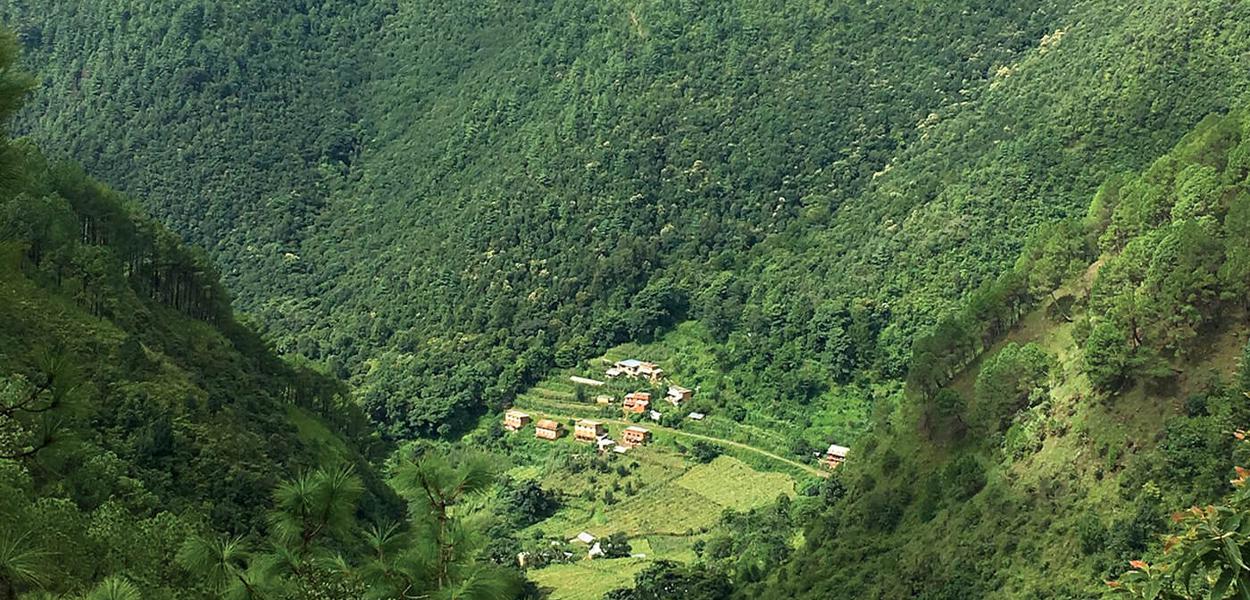
Nepal is a country endowed with remarkable natural wealth. Nearly 45 percent of its land area is covered by forests, making greenery not only a defining feature of the landscape but also a core element of national identity. Over the past three decades, Nepal’s community forestry model has earned global recognition as a successful example of participatory natural resource management.
More than 22,000 community forest user groups today manage millions of hectares of forest land, contributing significantly to forest conservation, biodiversity protection, and local livelihoods. Yet, despite this vast potential, a paradox persists: Nepal continues to import billions of rupees worth of timber and wood-based products, while trees rot unused inside its own forests.
This contradiction has raised fundamental questions about forest governance, policy design, and the country’s development priorities.
Policies That Protect, But Also Paralyze
Forest laws in Nepal are often drafted with noble intentions—conservation, sustainability, and environmental protection. However, when translated into regulations, guidelines, and directives, these laws frequently become obstacles rather than enablers of development.
The Forest Act 2019 (2076 BS) was expected to link community forestry with entrepreneurship, eco-tourism, and productive use of forest resources. In practice, however, its spirit has been diluted by restrictive regulations that tightly control utilization. Many stakeholders argue that while the law speaks of prosperity, the rules lock forests behind layers of bureaucracy.
A clear example is forest-based small and medium enterprises. Even when community forests sit beside unused land, entrepreneurs are barred from setting up processing units within a defined radius of forest areas. This forces them to buy private land or pay high rents elsewhere, making forest-based industries economically unviable. As a result, opportunities for local employment, value addition, and rural income generation are lost.
Infrastructure development faces similar challenges. Road construction through forest areas often requires years of approvals, discouraging investment and delaying projects indefinitely. While preventing indiscriminate deforestation is essential, critics argue that Nepal has failed to strike a balance between conservation and development. Creative solutions—such as integrating roads with forest fire lines or management corridors—remain largely absent from policy thinking.
Conservation Without Communities
The situation is even more sensitive in regions such as the Chure–Tarai–Madhesh belt, declared highly sensitive under environmental protection laws. In several areas, local communities are effectively barred from accessing nearby forests. In places like Udayapur’s Katari, residents say they have not been allowed to step into adjacent forests for nearly a decade.
Such exclusionary conservation policies have widened distrust between communities and the state. Experience shows that conservation achieved by disconnecting people from resources rarely succeeds in the long term.
Federalism in Theory, Centralization in Practice
Nepal’s transition to federalism devolved authority in sectors like health, education, and agriculture to local governments. Forest governance, however, remains largely centralized.
Although the Constitution places forests under shared jurisdiction among federal, provincial, and local governments, decision-making power continues to rest mainly with central forest offices. Local governments may “recommend” community forest plans, but approval authority remains elsewhere. This has created friction between municipalities and divisional forest offices, often stalling locally driven initiatives.
Provinces face similar constraints. While tasked with managing national forests, they are required to draft laws that do not conflict with federal legislation—effectively limiting their autonomy. Without genuine decentralization and trust in local institutions, forest management continues to be controlled from Kathmandu, undermining the spirit of federalism.
Shifting International Priorities
Nepal’s celebrated community forestry success was once supported by strong international partnerships. Organizations and development agencies invested heavily in decentralization, capacity building, and grassroots leadership.
Today, that support has shifted elsewhere. While international assistance continues, priorities have moved toward agriculture and other sectors, leaving community forestry with limited resources for leadership development, advocacy, and adaptation to federal governance structures.
At the same time, Nepal’s forests play a vital role in global climate mitigation by storing carbon. Yet mechanisms for compensation—such as climate finance, loss-and-damage funding, or carbon payments—have not reached communities at meaningful scale.
Importing Timber While Trees Stand Unused
Perhaps the most striking contradiction lies in timber trade. Farmers can freely sell crops grown on their land, but selling a tree grown on private property often requires navigating complex permits—especially for species like sal. This has discouraged tree planting on farms and worsened human–wildlife conflict, as unmanaged tree growth turns villages into de facto forests.
The economic cost is substantial. Between fiscal years 2019/20 and 2023/24, Nepal spent over NPR 31.3 billion importing timber and wood products—money that could have circulated within the domestic economy.
Many experts argue that easing restrictions on timber from private land alone could improve rural incomes and significantly reduce imports.
Community-Based Management: The Proven Path
Nepal’s own experience shows that community-based forest management is the most sustainable approach. Attempts at highly centralized or purely commercial “scientific forest management” failed due to weak governance and lack of local ownership.
Going forward, forest governance must answer three questions clearly:
Who manages the forest?
Local user communities, with government agencies providing technical support—not control.
How is it managed?
Through locally adapted models, recognizing that forests in the Himalayas, hills, and Tarai have different ecological characteristics.
What is the objective?
Healthy forests that also improve livelihoods and contribute to national prosperity.
This means prioritizing value addition (processing herbs, timber, and non-timber products locally), reducing the cost of domestic timber, partnering with private industries, and promoting eco-tourism as a source of income.
Unlocking the Green Economy
Nepal’s forests are not merely a conservation asset; they are an untapped economic resource. Yet the key to unlocking this potential is not tighter control, but trust, decentralization, and smart regulation.
As long as policies remain complex, centralized, and disconnected from local realities, forests will remain “protected” but underutilized. The path forward lies in empowering communities, simplifying rules, aligning federal structures with constitutional intent, and recognizing forests as partners in prosperity—not barriers to development.
Nepal’s green wealth holds the promise of jobs, industry, climate resilience, and rural revival. Turning that promise into reality requires a decisive shift—from control to collaboration, and from restriction to responsible use.
Advertisement
Written by
Dipesh Ghimire