Top
Nepal’s Manufacturing Sector Struggles Amid Rising Imports, High Production Costs, and Weak Policy Support
Nepal’s Manufacturing Sector Struggles Amid Rising Imports, High Production Costs, and Weak Policy Support As thousands of young Nepalis continue to leave the country in search of better opportunities abroad, industrial leaders warn that Nepal’s failure to strengthen its manufacturing base has created a dangerous economic imbalance. While the country has experienced multiple political transformations over the decades, the industrial structure has weakened sharply, leading to growing dependence on imports and shrinking domestic production.
Dipesh Ghimire
3 min read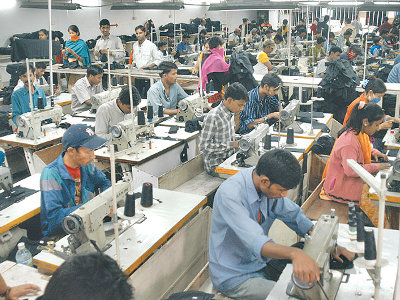
As thousands of young Nepalis continue to leave the country in search of better opportunities abroad, industrial leaders warn that Nepal’s failure to strengthen its manufacturing base has created a dangerous economic imbalance. While the country has experienced multiple political transformations over the decades, the industrial structure has weakened sharply, leading to growing dependence on imports and shrinking domestic production.
Industrialists argue that Nepal urgently needs to prioritize manufacturing if it wants to retain its youth workforce, reduce its import bill, and ensure long-term economic resilience. However, inadequate government support, inconsistent policy frameworks, and limited interest from donors in productive sectors have kept Nepal’s manufacturing contribution to GDP at a meager level. Once accounting for nearly 17% of the economy, the manufacturing sector now contributes barely 5%.
Amid this decline, Goldstar Shoes—one of Nepal’s largest domestic brands—stands out as a rare industrial success story. Its Kathmandu factory alone employs 3,500 workers, 70–75% of whom are women, creating one of the largest employment hubs within the valley. Established in the early 1970s, the company now produces a wide range of footwear and has even begun exporting to foreign markets, contributing to Nepal’s foreign exchange earnings.
But industry leaders caution that Nepal’s broader industrial ecosystem is deteriorating. Manufacturing businesses face long cash-flow cycles, high upfront costs, and complex supply chains—unlike trading companies, which can import and sell goods quickly with minimal risk. As a result, many entrepreneurs are shifting away from production toward easier and faster trading activities, weakening the domestic production base.
Goldstar notes that Nepal can produce quality shoes priced between Rs. 2,000 and Rs. 2,500, yet the domestic market is flooded with smuggled footwear branded as international labels and sold for as low as Rs. 500. Weak border enforcement, under-invoicing, and illegal imports have created unfair competition, harming both government revenue and local industries. Industry representatives say that without stronger government protection, Nepal cannot build competitive manufacturing capabilities.
Nepal’s footwear industry alone consists of over a thousand factories—large, medium, and small—employing more than 50,000 workers, many of them women. Yet the sector remains vulnerable due to high production costs, erratic raw material supply, and limited government incentives. Companies often conduct three-month skills training programs for workers at their own expense, only to lose trained employees to foreign employment shortly thereafter, forcing them to restart the training cycle.
Industrialists argue that Nepal needs a coordinated national strategy to strengthen manufacturing: skill-based training centers, industry-targeted curricula, and policies that require trained workers to serve a minimum period domestically. They emphasize that without such measures, Nepal’s productivity will remain low and industries will face chronic workforce shortages.
Exporters also report growing policy uncertainty. Government decisions—such as halting export subsidies due to budget shortages—have disrupted business planning. While industrialists do not insist on cash subsidies, they call for alternative incentives: reduced electricity tariffs, lower customs on raw materials, and easier access to affordable loans. They say that without such reforms, Nepal will remain uncompetitive globally.
Nepal’s transition out of the Least Developed Country (LDC) category in 2026 further raises the stakes. Once Nepal graduates, it will lose preferential treatment in international markets, making it even harder for local products to compete. Although Nepali producers have decades of experience and the capability to manufacture high-quality goods, high production costs—driven by expensive raw material imports, energy fees, and labor costs—limit their global competitiveness.
Industrialists cite examples from Vietnam, China, and Bangladesh, where governments actively support local producers through subsidies, logistical facilitation, and strong export policies. In contrast, Nepali manufacturers face high operational costs and infrastructure bottlenecks. Even when Nepal receives opportunities—such as lower U.S. tariffs compared to other Asian countries—supply-chain disruptions, customs delays, and poor border infrastructure prevent industries from fully utilizing them.
A recent example involves Nepali manufacturers losing a major export order due to the 55-day closure of the Tatopani border point, which left raw materials stuck for more than two months during monsoon season. Businesses warn that without reliable trade infrastructure, Nepal cannot build a credible export industry.
As Nepal prepares for LDC graduation, industrialists say the country needs immediate reforms:
stable, predictable industrial policies
protection against smuggling and unfair imports
incentives for domestic production
better customs and logistics infrastructure
affordable financing for productive sectors
skill development programs aligned with industry needs
They argue that manufacturing is essential not only for economic growth but also for reducing youth migration, increasing employment, and achieving long-term economic sovereignty.
Ultimately, analysts conclude that Nepal cannot rely indefinitely on remittances and trading activities. To build a modern, resilient economy, the government must work with the private sector—fostering trust, ensuring consistent policies, and supporting industries that build national capability. Without such cooperation, Nepal’s dream of industrial self-reliance will remain out of reach.
Advertisement
Written by
Dipesh Ghimire