Train
One Train, Three Days, and a Trade Route Two Years in the Making
The industrialists of Morang and Sunsari are right to be cautiously optimistic. The service has launched. The route is proven. The diplomatic and regulatory groundwork has been laid. But the true measure of this development will come not from Monday's arrival, but from whether a cargo train from Kolkata is still arriving in Biratnagar six months from now — quietly, routinely, and without anyone needing to wave a green flag.
Dipesh Ghimire
6 min read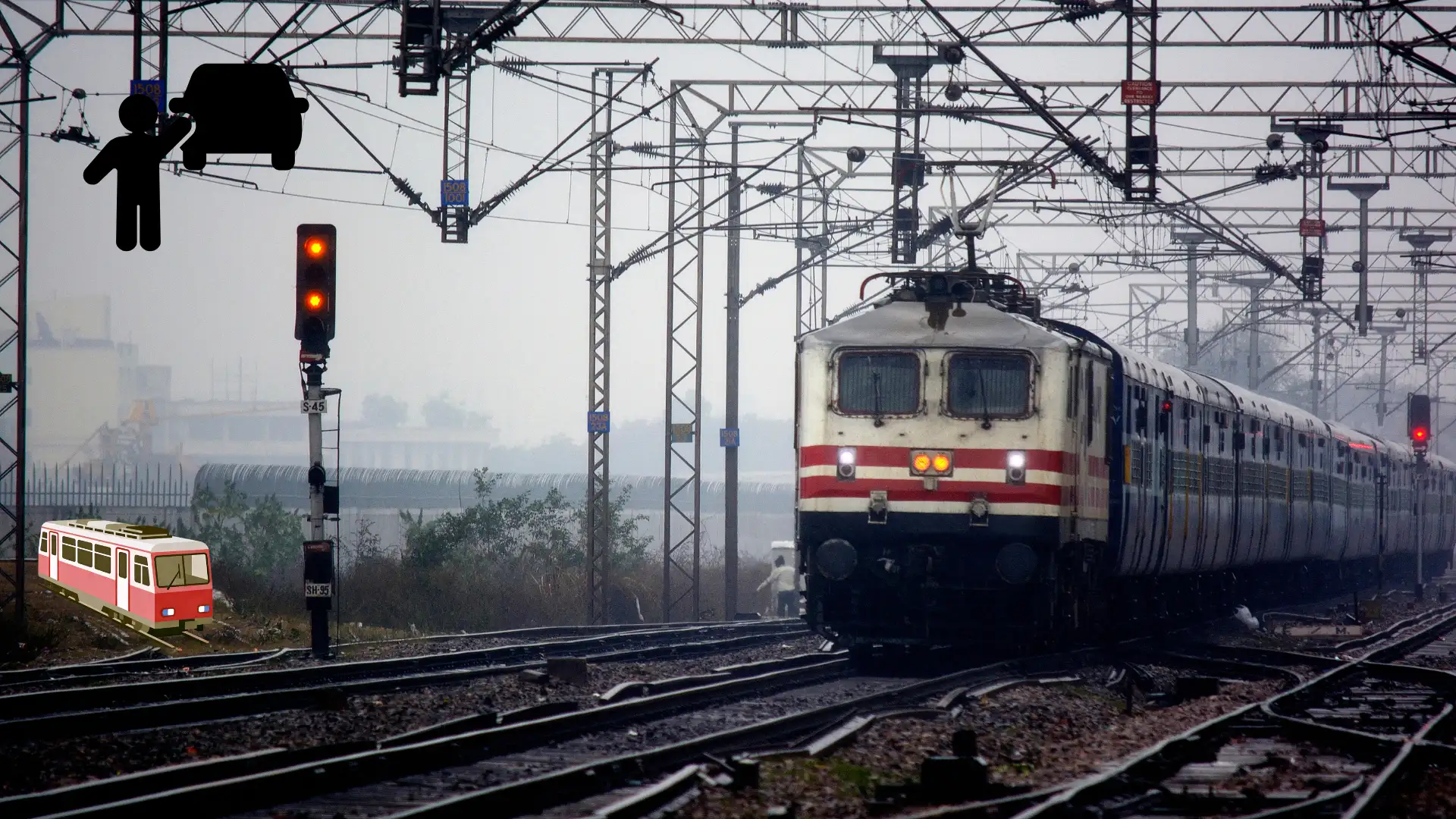
It took a cargo train four days to travel from Kolkata to Biratnagar. It took Nepal two years to make that journey possible. That gap between physical distance and political will is the real story behind Monday's arrival of the first regular cargo rail service at Biratnagar Customs Yard — and understanding it requires looking beyond the celebration.
The Route That Always Made Sense But Never Worked
Geography made this route logical from the beginning. Kolkata is Nepal's primary maritime gateway. The Morang-Sunsari corridor in eastern Nepal is the country's most concentrated industrial zone. A direct rail link between the two was never a question of engineering — the tracks already existed. It was always a question of political agreement, regulatory alignment, and the willingness of two sovereign bureaucracies to cooperate on the details.
Those details proved stubborn. A trial run was attempted in Jestha 2080 — more than two years before Monday's arrival. That test run worked. The train moved. The route was proven. And then nothing happened for over two years, as the service sat unregularized, caught between unresolved policy questions on both sides of the border.
What finally changed was not infrastructure. It was not new investment. It was paperwork — specifically, the completion of necessary policy agreements between Nepali and Indian agencies that had been stalled in bureaucratic limbo. That a functional trade route can sit idle for two years waiting for administrative signatures is itself a commentary on the cost Nepal pays for slow governance.
What the Old System Actually Cost
To understand why Monday mattered, it helps to understand what came before. Under the previous arrangement, third-country imports — goods manufactured outside both Nepal and India, arriving through Kolkata Port — could only travel by rail as far as Bithana, a junction town in the Indian state of Bihar. From Bithana, everything had to transfer onto trucks for the remaining journey into Nepal.
That transfer point sounds minor. In practice, it was a consistent source of cost, delay, and logistical friction. Every time cargo moves from one mode of transport to another, it must be unloaded, inspected, reloaded, and documented. Each step adds hours. Each step adds rupees. For an industrial unit importing large volumes of raw materials on tight production schedules, those hours and rupees accumulate into a significant competitive disadvantage.
The direct rail service to Biratnagar Customs Yard eliminates that transfer entirely. The container that leaves Kolkata Port now arrives at the customs yard without being touched in between. For Swastik Oil Industries, which received the first consignment, this is not a symbolic improvement — it is a concrete reduction in the cost of doing business.
Reading the Inaugural Consignment
The choice of Swastik Oil Industries as the recipient of the first cargo shipment was not accidental. Swastik is an established industrial name in the Morang-Sunsari corridor, the kind of anchor business whose operations ripple outward through supply chains, employment, and local economic activity. By beginning with a real commercial shipment rather than a ceremonial load of goods, the organizers sent a clear message: this is operational infrastructure, not a photo opportunity.
The Morang-Sunsari Industrial Corridor itself deserves attention in this context. It is home to dozens of manufacturing units producing everything from vegetable oils and noodles to steel and textiles. Many of these industries depend heavily on imported raw materials — commodities like palm oil, soybean, steel billets, and chemical inputs that arrive through Kolkata from Malaysia, Indonesia, Brazil, and elsewhere. For this corridor, the efficiency of the Kolkata-Biratnagar supply chain is not a peripheral concern. It is central to whether these factories can compete on price, maintain production schedules, and remain viable businesses.
The Diplomatic Architecture Behind the Train
The launch ceremony in Kolkata revealed something important about how this service finally came together. Nepal's Consul General Jhakka Prasad Acharya stood alongside senior Indian customs officials, Kolkata Port representatives, and CONCOR executives to jointly flag off the train. That arrangement of officials — from both countries, from port authority, from customs, and from the railway logistics arm — reflects exactly the kind of multi-agency coordination that had been missing for two years.
CONCOR, the Container Corporation of India, is a particularly significant player in this story. As the agency responsible for operating rail freight terminals and managing container logistics across India's rail network, CONCOR's active involvement transforms this from a bilateral government agreement into an operational commercial service. When CONCOR has a role, containers move on schedules, not on promises.
The Nepal-India Transit Treaty, under whose framework this service operates, has existed for years. What changed was the willingness and capacity of implementing agencies on both sides to actually operationalize it for this specific route. That distinction matters because it suggests the treaty framework itself is not the binding constraint — execution and follow-through are.
The Integrated Check Post: The Next Frontier
Officials have publicly stated an ambition that goes beyond the current service: eventually extending cargo rail all the way to Biratnagar's Integrated Check Post, or ICP. This is worth examining carefully because the ICP represents a qualitatively different level of trade facilitation.
An Integrated Check Post is designed to consolidate all border crossing formalities — customs clearance, immigration, quarantine, standards inspection — into a single location with shared infrastructure. The theory is that a shipper should be able to arrive at one gate, complete all required processes under one roof, and leave cleared for delivery. Nepal and India have been developing ICP facilities at several border crossings as part of a broader bilateral trade facilitation agenda.
If cargo rail can reach the Biratnagar ICP directly, it would create what trade economists call a seamless logistics corridor — a supply chain path from port to factory gate with minimal friction points. For eastern Nepal's industries, that would represent a genuine structural improvement in competitiveness, not just an incremental efficiency gain.
Getting there, however, will require additional infrastructure investment, further regulatory alignment, and the kind of sustained political attention that trade logistics rarely attracts once the inauguration ceremonies are over.
The Bigger Picture: Nepal's Transit Identity
Monday's cargo train arrival sits within a much larger strategic question that Nepal has been wrestling with for decades: can a landlocked country between India and China transform its geography from a liability into an asset?
The honest answer is that Nepal remains far from achieving that transformation. Its trade infrastructure is underdeveloped. Its customs procedures are frequently cited by businesses as opaque and slow. Its connectivity to the global supply chain depends almost entirely on Indian goodwill and Indian infrastructure — a dependence that carries both practical and political risks.
But individual developments like the Kolkata-Biratnagar cargo rail service matter precisely because they represent incremental movement in the right direction. Each logistics bottleneck removed, each transfer point eliminated, each day shaved off a supply chain journey makes Nepal's industrial sector marginally more competitive and the country marginally more integrated into regional trade flows.
What Remains Unsaid
What the official statements and inauguration coverage do not address is the question of frequency and reliability. A single inaugural run is a milestone. A service that operates on a dependable weekly or biweekly schedule, with consistent transit times and predictable costs, is an infrastructure asset. Nepal has seen trade corridors announced before that never achieved operational regularity.
The industrialists of Morang and Sunsari are right to be cautiously optimistic. The service has launched. The route is proven. The diplomatic and regulatory groundwork has been laid. But the true measure of this development will come not from Monday's arrival, but from whether a cargo train from Kolkata is still arriving in Biratnagar six months from now — quietly, routinely, and without anyone needing to wave a green flag.
That is when a milestone becomes infrastructure. And infrastructure, not ceremonies, is what eastern Nepal's factories actually need.
Advertisement
Written by
Dipesh Ghimire