Popular News3 min readHidden Crisis? Rising Non-Performing Loans Threaten Nepal’s Financial StabilityHidden Crisis? Rising Non-Performing Loans Threaten Nepal’s Financial Stability As Nepal grapples with slowing economic activity, a silent storm is brewing in the heart of its financial system—non-performing loans (NPLs), or bad loans, are increasing at an alarming yet publicly understated rate. Before stepping down, former Governor Maha Prasad Adhikari had already sensed the ticking time bomb within the financial sector. As he presented the monetary policy for the fiscal year 2081/82, he was acutely aware of the surging NPL levels. When NPLs rose from 3.02% in Ashad 2080 to 3.98% in Ashad 2081, he included a provision in point 89 of the monetary policy—calling for the drafting of an Asset Management Act to handle bad loans and non-banking assets. But that promise appears to have evaporated without action or follow-up. There is no official record or update indicating that the draft law was ever submitted to the government before his retirement.Dipesh Ghimire·2 Jun, 2025
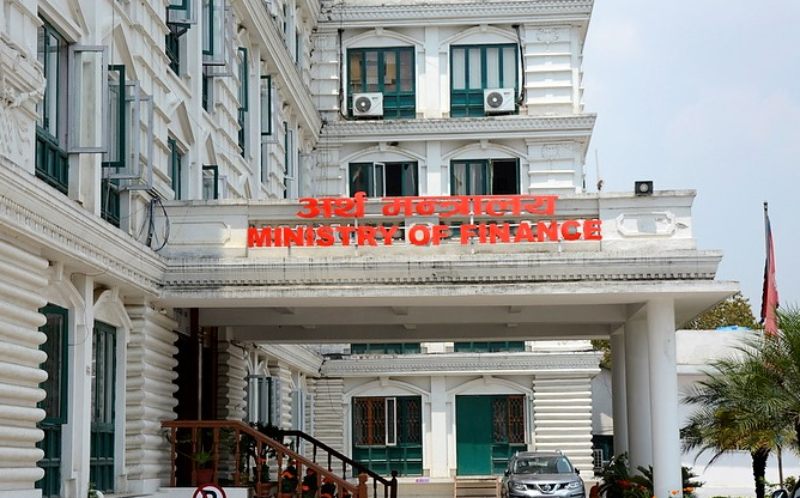
Top2 min readDemat Accounts Reach 6.55 Million, Mero Share Users Climb to 5.59 MillionAs of the month of Falgun in the current fiscal year 2081/82 (mid-February 2025), the number of Demat (beneficiary) accounts in Nepal has reached 6.55 million, accounting for 22.44% of the country's total population. This is a notable increase from 5.82 million accounts recorded at the end of the previous fiscal year. According to the Ministry of Finance, Demat account growth has been accelerating in recent years: Dipesh Ghimire·2 Jun, 2025
Banking Industry2 min readHistory of Banking Industry in NepalNepal’s banking industry began in 1937 with the establishment of Nepal Bank Limited, the first commercial bank. The Nepal Rastra Bank, the country's central bank, was founded in 1956 to regulate monetary policy and issue currency. Over the decades, Nepal saw the creation of key institutions like Rastriya Banijya Bank (1966), Agricultural Development Bank (1968), and Nepal Industrial Development Corporation (1959). Financial liberalization in the 1980s and 1990s led to the rise of private banks, including Nepal Arab Bank (now Nabil Bank), and the introduction of finance companies. The Bank and Financial Institutions Act (BAFIA) of 2006 and its 2017 revision unified Nepal’s banking regulations. In recent years, the focus has shifted to digital banking, promoting QR and card-based payments, and reducing the number of banks through consolidation to strengthen the financial system.Sandeep Chaudhary·1 Jun, 2025
Top2 min readBiography of Dr. Yuba Raj Khatiwada: From Central Banker to National Policy ArchitectBiography of Dr. Yuba Raj Khatiwada: From Central Banker to National Policy Architect Dr. Yuba Raj Khatiwada stands as one of the most influential technocrats in Nepal's modern economic history. From steering Nepal Rastra Bank as its governor to shaping fiscal policy as finance minister, and later representing Nepal as its ambassador to the United States, his journey has been one defined by intellect, policy discipline, and national service. Born in Taplejung in eastern Nepal, Dr. Khatiwada completed his undergraduate and postgraduate studies in Economics and Public Administration from Tribhuvan University. He later earned a Ph.D. in Monetary Economics from the prestigious Delhi School of Economics in India. Dipesh Ghimire·1 Jun, 2025
Top2 min readBiography of Dr. Bishwanath Paudel: A Technocrat Economist at the Helm of Nepal Rastra BankBiography of Dr. Bishwanath Paudel: A Technocrat Economist at the Helm of Nepal Rastra Bank Dr. Bishwanath Paudel has been appointed the 18th Governor of Nepal Rastra Bank (NRB), bringing with him a rich blend of academic excellence, international exposure, and domestic policy experience. A known technocrat with a non-political image, Dr. Paudel takes charge at a time when Nepal's financial sector is grappling with rising non-performing loans, sluggish credit growth, and surplus liquidity. A permanent resident of Chitwan, Dr. Paudel holds a Ph.D. in Agricultural and Resource Economics from the University of California, Berkeley. He began his academic journey with an engineering degree in Computer Science from the China Textile University, Shanghai.Dipesh Ghimire·1 Jun, 2025
Top3 min readGovernor Paudel Endorses Stock Market as a Tool for Financial Security and DiversificationGovernor Paudel Endorses Stock Market as a Tool for Financial Security and Diversification In a rare and candid commentary from the top monetary authority, Nepal Rastra Bank Governor Dr. Vishwanath Paudel openly endorsed the stock market as a vital instrument for wealth diversification. His remarks come at a time when public trust in Nepal’s capital market has seen fluctuations due to market volatility, low financial literacy, and regulatory skepticism.Dipesh Ghimire·1 Jun, 2025
6 Essential Finance Rules3 min read6 Essential Finance Rules Everyone Should Master by Age 30Discover the 6 must-know finance rules everyone should learn by age 30 to build strong money habits and achieve financial freedom. This guide covers the 50/30/20 budgeting rule, Rule of 72 for smart investing, emergency fund planning (3x to 6x EF rule), the 300 Rule for retirement savings, 20/4/10 car loan strategy, and the 3x rent rule for housing expenses. Ideal for young adults, this article simplifies personal finance, helps avoid debt, and sets the foundation for long-term wealth and stability.Trading view·1 Jun, 2025
Top2 min readBishnu Prasad Paudel: A Veteran Political Leader Steering Nepal's Economic ReformsBishnu Prasad Paudel: A Veteran Political Leader Steering Nepal's Economic Reforms Bishnu Prasad Paudel, a seasoned leader of the Communist Party of Nepal (Unified Marxist–Leninist), currently serves as Nepal's Deputy Prime Minister and Minister of Finance. With a political career spanning over four decades, Paudel has held several key ministerial positions, including Finance, Defence, Home Affairs, and Energy, Water Resources, and Irrigation. Early Life and Political Inception Born on November 20, 1959, in Syangja District, Paudel began his career as a schoolteacher in Rupandehi after completing his School Leaving Certificate (SLC) in 1977. Influenced by communist ideologies, he joined the Communist Party at the age of 18. His early political activism during Nepal's Panchayat era led to multiple imprisonments, including a notable escape from Bhairahawa Jail, underscoring his commitment to political change. Dipesh Ghimire·31 May, 2025
9 Powerful Mindsets2 min read9 Powerful Mindsets That Define the World’s Most Successful PeopleDiscover the 9 proven mindsets that define the world’s most successful individuals. From embracing lifelong learning and taking smart risks to prioritizing health and staying resilient during tough times, this guide highlights the core habits and attitudes that fuel consistent achievement. Learn how setting clear goals, solving problems proactively, surrounding yourself with mentors, keeping your word, and practicing daily gratitude can transform your personal and professional life. Perfect for entrepreneurs, leaders, and ambitious individuals seeking growth, these mindsets offer a practical roadmap to lasting success.Sandeep Chaudhary·30 May, 2025
Top2 min readNepal’s 2082/83 Budget: Ambitious Leap Toward Growth, Digital Governance, and Social EquityNepal’s 2082/83 Budget: Ambitious Leap Toward Growth, Digital Governance, and Social Equity In a bold move to steer the country toward economic revitalization and digital transformation, the Government of Nepal has unveiled a budget of NPR 1.964 trillion (Rs 19 kharba 64 arba 11 crore) for the fiscal year 2082/83. Deputy Prime Minister and Finance Minister Bishnu Prasad Paudel presented the budget in a joint session of the federal parliament, outlining a wide-ranging fiscal plan touching infrastructure, education, agriculture, technology, and public finance reform.Dipesh Ghimire·29 May, 2025