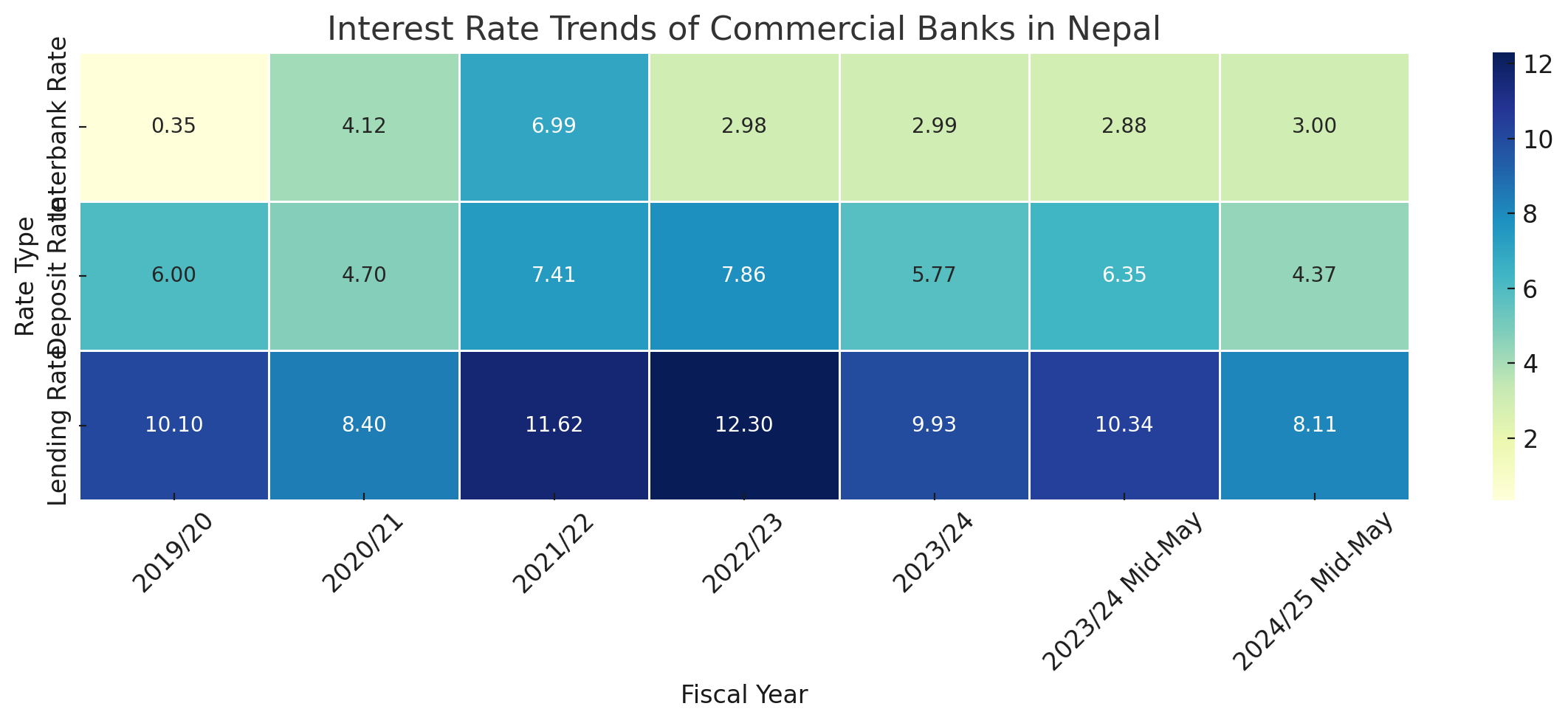
Interest Rate1 min readInterest Rate Trends of Nepal’s Commercial Banks Show Mixed Movements in 2024/25Nepal's commercial banks have witnessed declining interest rates in mid-May 2024/25. The weighted average deposit rate dropped to 4.37% from 6.35% last year, and the lending rate fell to 8.11% from 10.34%. The interbank rate slightly increased to 3.00%. This trend reflects easing liquidity pressure and a softer monetary stance by Nepal Rastra Bank, potentially boosting credit flow and economic growth.Sandeep Chaudhary·12 Jun, 2025
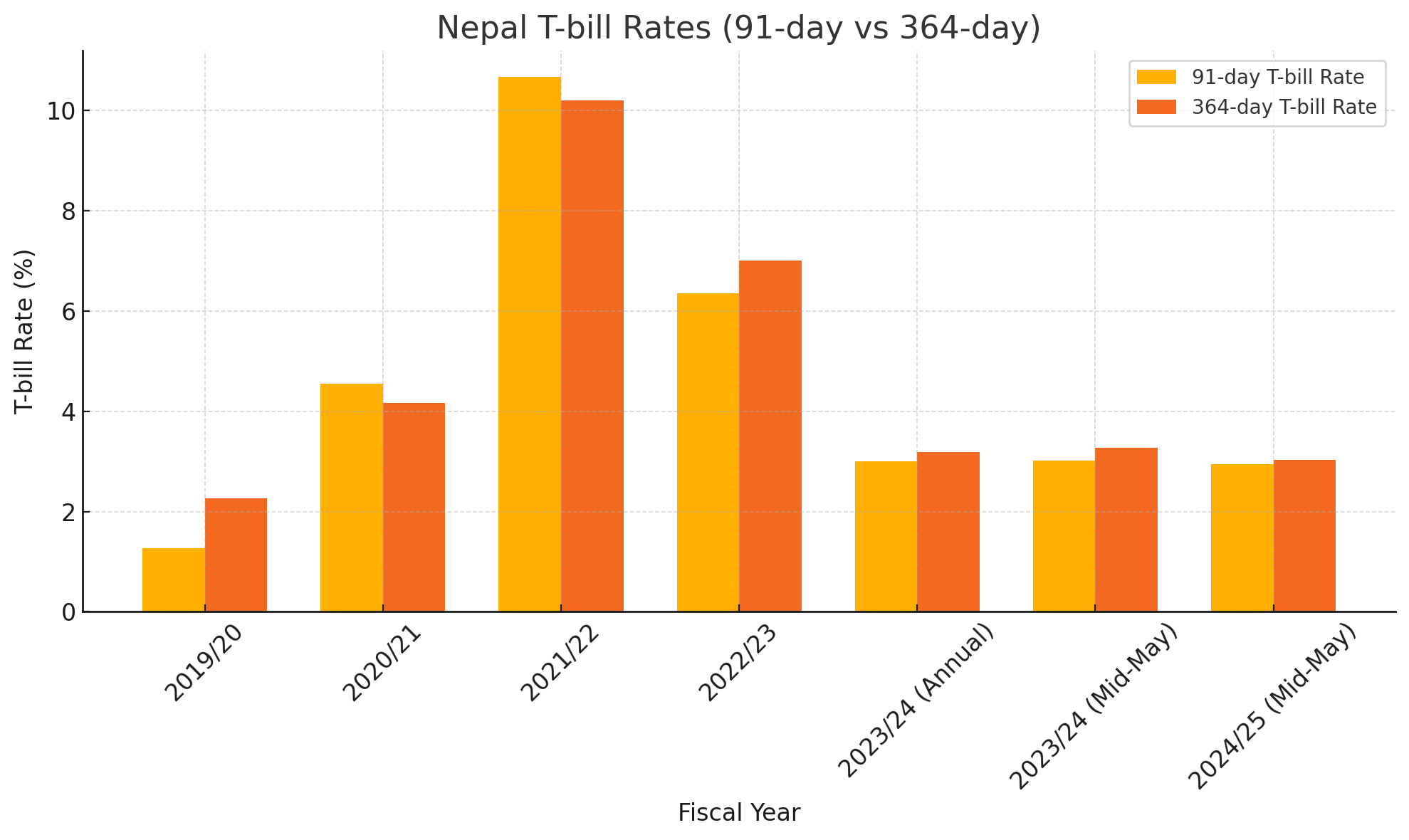
T-Bills1 min readNepal T-Bills Rates Show Continued Decline in 2024 Amid Easing Liquidity PressureNepal's Treasury bill (T-bill) rates have declined in FY 2024/25, reflecting improved liquidity and stable monetary policy. The 91-day T-bill rate dropped to 2.95% and the 364-day rate to 3.03% as of mid-May 2025. This continues a downward trend from the peak rates seen in FY 2021/22. The fall in T-bill rates indicates easing inflation pressures, reduced government borrowing costs, and a stable financial outlook.Sandeep Chaudhary·12 Jun, 2025
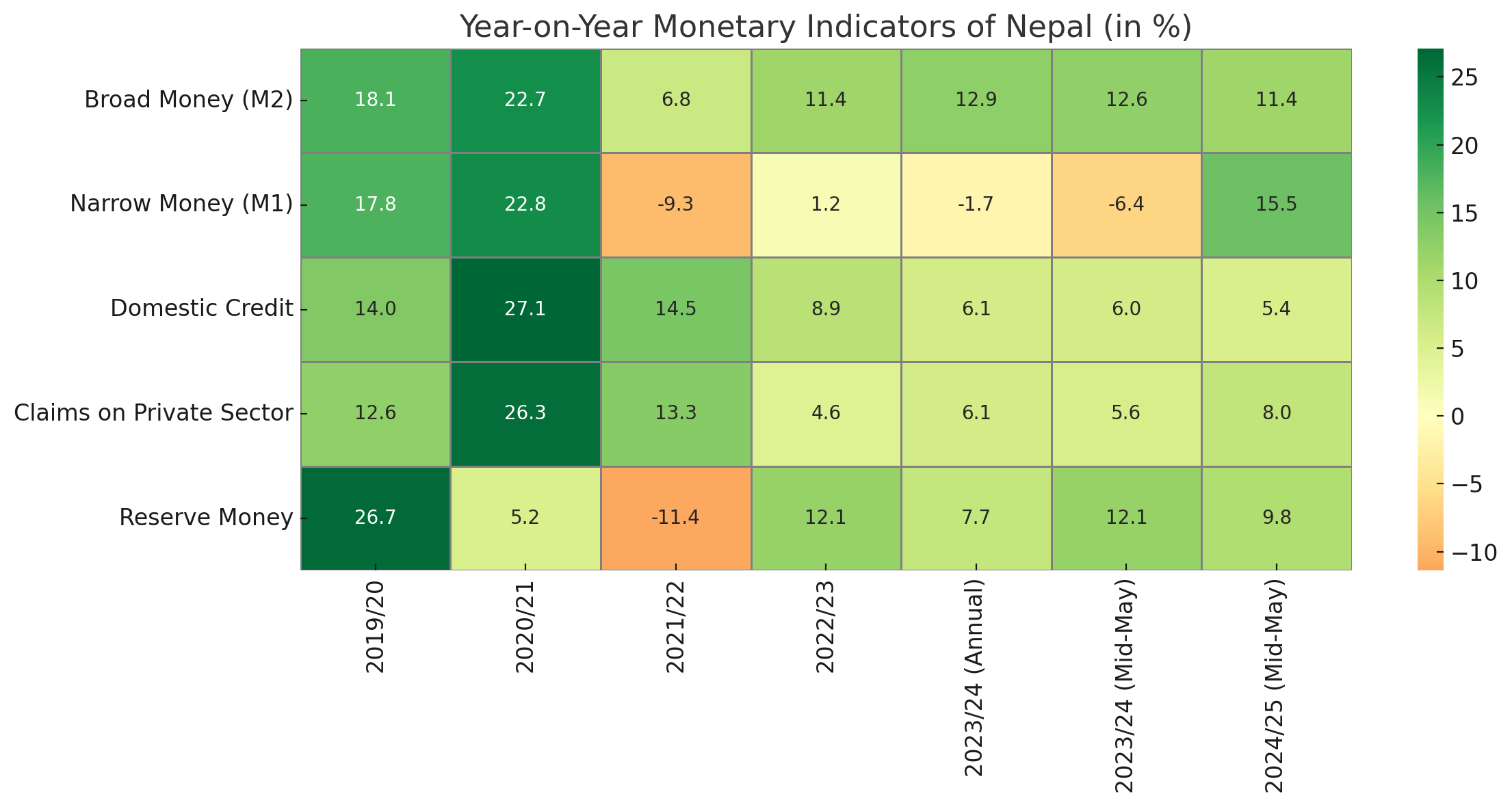
Monetary Indicators1 min readMonetary Indicators Reflect Mixed Trends in Nepal's Economy as of Mid-May FY 2024/25Nepal’s monetary indicators as of mid-May FY 2024/25 show a stable liquidity environment with Broad Money (M2) growth at 11.4% and a sharp rebound in Narrow Money (M1) to 15.5%, indicating rising cash demand. Domestic credit growth slowed to 5.4%, while private sector credit rose to 8.0%, reflecting cautious optimism. Reserve Money increased by 9.8%, signaling active liquidity management by Nepal Rastra Bank. These trends suggest a mixed but improving outlook for Nepal’s economy.Sandeep Chaudhary·12 Jun, 2025
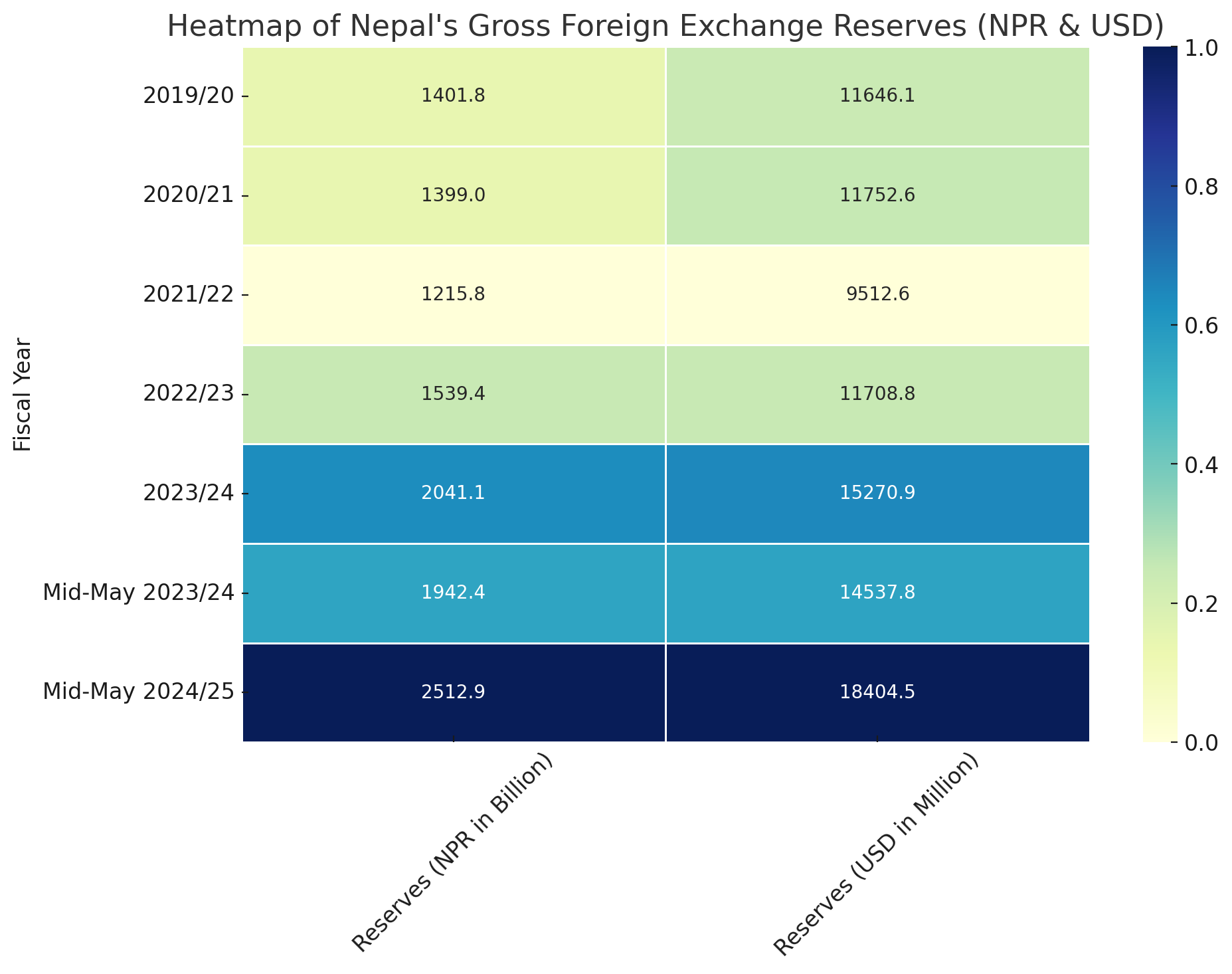
Foreign Exchange1 min readNepal's Foreign Exchange Reserves Surge to Historic Highs in Mid-May FY 2024/25Nepal’s foreign exchange reserves reached a record high of Rs. 2,512.9 billion (USD 18.40 billion) by mid-May 2024/25, showing strong growth from the previous year. This 29% rise in NPR terms and 25% in USD reflects improved remittance inflows, controlled imports, and sound monetary policy. After a dip in FY 2021/22, reserves have steadily grown, strengthening Nepal’s economic stability and external sector resilience.Sandeep Chaudhary·12 Jun, 2025
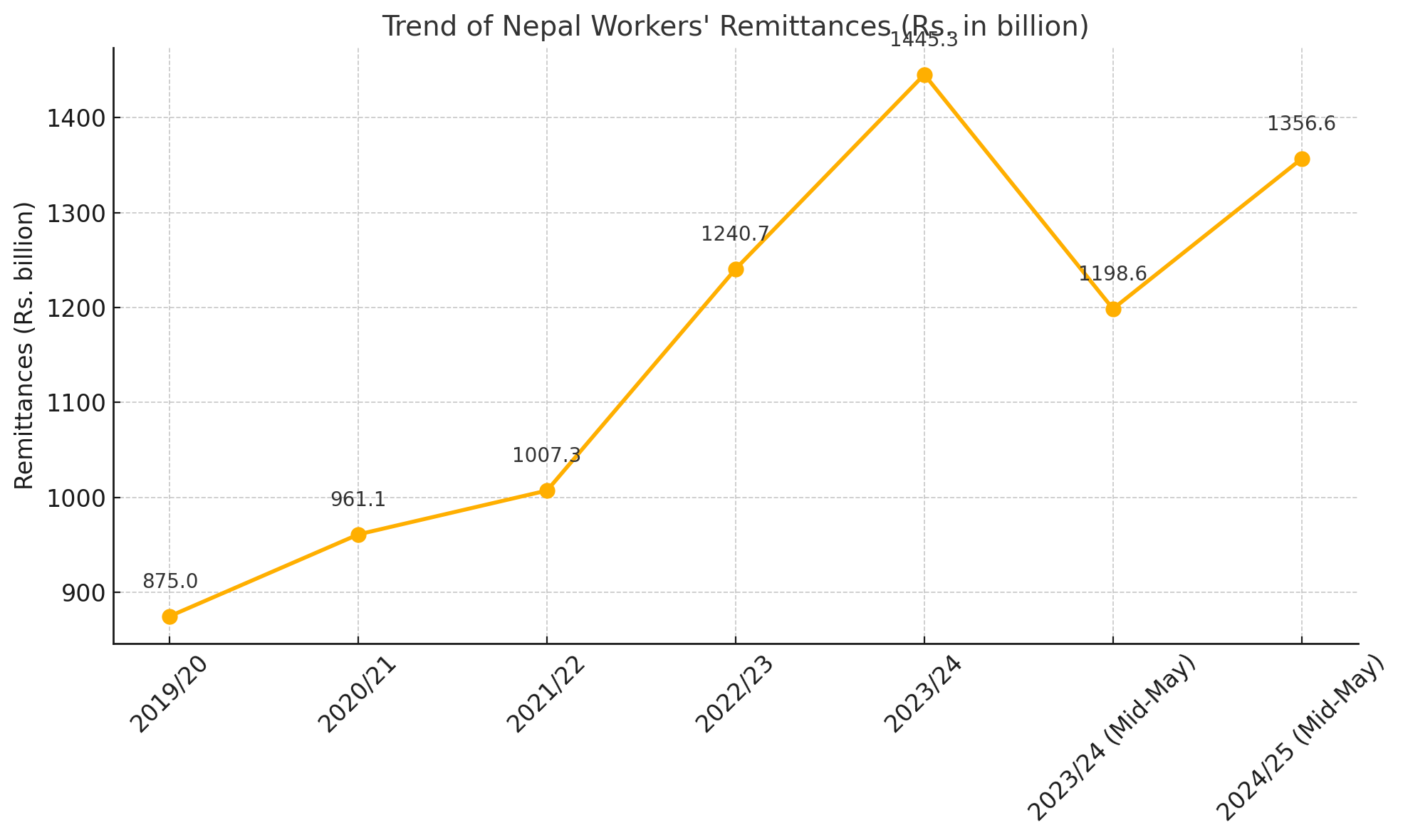
Remittance 1 min readRemittance Growth Boosts Nepal's Economy in FY 2024/25Nepal's workers' remittances reached NPR 1,356.6 billion by mid-May FY 2024/25, up from NPR 1,198.6 billion in the same period last year. Annual remittance inflows have steadily grown from NPR 875 billion in 2019/20 to a record NPR 1,445.3 billion in 2023/24. This upward trend strengthens Nepal’s economy, supports foreign reserves, and boosts household income. With continued growth, remittances are set to remain a key pillar of Nepal’s financial stabilitySandeep Chaudhary·12 Jun, 2025
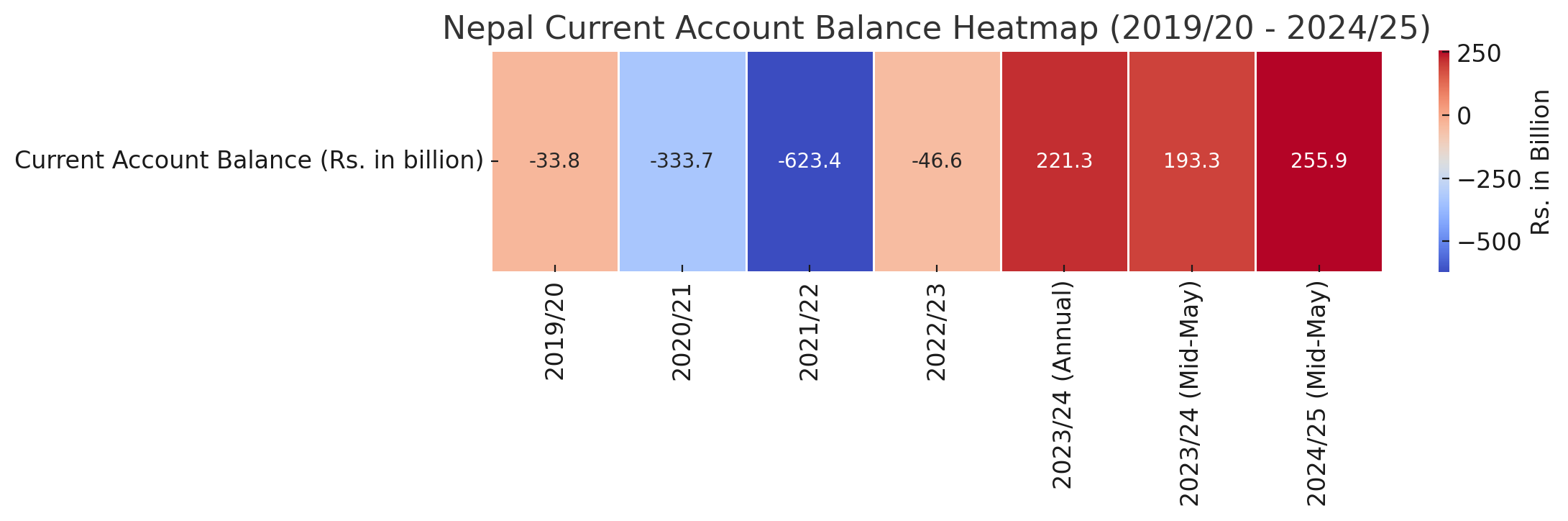
Current Account Balance1 min readNepal's Current Account Balance Turns Positive, Showing Strong RecoveryNepal's current account balance has shown a strong recovery, turning from a record deficit of Rs. -623.4 billion in 2021/22 to a surplus of Rs. 255.9 billion by mid-May 2024/25. This positive trend reflects increased remittance inflows, reduced imports, and improved tourism income. The fiscal year 2023/24 also recorded a surplus of Rs. 221.3 billion, confirming sustained external sector stability. Nepal's improving current account position signals strong macroeconomic health and boosts investor confidence.Sandeep Chaudhary·12 Jun, 2025
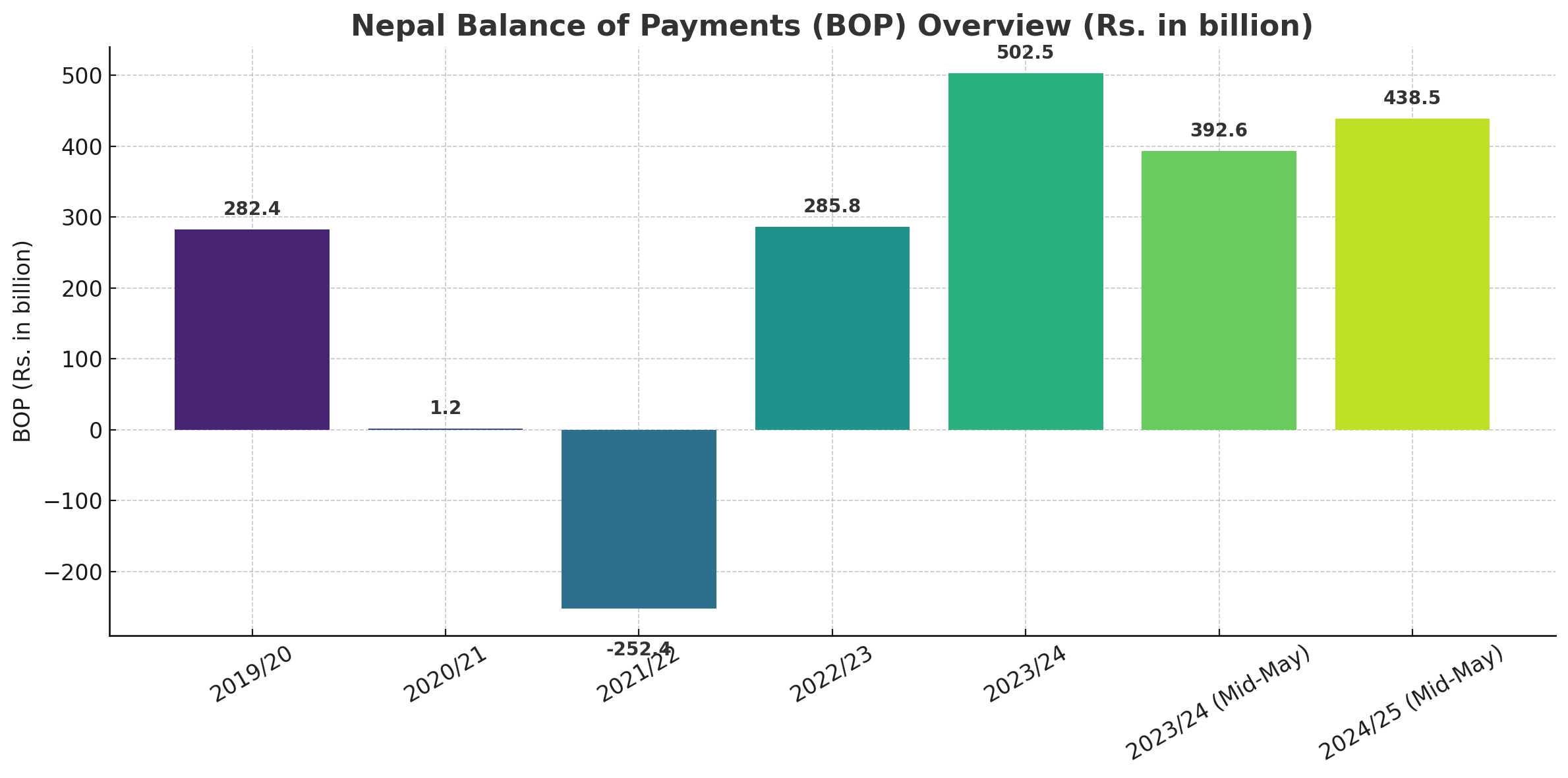
Balance of Payments1 min readNepal's Balance of Payments Shows Strong Recovery Despite Past VolatilityNepal's Balance of Payments (BoP) shows strong recovery with a Rs. 438.5 billion surplus by mid-May FY 2024/25, up from Rs. 392.6 billion in FY 2023/24. After a severe deficit of Rs. 252.4 billion in FY 2021/22, Nepal saw surpluses in FY 2022/23 (Rs. 285.8B) and FY 2023/24 (Rs. 502.5B). Improved remittances, controlled imports, and tourism revival contributed to this positive trend. This indicates strengthened macroeconomic stability and better foreign reserve management in Nepal.Sandeep Chaudhary·12 Jun, 2025
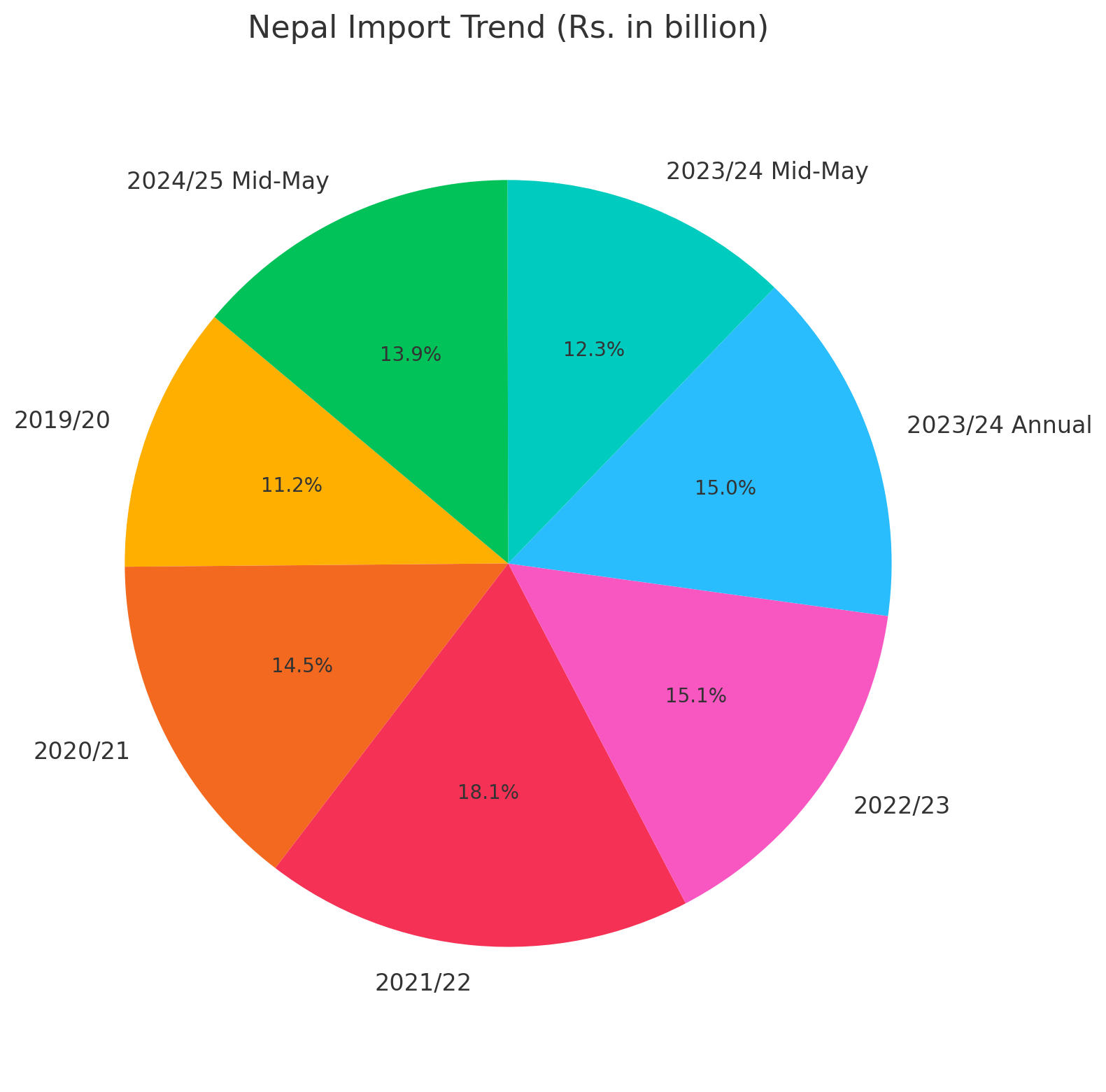
Import1 min readNepal’s Import Trend Shows Recovery in FY 2024/25Nepal's import trends have shown notable changes over recent years. Imports peaked at Rs. 1920.4 billion in FY 2021/22 but declined to Rs. 1593.0 billion in FY 2023/24 due to tighter policies. However, data up to mid-May 2025 shows a recovery, with imports rising to Rs. 1474.2 billion, compared to Rs. 1303.4 billion during the same period last year. This growth indicates improved trade activities and relaxed restrictions. The import pattern reflects Nepal’s shifting economic strategy and external trade dynamics. Keep track of Nepal’s latest import data and fiscal trends for 2025 for informed economic insights.Sandeep Chaudhary·12 Jun, 2025
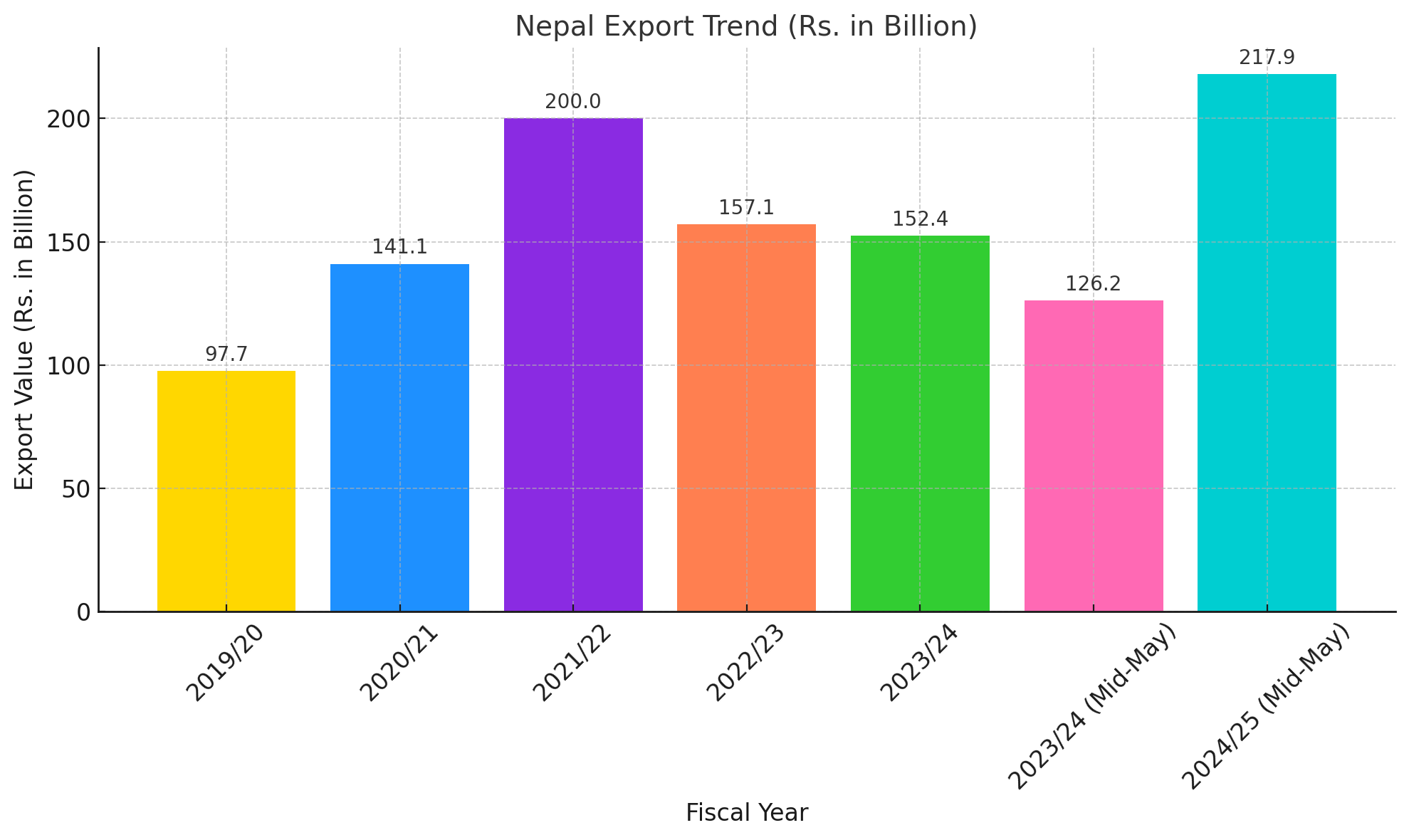
Export1 min readNepal’s Export Trends Show Strong Mid-Year Recovery in FY 2024/25Nepal's export performance has shown strong recovery in FY 2024/25, reaching Rs. 217.9 billion by mid-May—surpassing the annual totals of the previous two fiscal years. After peaking at Rs. 200 billion in FY 2021/22 and dipping in FY 2022/23 and FY 2023/24, this rebound signals renewed momentum in foreign trade. Key export drivers include garments, carpets, and herbal products. The data reflects improved trade policies, increased global demand, and stronger production capacity.Sandeep Chaudhary·12 Jun, 2025
Inflation1 min readNepal’s Inflation, Wholesale, and Wage Trends Show Mixed Signals in 2024/25Nepal's inflation rate dropped to 2.77% y-o-y by mid-May 2025, with food inflation sharply falling to 1.52%. The Consumer Price Index (CPI) and Wholesale Price Index (WPI) show a downward trend, indicating easing price pressures. Non-food inflation remained stable at 3.45%, while wage growth slowed significantly, with the Salary and Wage Rate Index showing only 3.56% growth in 2023/24. These trends suggest improved price stability but also highlight concerns over weak wage momentum in Nepal's economy.Sandeep Chaudhary·12 Jun, 2025