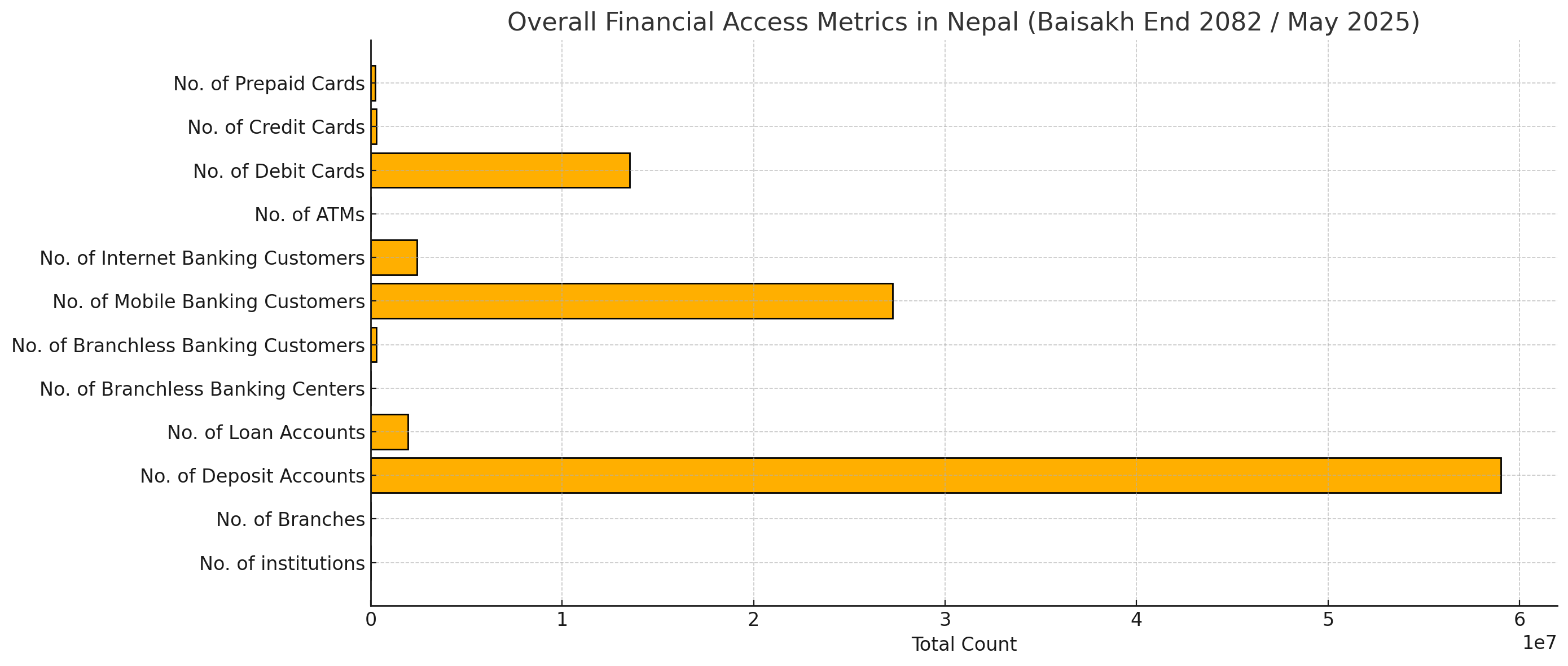
Financial Access1 min readNepal’s Expanding Financial Access Landscape as of Baisakh End 2082 Nepal's banking sector has expanded to 54 institutions with 6,507 branches and over 5.9 crore deposit accounts. Loan accounts total 19.53 lakh, and mobile banking users have surged to 2.72 crore. ATMs now number 5,266 nationwide. Debit card usage exceeds 1.35 crore, while internet banking users top 24 lakh. Class "A" commercial banks dominate in all metrics, showing strong digital and physical outreach. The data reflects Nepal’s growing financial inclusion and digital banking adoption.Sandeep Chaudhary·13 Jun, 2025
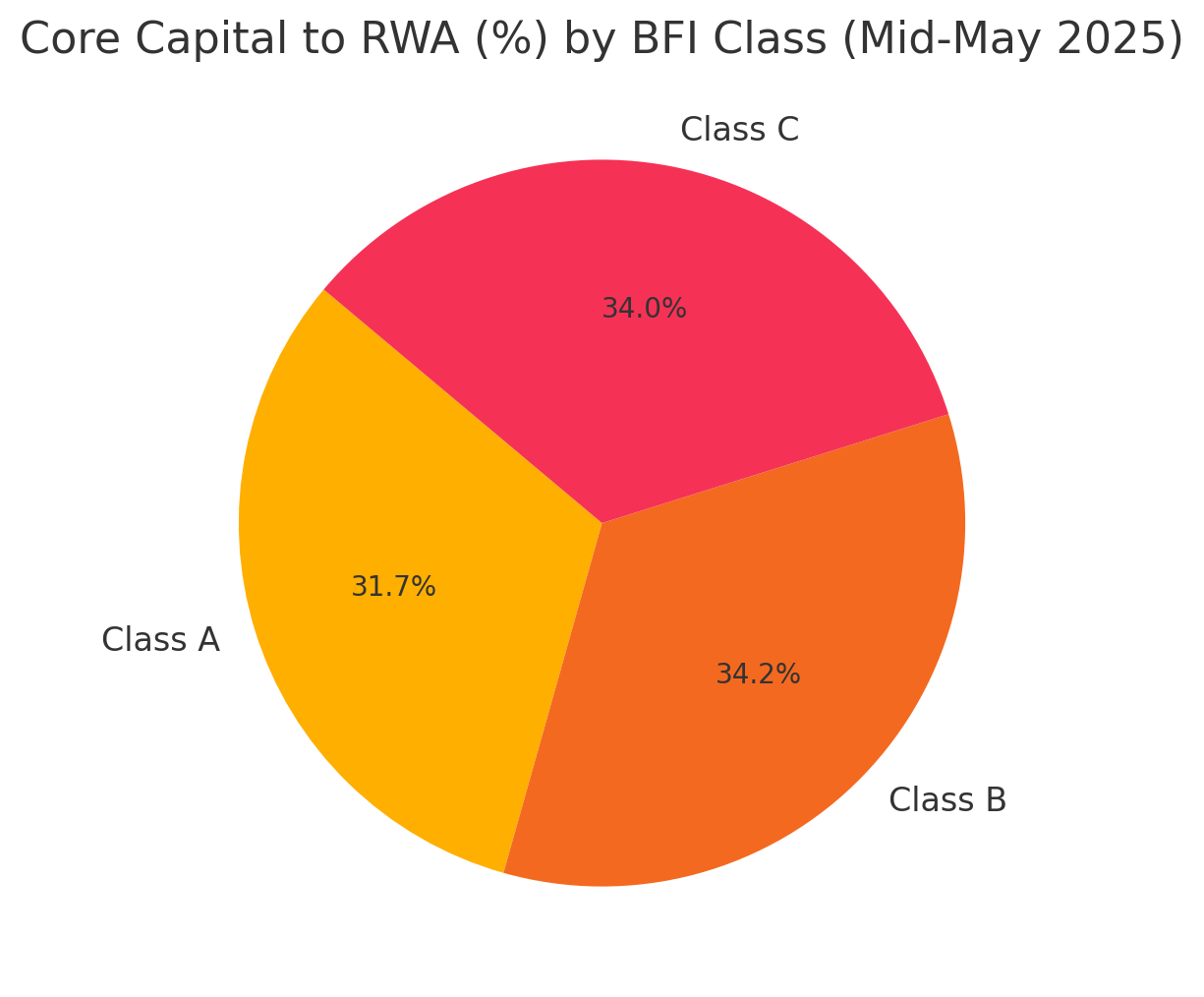
Weighted Assets1 min readCapital Adequacy of Nepalese BFIs Shows Stable Health as of Mid-May 2025As of Mid-May 2025 (Baisakh End, 2082), Nepal’s Banks and Financial Institutions (BFIs) maintain strong capital adequacy. The overall Core Capital to Risk-Weighted Assets (RWA) stands at 9.57%, while the Total Capital to RWA is 12.42%. Class "B" development banks lead with the highest ratios, reflecting sound financial health and compliance with regulatory norms. These figures indicate Nepal’s banking sector is well-capitalized and resilient against financial risks.Sandeep Chaudhary·13 Jun, 2025
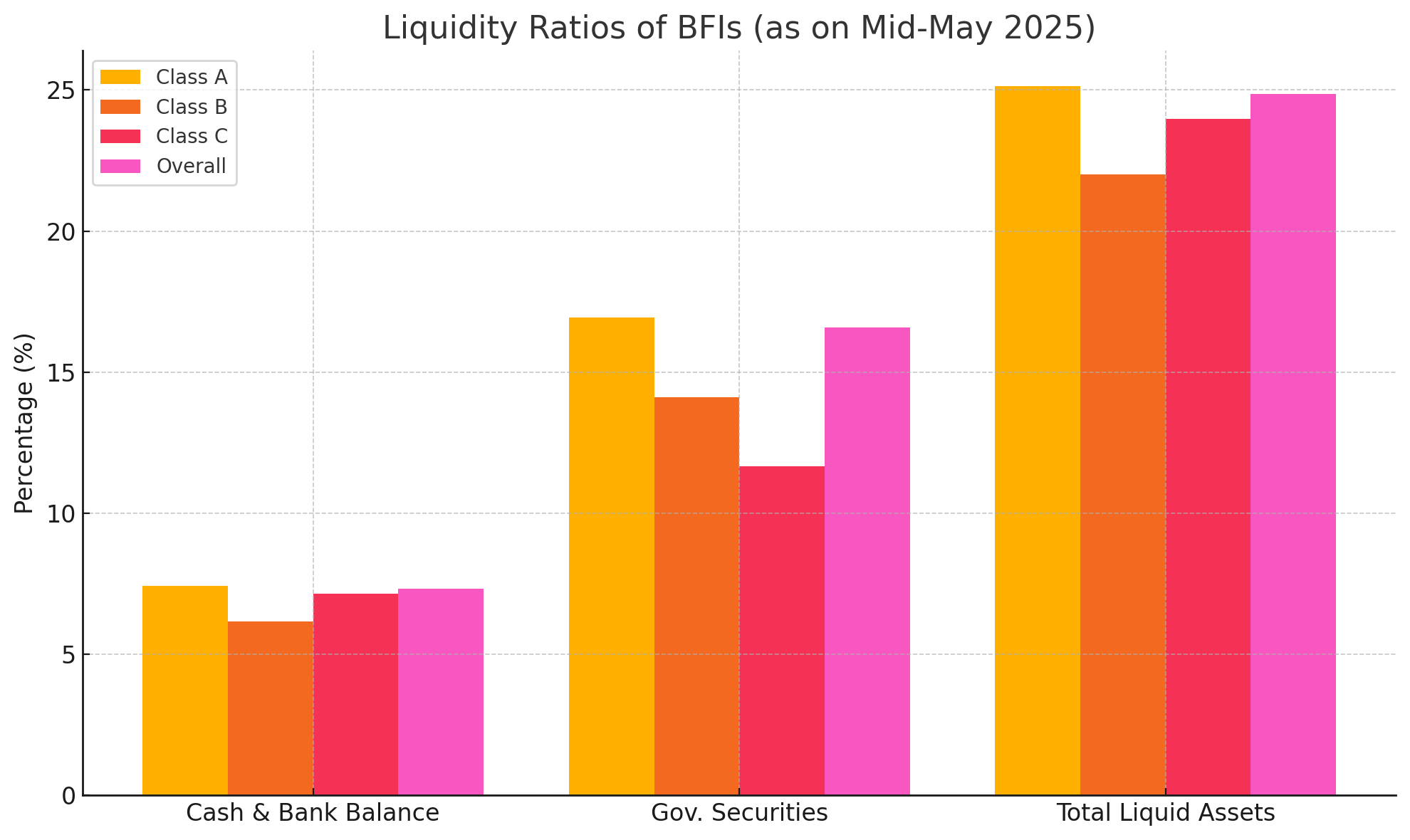
Liquidity1 min readLiquidity Position of Nepal’s BFIs as of Baisakh End, 2082As of Baisakh End, 2082 (Mid-May 2025), Nepal’s BFIs reported a healthy liquidity position. Overall Cash & Bank Balance to Total Deposit stood at 7.32%, Investment in Government Securities at 16.59%, and Total Liquid Assets at 24.85%. Class "A" banks showed stronger liquidity compared to Class "B" and "C". This indicates stable short-term financial health across the banking sector.Sandeep Chaudhary·13 Jun, 2025
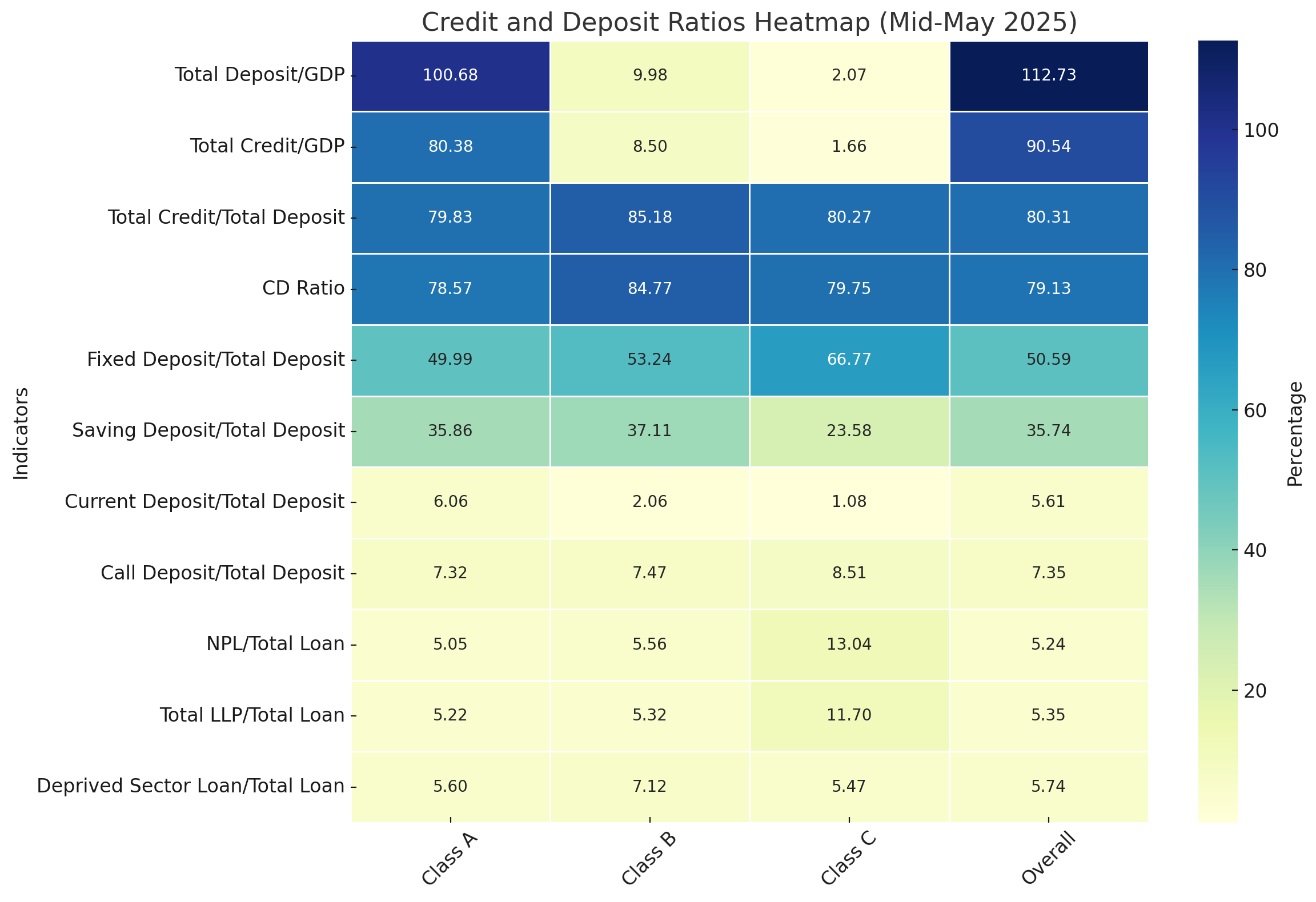
Credit and Deposit2 min readNepal Bank Credit and Deposit Ratio Analysis 2025: NPL, CD Ratio, and Financial HealthAs of Mid-May 2025 (Baisakh End 2082), Nepal's banking sector shows a strong Total Deposit to GDP ratio of 112.73%, with Class "A" banks dominating. The Total Credit to GDP stands at 90.54%, reflecting solid lending growth. The overall Credit to Deposit ratio is balanced at 80.31%. Fixed deposits make up 50.59% of total deposits, while Saving Deposits hold 35.74% share. Non-Performing Loans (NPL) average 5.24%, but rise to 13.04% in Class "C" institutions. Deprived Sector Loans account for 5.74% of total lending. These indicators highlight stable financial growth but call for improved asset quality in lower-tier banks.Sandeep Chaudhary·13 Jun, 2025
Top2 min readNepal Stock Exchange Sees Shift in Sectoral Dynamics as Listed Companies Reach 271Nepal Stock Exchange Sees Shift in Sectoral Dynamics as Listed Companies Reach 271 As of the end of Baisakh 2081/82, the Nepal Stock Exchange (NEPSE) has 271 listed companies—a significant increase from just 66 in FY 2050/51. While the quantity of listed firms shows steady growth, a closer look at sectoral composition reveals a dramatic shift in the structure and priorities of Nepal's capital market over the past three decades.Dipesh Ghimire·13 Jun, 2025
Top3 min readMargin Trading in Nepal: Analysis, Regional Comparisons, and Implementation RoadmapMargin Trading in Nepal: Analysis, Regional Comparisons, and Implementation Roadmap Margin trading allows investors to purchase securities by paying a part of the total cost (margin) while borrowing the remaining amount from a broker. Despite being introduced in Nepal nearly a decade ago, it remains largely non-operational due to regulatory, legal, and structural challenges. This article dives deep into the status of margin trading in Nepal, compares it with regional practices, and outlines a roadmap for effective implementation.Dipesh Ghimire·13 Jun, 2025
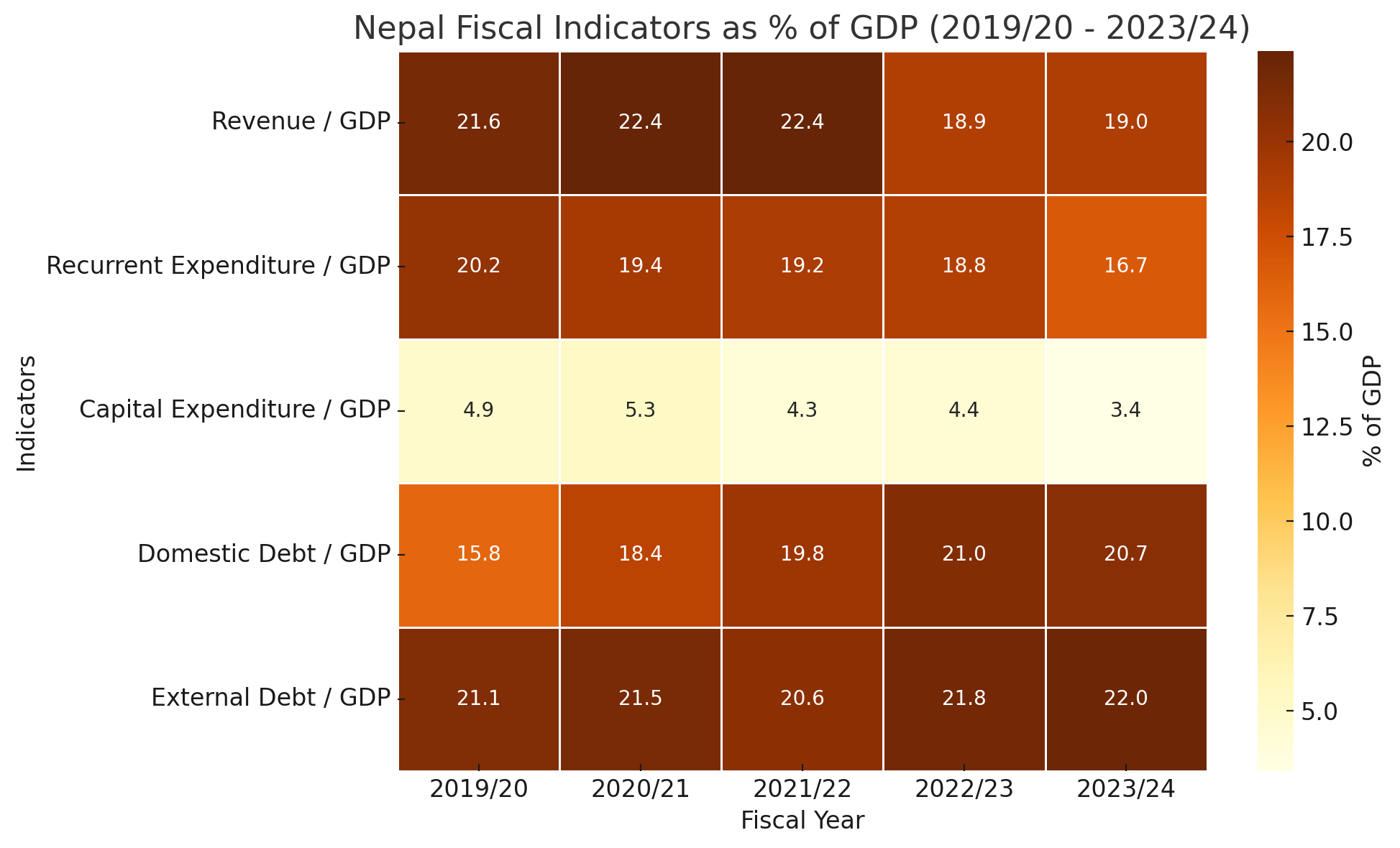
Indicators1 min readNepal’s Fiscal Indicators Show Mixed Trends in FY 2023/24Nepal’s FY 2023/24 fiscal data shows a slight increase in revenue-to-GDP (19.0%) and a sharp decline in recurrent expenditure-to-GDP (16.7%), indicating cost-cutting measures. Capital expenditure dropped to a five-year low of 3.4%, signaling weak infrastructure investment. Domestic debt slightly decreased to 20.7% of GDP, while external debt rose to 22.0%, the highest in five years. Overall, the fiscal trend reflects stabilization in revenue but declining development spending and rising external debt risks.Sandeep Chaudhary·12 Jun, 2025
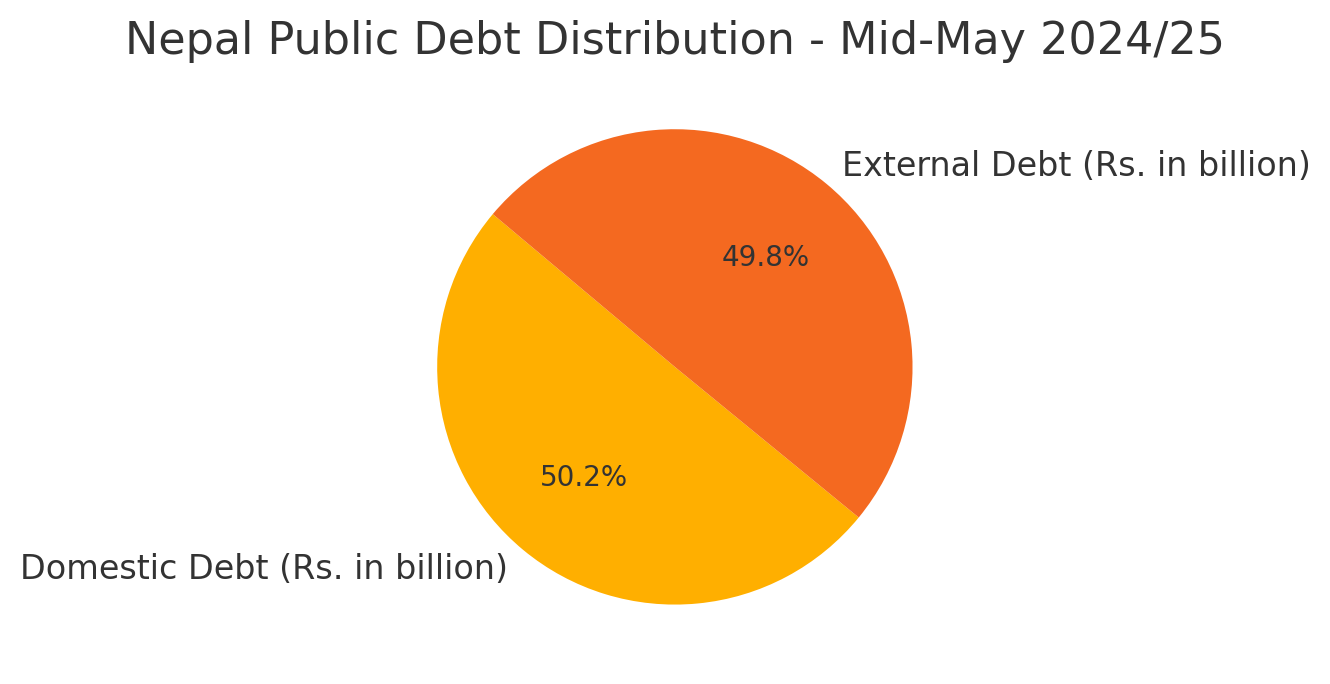
Public Debt1 min readNepal’s Public Debt Nears Rs. 2.5 Trillion: Rising Domestic and External Borrowing Highlight Fiscal ChallengesNepal’s public debt has surged to nearly Rs. 2.52 trillion by mid-May 2024/25, with domestic debt reaching Rs. 1262.8 billion and external debt at Rs. 1253.2 billion. This marks a consistent rise in both internal and foreign borrowing since FY 2019/20. The growing debt burden highlights fiscal pressure on the government and the need for improved revenue generation and sustainable debt management policies.Sandeep Chaudhary·12 Jun, 2025
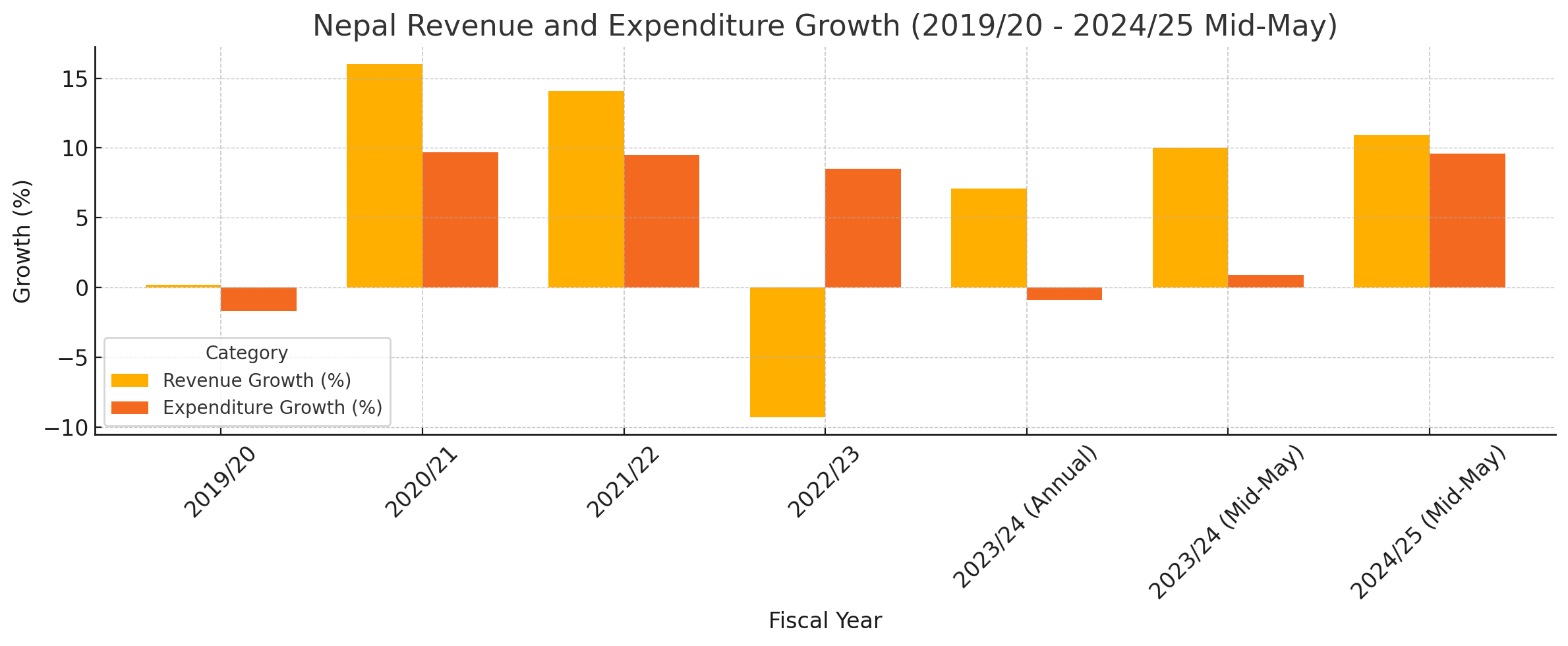
Revenue1 min readNepal’s Fiscal Dynamics Reflect Gradual Recovery: Revenue and Expenditure Growth TrendsNepal’s revenue growth rebounded to 10.9% by mid-May 2025 after a sharp drop in 2022/23, reflecting improved tax collection and economic activity. Expenditure growth also recovered to 9.6%, signaling stronger budget execution. The overall fiscal trend indicates a positive outlook for Nepal's economy, supported by rising government revenues and revitalized public spending.Sandeep Chaudhary·12 Jun, 2025
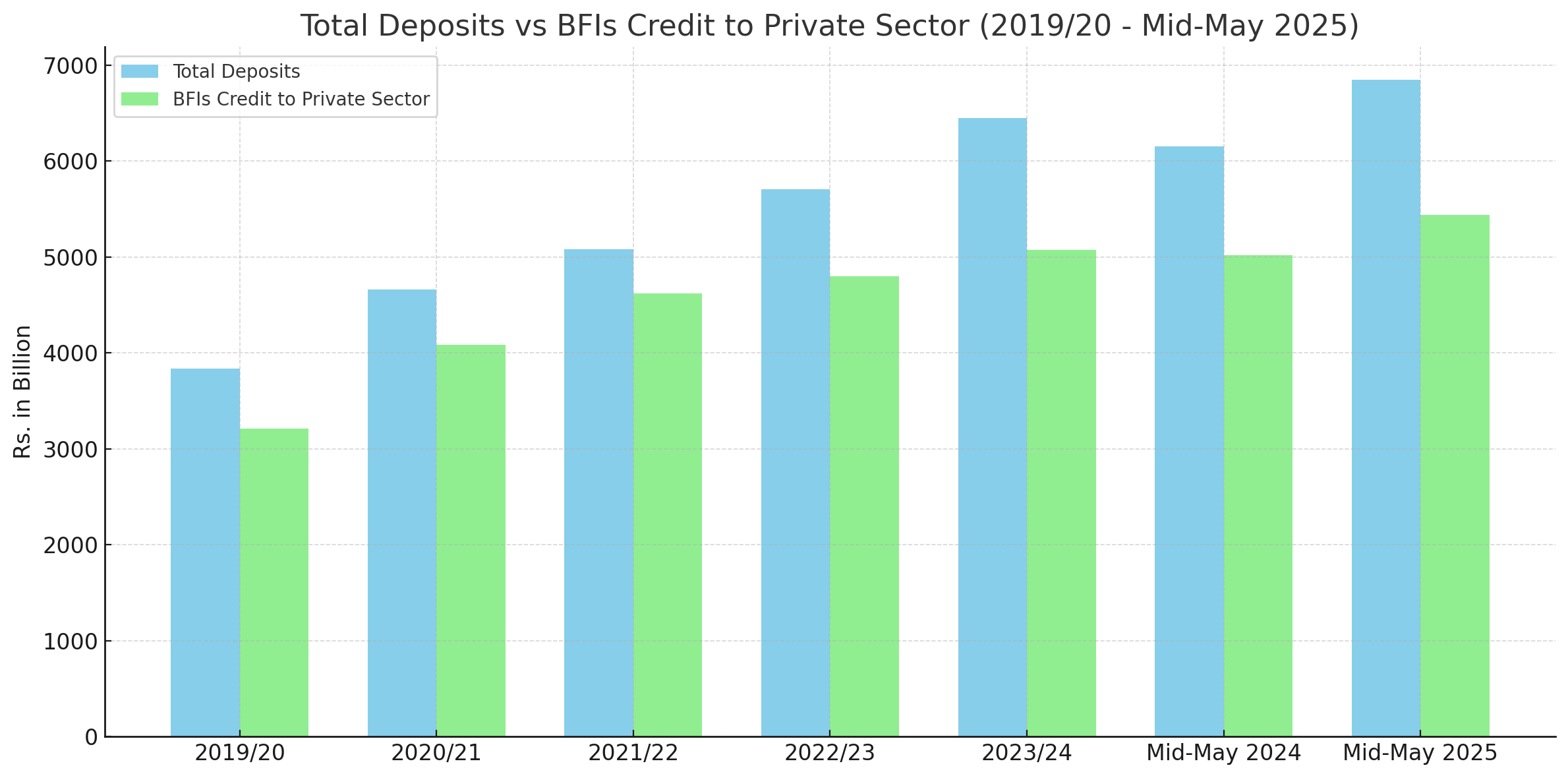
Deposits1 min readRise in Deposits and Private Sector Credit Signals Recovery in Nepal’s Financial SectorNepal's total bank deposits surged to Rs. 6852.2 billion and BFIs' credit to the private sector reached Rs. 5442.6 billion by mid-May 2025, indicating strong financial sector growth. Rising deposits and expanding credit signal increased liquidity, economic recovery, and growing investor confidence. The data highlights Nepal’s improving banking performance and private sector lending momentum.Sandeep Chaudhary·12 Jun, 2025