Top
Latest
Strengthening Financial Literacy in Nepal's Education System
Strengthening Financial Literacy in Nepal's Education System Nepal’s evolving education system is gradually embracing the importance of financial literacy, especially at the secondary level. While basic mathematical skills have long been embedded in the foundational curriculum, financial education is now increasingly being recognized as essential for both personal and national economic development. Currently, Nepal’s curriculum incorporates financial concepts in the form of optional economics subjects for Grades 9 and 10, categorized under Social Science. These courses introduce students to key economic principles such as consumption, production, exchange, and distribution, helping them understand how economic units make rational decisions using limited resources. Moreover, the curriculum aims to equip students with the ability to analyze the country's current economic conditions, make sound personal and business decisions, forecast future trends, and develop respect for labor and responsible financial behavior.
Dipesh Ghimire
2 min read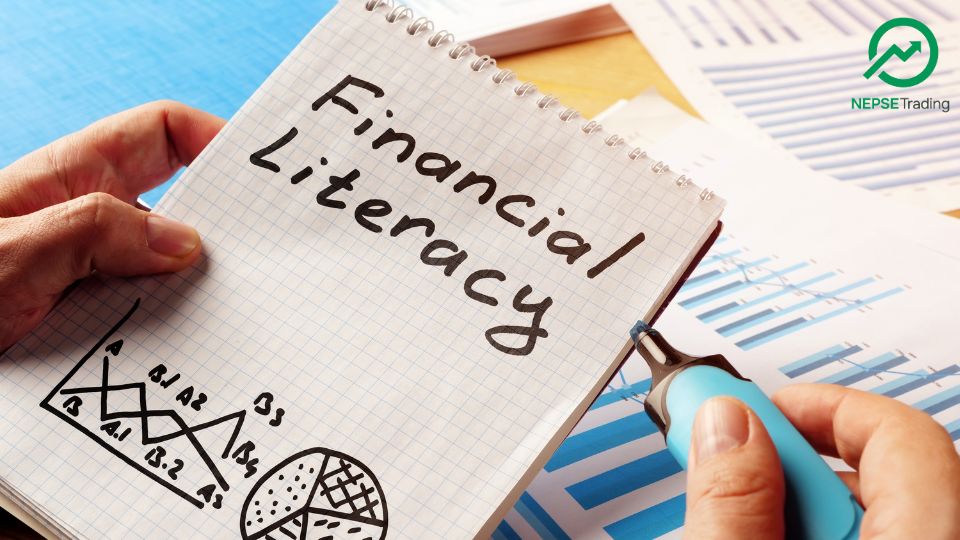
Nepal’s evolving education system is gradually embracing the importance of financial literacy, especially at the secondary level. While basic mathematical skills have long been embedded in the foundational curriculum, financial education is now increasingly being recognized as essential for both personal and national economic development.
Currently, Nepal’s curriculum incorporates financial concepts in the form of optional economics subjects for Grades 9 and 10, categorized under Social Science. These courses introduce students to key economic principles such as consumption, production, exchange, and distribution, helping them understand how economic units make rational decisions using limited resources. Moreover, the curriculum aims to equip students with the ability to analyze the country's current economic conditions, make sound personal and business decisions, forecast future trends, and develop respect for labor and responsible financial behavior.
At the higher education level, financial knowledge is imparted through dedicated faculties such as Management and Humanities & Social Sciences. These streams offer more specialized economics and finance courses, fostering deeper understanding and skills among students pursuing careers in finance, business, or policy-making.
In addition to the formal curriculum, financial literacy in Nepal is also promoted by financial regulators, banks, financial institutions, and NGOs. These stakeholders often organize awareness campaigns and training programs, though these efforts remain sporadic and event-based. While such initiatives help spark initial interest or “hunger” for financial knowledge, they fall short of providing the comprehensive understanding needed for long-term behavioral change.
Experts argue that unless financial education is made a mandatory and integral part of school-level learning, its impact will remain limited. Embedding financial literacy as a core subject—not merely optional—can ensure that all students, regardless of their future career paths, are equipped to handle personal and family finances wisely. In an era where financial decisions—from saving and investing to budgeting and credit use—are central to daily life, a population lacking in financial literacy is at risk of poor economic choices.
The broader interpretation is clear: financial literacy is not just a skill; it is a foundation for economic empowerment and social mobility. By integrating structured, age-appropriate financial education into Nepal’s school curriculum from an early stage, the nation can produce financially responsible citizens capable of contributing to the country’s economic well-being.
As Nepal moves toward digital banking, rising entrepreneurship, and increasing access to global markets, the urgency to institutionalize financial literacy has never been higher. A financially educated society is a prerequisite for sustainable economic growth—and the time to act is now.
Advertisement
Written by
Dipesh Ghimire