Top2 min readSleeping Positions Reflect Trading Lifestyles in Viral Market IllustrationSleeping Positions Reflect Trading Lifestyles in Viral Market Illustration A humorous yet insightful illustration titled “Sleeping Positions of Different Trading Styles” is gaining popularity across online trading communities for its creative depiction of how various trading approaches affect the daily lives and mental states of investors. Through simple cartoon imagery, the graphic connects trading styles with sleep patterns, highlighting the emotional and psychological impact of market participation. The image presents four characters, each representing a distinct type of trader: Swing Trader, Position Trader, Day Trader, and Scalper. Each figure is shown in a different sleeping posture, symbolizing their level of stress, confidence, and exposure to market risk.Dipesh Ghimire·18 Feb, 2026
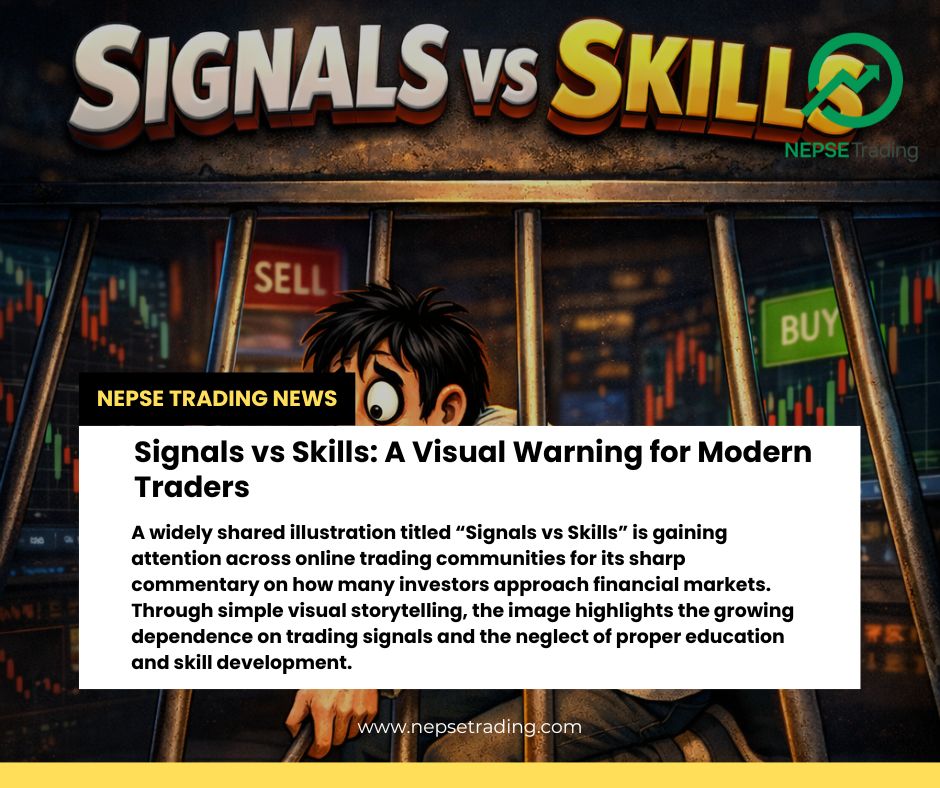
Top2 min readSignals vs Skills: A Visual Warning for Modern TradersSignals vs Skills: A Visual Warning for Modern Traders A widely shared illustration titled “Signals vs Skills” is gaining attention across online trading communities for its sharp commentary on how many investors approach financial markets. Through simple visual storytelling, the image highlights the growing dependence on trading signals and the neglect of proper education and skill development.Dipesh Ghimire·18 Feb, 2026
Top2 min readFrom Confusion to Clarity: The Journey of a Trader Toward MasteryFrom Confusion to Clarity: The Journey of a Trader Toward Mastery A symbolic illustration circulating among trading communities is drawing widespread attention for its powerful message about the realities of success in financial markets. The image portrays two traders at different stages of their journey, using a Rubik’s Cube as a metaphor for market complexity and personal growth. On one side of the illustration, a “New Trader” is shown climbing a steep mountain path, carrying a backpack and using a walking stick for support. His head is represented by an unsolved Rubik’s Cube, symbolizing confusion, uncertainty, and the overwhelming nature of financial markets for beginners. The climb reflects the early struggles traders face—learning technical analysis, managing emotions, coping with losses, and understanding market dynamics.Dipesh Ghimire·18 Feb, 2026
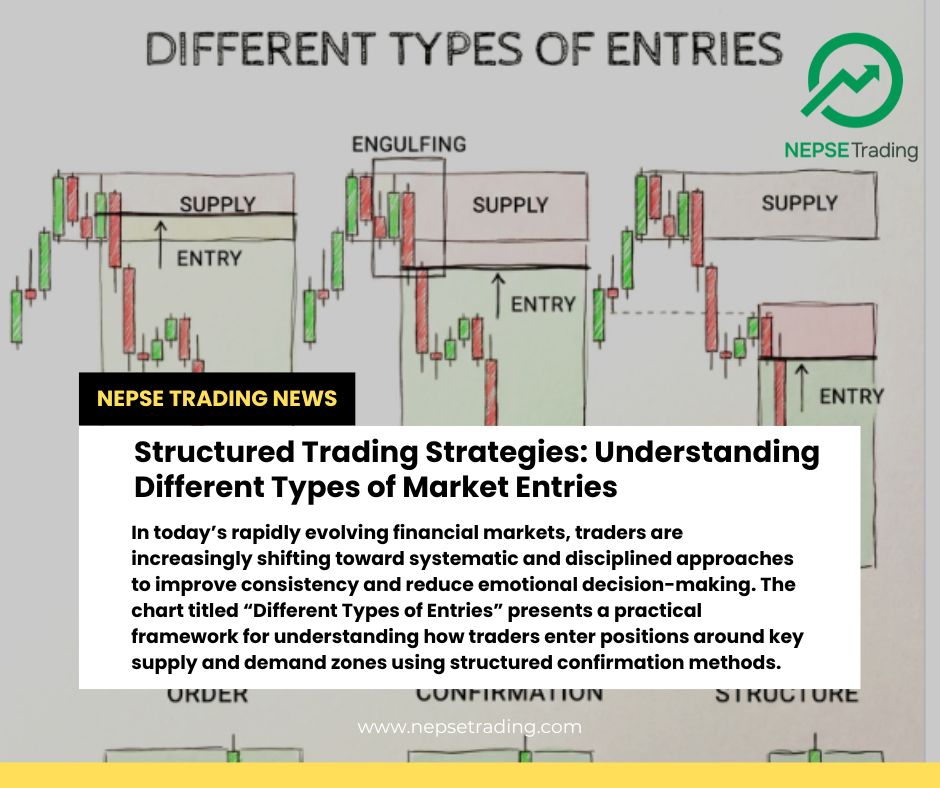
Top2 min readStructured Trading Strategies: Understanding Different Types of Market EntriesStructured Trading Strategies: Understanding Different Types of Market Entries In today’s rapidly evolving financial markets, traders are increasingly shifting toward systematic and disciplined approaches to improve consistency and reduce emotional decision-making. The chart titled “Different Types of Entries” presents a practical framework for understanding how traders enter positions around key supply and demand zones using structured confirmation methods.Dipesh Ghimire·18 Feb, 2026
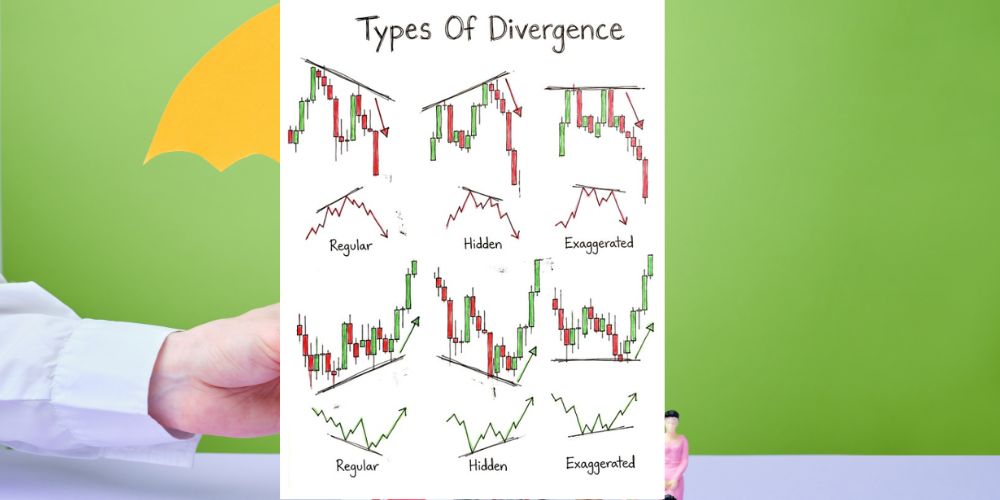
Top3 min readUnderstanding Types of Divergence in Trading: A Guide to Key IndicatorsUnderstanding Types of Divergence in Trading: A Guide to Key Indicators Divergence is a critical concept in technical analysis, widely used by traders to predict potential reversals or continuations in price trends. Divergence occurs when the price of an asset moves in the opposite direction of an indicator, typically a momentum oscillator like the Relative Strength Index (RSI) or Moving Average Convergence Divergence (MACD). The different types of divergence—Regular, Hidden, and Exaggerated—offer distinct insights into market behavior, helping traders make informed decisions based on the relationship between price movements and technical indicators.Dipesh Ghimire·17 Feb, 2026
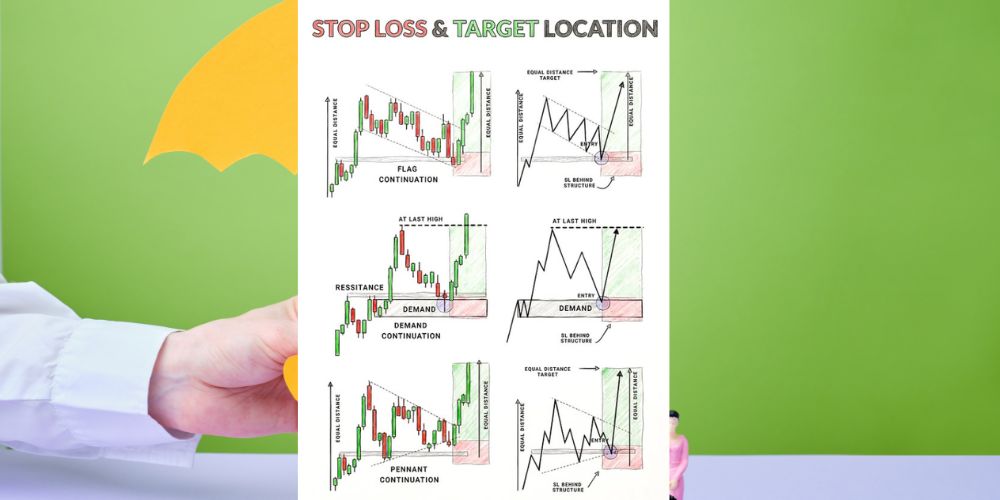
Top3 min readA Comprehensive Guide to Stop Loss and Target Locations in Trading: Insights on Managing Risk and RewardA Comprehensive Guide to Stop Loss and Target Locations in Trading: Insights on Managing Risk and Reward In the world of trading, one of the most critical aspects of risk management involves setting appropriate stop loss and target locations. The use of stop loss orders helps mitigate losses when the market moves unfavorably, while target orders set a clear exit strategy for when a trade hits a desired profit level. The latest trading guide emphasizes different strategies for setting stop loss and target locations, particularly focusing on various chart patterns and their associated risk-reward setups.Dipesh Ghimire·17 Feb, 2026
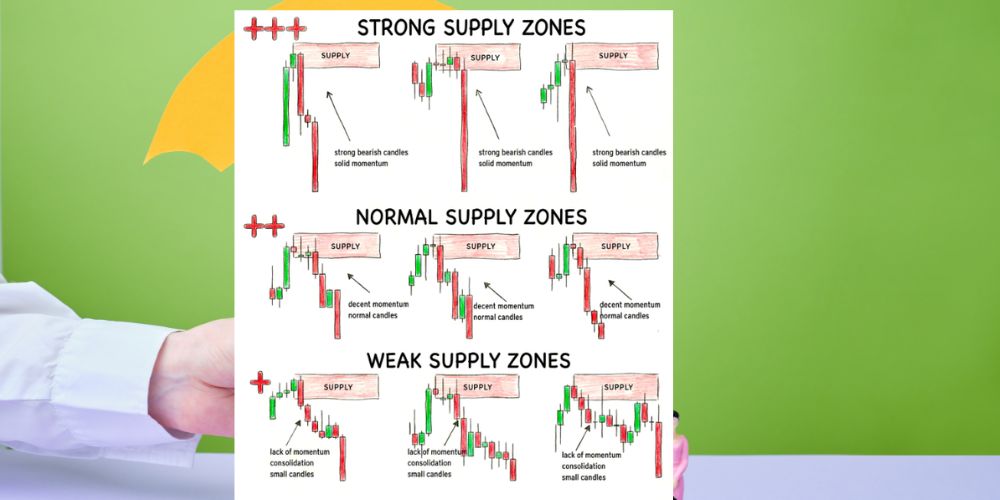
Top3 min readAnalysis of Supply Strength Zones in Market Trends: A Detailed BreakdownAnalysis of Supply Strength Zones in Market Trends: A Detailed Breakdown In recent market analysis, the concept of "Supply Strength Zones" has gained significant attention among traders. These zones, categorized into Strong Supply Zones, Normal Supply Zones, and Weak Supply Zones, provide valuable insights into the behavior of price action and are essential for predicting potential market movements. A deeper understanding of these zones can help investors make informed decisions and improve their trading strategies.Dipesh Ghimire·17 Feb, 2026
Top4 min readLife Insurance Companies Scale Back on Single Premium Policies, Amid Rising RisksLife Insurance Companies Scale Back on Single Premium Policies, Amid Rising Risks Life insurance companies in Nepal have significantly reduced their issuance of single premium policies, citing rising risks and unsustainable business practices. This reduction comes after a noticeable shift in policyholder behavior, with many individuals surrendering their policies prematurely or using them as collateral for loans, which has amplified risks for insurers. Decline in Single Premium Policies In the first six months of the current fiscal year 2082/83, life insurance companies issued only 7,946 single premium life insurance policies, representing a 23% decline compared to the same period last year when 10,309 such policies were issued. According to data from the Nepal Insurance Authority, the share of single premium policies within total policies issued has also decreased significantly. As of the end of Poush (December), single premium policies accounted for just 0.22% of the total policies issued, a notable drop from the 0.36% share in the previous fiscal year. A single premium life insurance policy is a type of insurance where the policyholder pays the full premium in a lump sum at the time of purchase. This policy had previously been promoted by insurance companies, offering a one-time commission of 6% to agents. However, this practice has been phased out due to the rising number of policy surrenders or the use of policies as collateral for loans, which have contributed to increasing risk for the insurers.Dipesh Ghimire·17 Feb, 2026
Top4 min readNepal's Banking Sector Sees Decline in Loan Interest Rates, Increasing Share Loan ActivityNepal's Banking Sector Sees Decline in Loan Interest Rates, Increasing Share Loan Activity In recent months, Nepal’s banking sector has witnessed a notable shift, as commercial banks and financial institutions began offering share loans at interest rates lower than the average market rates. With rates 1-2 percent lower than regular loan offerings, there has been a surge in enthusiasm among investors, particularly in the stock market. This development is expected to increase market transactions and provide easier access for investors, contributing to the overall growth of the market. Continuous Decline in Interest Rates Interest rates in the banking and financial sectors have been on a downward trajectory, primarily due to a combination of factors such as increased liquidity in financial institutions and a shrinking credit flow. According to the latest data, the weighted average interest rate for loans by commercial banks dropped to 7.12% as of last Poush (December), signaling a downward trend in lending rates. Additionally, with the decrease in the base rate set by banks, which now stands at 5%, the overall lending rates have followed suit, offering even more competitive borrowing conditions. Financial institutions have also lowered the premium rates added to the base rate, which were once as high as 5%. Currently, they are offering loans with just a 1-1.5% premium due to improved liquidity levels.Dipesh Ghimire·17 Feb, 2026
Top3 min readNepal Stock Exchange Needs Restructuring for Competitiveness and GrowthNepal Stock Exchange Needs Restructuring for Competitiveness and Growth The need to restructure Nepal Stock Exchange (NEPSE) for enhanced competitiveness has been a topic of discussion for decades. Several government reports over the years have pointed out the necessity of restructuring NEPSE to make it more business-oriented and competitive. A recent government budget presentation has reiterated this goal by including plans for NEPSE's restructuring. As part of this initiative, the government formed a committee under the leadership of Prakash Jung Thapa in 2022, tasked with studying and proposing recommendations for NEPSE's restructuring. The committee’s report focused on key areas such as capital increase, changes to the ownership structure, inclusion of strategic partners, and modifications to the board of directors. These proposals aim to transform NEPSE into a more efficient and competitive exchange.Dipesh Ghimire·17 Feb, 2026