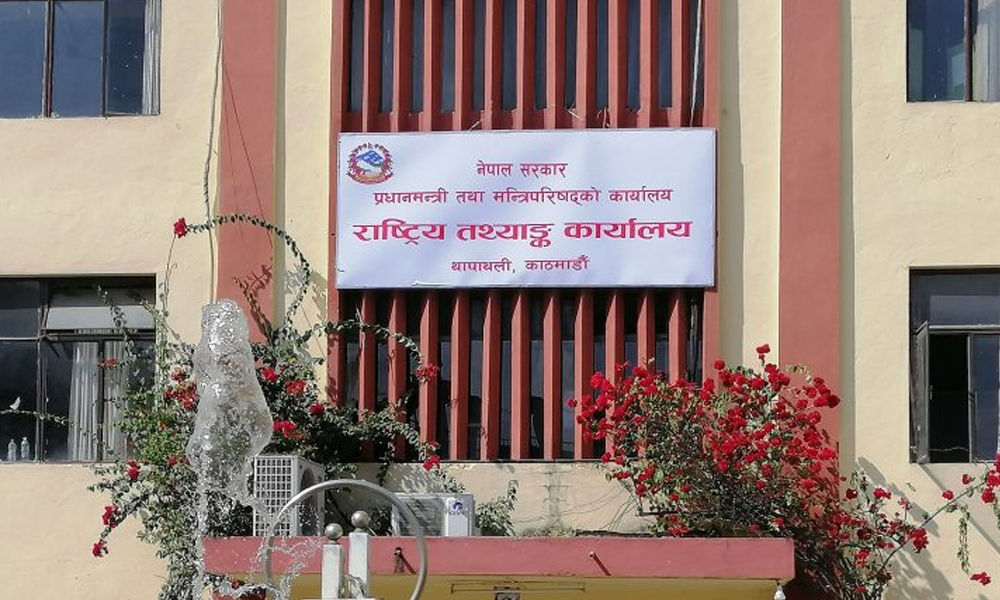
Top3 min readBusiness Leaders Call for Strong Public–Private Partnership Ahead of Nepal’s Economic Census 2082Business Leaders Call for Strong Public–Private Partnership Ahead of Nepal’s Economic Census 2082 Kathmandu — With Nepal preparing to conduct the National Economic Census 2082, business leaders and government statisticians are pushing for closer coordination between public agencies and the private sector to ensure the exercise delivers credible, usable results. Stakeholders say the census is more than a routine survey: it is expected to provide the most comprehensive snapshot of how businesses operate across the country—data that can shape economic policy, investment planning, and employment strategy for years. The interaction program held on Monday, jointly organized by the Federation of Nepalese Chambers of Commerce and Industry (FNCCI) and the National Statistics Office (NSO), focused on building confidence among businesses to participate fully. Participants stressed that without private-sector cooperation, even the best-designed census can produce gaps and inconsistencies, weakening its value for national planning. They urged the government to prioritize transparency and communication throughout the process.Dipesh Ghimire·9 Feb, 2026
Top3 min readLoan Quality Review Raises Red Flags for Nepal’s Banking SectorLoan Quality Review Raises Red Flags for Nepal’s Banking Sector Kathmandu — A comprehensive loan quality assessment conducted by a Bangladeshi consulting firm has raised serious concerns about credit management practices in Nepal’s major commercial banks. The review, carried out by Houladar Yunus & Company, found weaknesses in loan classification and risk control systems, prompting Nepal Rastra Bank to consider stricter regulatory measures. The findings come at a time when rising bad loans are already putting pressure on the country’s financial system. According to the central bank, several banks have failed to strictly follow regulatory guidelines while categorizing their loans as performing, watchlist, substandard, doubtful, or bad. As a result, Nepal Rastra Bank is preparing to require additional loan-loss provisioning from institutions that do not correct these weaknesses. Officials say that banks will first be asked to clarify their positions before any formal enforcement action is taken.Dipesh Ghimire·9 Feb, 2026
Top3 min read30MW Myardi Hydropower Project Planned on Manang–Lamjung Border, EIA Process Begins30MW Myardi Hydropower Project Planned on Manang–Lamjung Border, EIA Process Begins Kathmandu — A new 30-megawatt hydropower project is being planned on the border of Manang and Lamjung districts, adding momentum to Nepal’s ongoing push to expand electricity generation. The Ministry of Forests and Environment has initiated work to prepare the Environmental Impact Assessment (EIA) report, marking the project’s formal entry into the approval pipeline. The project will be located between Nasong Rural Municipality in Manang and Marsyangdi Rural Municipality in Lamjung. The proposed project, named the Myardi Hydropower Project, is being promoted by Myardi Khola Hydropower Company Pvt. Ltd. and is designed as a run-of-river scheme. This means the plant will rely mainly on the river’s natural flow rather than storing large volumes of water in a reservoir. While such projects are generally faster to build and involve less large-scale submergence, they can also face seasonal fluctuations in output—an issue Nepal’s hydropower-heavy system already experiences.Dipesh Ghimire·9 Feb, 2026
Top3 min readNepal Adds Nearly 500 MW to Grid in Six Months, but Seasonal Power Imbalance PersistsNepal Adds Nearly 500 MW to Grid in Six Months, but Seasonal Power Imbalance Persists Kathmandu — Nepal’s power sector has recorded notable progress over the past six months, with nearly 500 megawatts of electricity added to the national grid. According to the Ministry of Energy, Water Resources and Irrigation, 495 MW was connected to the transmission system by mid-January, raising the country’s total installed capacity to 4,086 MW. The growth reflects the gradual completion of several hydropower projects and improved coordination in grid integration.Dipesh Ghimire·9 Feb, 2026
Top3 min readGlobal IME Laghubitta Faces Profit Pressure Despite Strong Income GrowthGlobal IME Laghubitta Faces Profit Pressure Despite Strong Income Growth Global IME Laghubitta Bittiya Sanstha Limited has released its unaudited financial report for the second quarter of the current fiscal year, showing a decline in net profit despite significant growth in core income. The report reflects the growing challenges faced by microfinance institutions amid weakening loan quality and rising financial risks. During the review period, the company earned a net profit of NPR 105.9 million. In the same period last year, it had recorded a profit of NPR 118.3 million. This represents a decline of around 10.51 percent. Analysts say the fall in profit indicates increasing pressure on microfinance companies as repayment capacity weakens in many rural and semi-urban areas. Although profit declined, the company’s net interest income showed strong improvement. By mid-Poush, net interest income reached NPR 487.6 million, up from NPR 350.7 million in the previous year. This nearly 39 percent growth suggests that the company has expanded its lending activities and strengthened its interest collection mechanism. Similarly, total operating income rose to NPR 521.8 million from NPR 392.1 million last year, recording a growth of about 33 percent. The increase reflects higher loan disbursement, improved service coverage, and greater outreach among low-income borrowers. Experts interpret this as a sign that demand for microfinance services remains strong despite economic uncertainty.Dipesh Ghimire·8 Feb, 2026
Top3 min readTrademark Registrations Rise Sharply, Reflecting Growing Business AwarenessTrademark Registrations Rise Sharply, Reflecting Growing Business Awareness Nepal has witnessed a significant rise in trademark registrations during the first six months of the current fiscal year 2082/83, highlighting increasing awareness among entrepreneurs and businesses about brand protection. According to the Department of Industry, a total of 1,520 trademarks were registered between Shrawan and Poush, marking steady growth in intellectual property activities. Information Officer Suresh Dahal said that registrations have gained momentum in recent months. He noted that 504 trademarks were registered in Poush alone, indicating that more businesses are taking legal steps to secure their brand identities. Officials believe this reflects a gradual shift toward formal and organized business practices.Dipesh Ghimire·8 Feb, 2026
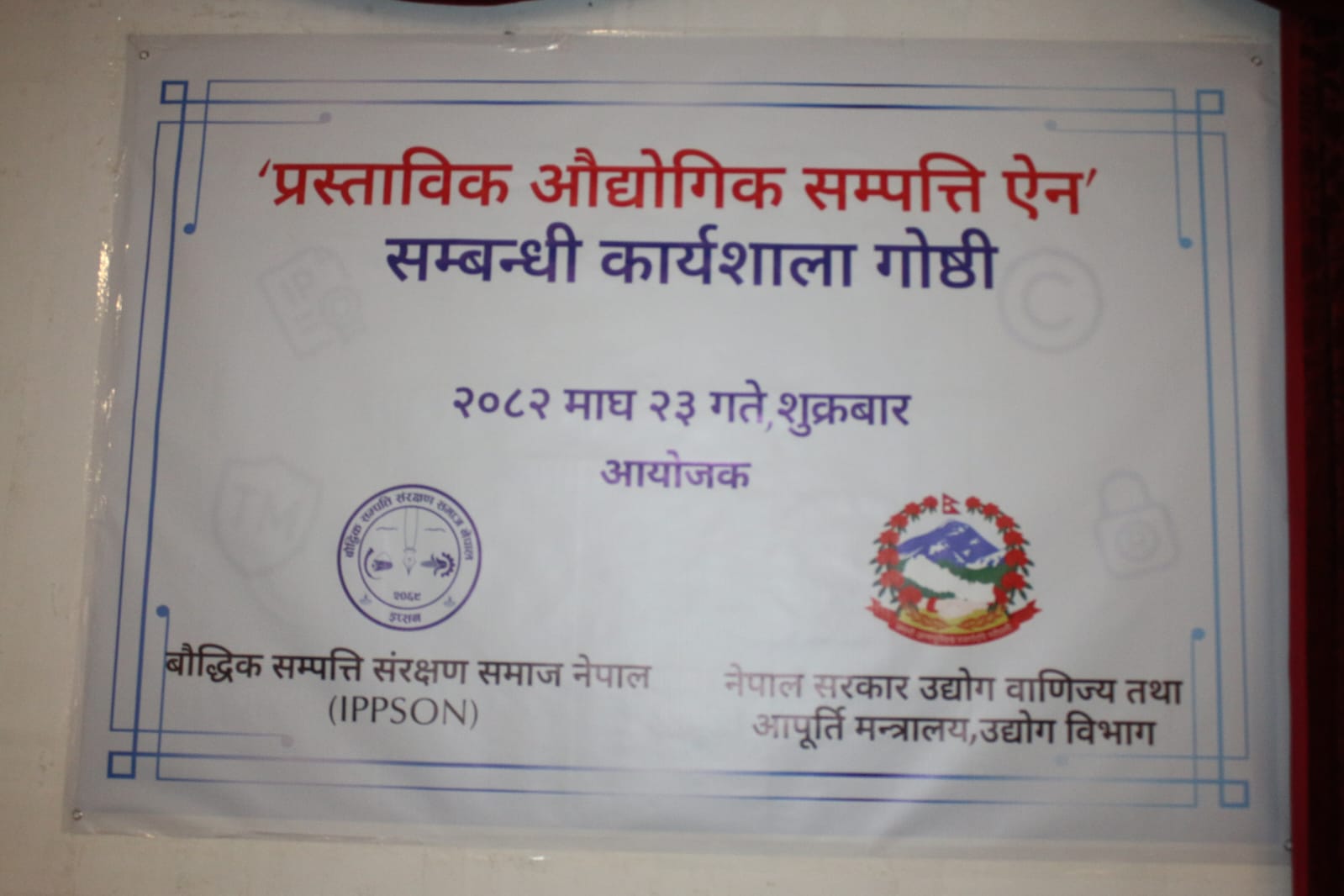
Top2 min readIntellectual Property Law Workshop Highlights Need for Practical Reforms in NepalIntellectual Property Law Workshop Highlights Need for Practical Reforms in Nepal A workshop on the proposed Intellectual Property Act was concluded in Kathmandu on Friday, bringing together policymakers, legal experts, and stakeholders to discuss the future of intellectual property protection in Nepal. The program was jointly organized by the Intellectual Property Protection Society Nepal (IPPSN) and the Department of Industry under the Ministry of Industry, Commerce and Supplies. The event aimed to gather expert opinions and improve the effectiveness of the proposed legislation.Dipesh Ghimire·8 Feb, 2026
Top3 min readExcess Liquidity Poses Growing Challenge for Nepal’s Banking SystemExcess Liquidity Poses Growing Challenge for Nepal’s Banking System The rising level of excess liquidity in Nepal’s banking system has increasingly become a major concern for financial regulators. Despite having abundant funds, banks are struggling to channel money into productive sectors due to weak credit demand and sluggish economic activities. As a result, a large volume of idle capital has accumulated within the financial system. In recent months, lending activities have slowed as businesses remain cautious and investment confidence stays low. Industries, trade, and construction sectors have not expanded at the expected pace, reducing the demand for bank loans. This imbalance between deposits and credit has widened, creating pressure on banks to manage surplus funds effectively.Dipesh Ghimire·8 Feb, 2026
Top3 min readCitizen Investment Trust Strengthens Financial Position with Steady Profit GrowthCitizen Investment Trust Strengthens Financial Position with Steady Profit Growth The Citizen Investment Trust (CIT) has reported a notable improvement in its financial performance in the second quarter of the current fiscal year 2082/83. The Trust recorded a net profit of NPR 665.3 million, reflecting a 6.92 percent increase compared to the same period last year. This growth indicates steady operational progress despite changing market conditions. In the corresponding period of the previous fiscal year, CIT had earned NPR 622.2 million in net profit. The latest figures suggest that the institution has been able to enhance its income-generating capacity while maintaining financial discipline. Analysts view this as a positive sign of institutional stability and long-term sustainability. During the review period, the Trust’s total income reached NPR 1.06 billion, up by 2.86 percent from NPR 1.03 billion recorded a year earlier. Although the growth rate in total income appears moderate, it reflects consistent expansion in core business activities. The gradual rise in income also highlights CIT’s ability to adapt to evolving financial environments.Dipesh Ghimire·8 Feb, 2026
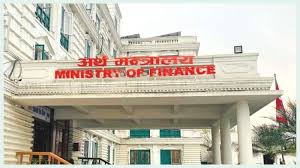
Top3 min readFinance Ministry Sets Three-Year Limit on Multi-Year Project Funding CommitmentsFinance Ministry Sets Three-Year Limit on Multi-Year Project Funding Commitments The Ministry of Finance, Nepal has introduced a new policy limiting the funding approval period for multi-year projects to a maximum of three fiscal years. By issuing the “Multi-Year Project Standards, 2082,” the ministry has sought to bring greater discipline and predictability to public investment management. According to the new standards, funding commitments for multi-year projects will generally remain valid for up to three financial years. However, exceptions have been made for national pride projects and large-scale infrastructure initiatives whose contract periods exceed three years. In such cases, funding approval may be extended in line with project requirements and cost structures. The ministry has also made it clear that funding approvals will automatically become inactive if procurement processes are not initiated within the same fiscal year in which approval is granted. Officials say this provision aims to discourage delays and prevent projects from remaining inactive despite having secured budgetary commitments.Dipesh Ghimire·4 Feb, 2026