Top2 min readFalling Interest Rates Reshape Nepal’s Insurance LandscapeFalling Interest Rates Reshape Nepal’s Insurance Landscape The relationship between bank interest rates and insurance uptake in Nepal has become increasingly complex, exposing structural tensions within the financial system. As bank deposit rates decline, insurance products often appear more attractive to savers seeking stable returns and long-term security. However, whether insurance companies can consistently meet customer expectations in such an environment has emerged as a central challenge. Insurance companies in Nepal invest a significant portion of their funds in fixed deposits (FDs) with banks and financial institutions. When FD interest rates fall, insurers face pressure on their investment income, directly affecting their ability to offer competitive bonuses and returns to policyholders. This creates a paradox: while lower bank interest rates encourage people to buy insurance, the same rate environment weakens insurers’ earning capacity. The relationship between bank interest rates and insurance uptake in Nepal has become increasingly complex, exposing structural tensions within the financial system. As bank deposit rates decline, insurance products often appear more attractive to savers seeking stable returns and long-term security. However, whether insurance companies can consistently meet customer expectations in such an environment has emerged as a central challenge. Insurance companies in Nepal invest a significant portion of their funds in fixed deposits (FDs) with banks and financial institutions. When FD interest rates fall, insurers face pressure on their investment income, directly affecting their ability to offer competitive bonuses and returns to policyholders. This creates a paradox: while lower bank interest rates encourage people to buy insurance, the same rate environment weakens insurers’ earning capacity.Dipesh Ghimire·24 Jan, 2026
Top2 min readEconomic Slowdown Weighs on Nepal’s Insurance Sector Despite Wider CoverageEconomic Slowdown Weighs on Nepal’s Insurance Sector Despite Wider Coverage The ongoing economic slowdown in Nepal has begun to visibly affect the insurance sector, which is closely tied to overall financial activity. One of the most immediate impacts has come from falling interest rates on fixed deposits offered by banks and financial institutions—traditionally the primary source of investment income for insurance companies. As deposit rates decline, insurers are seeing pressure on both their investment returns and overall earnings. Despite ample liquidity in the banking system, confidence in the market remains weak. Financial institutions are struggling to absorb additional deposits, while lending activity has slowed sharply. Although loan interest rates have fallen to single digits and borrowers can access relatively cheap credit for longer periods, demand for loans remains subdued. Analysts attribute this to reduced purchasing power among households and businesses, which has dampened appetite for borrowing and investment. This slowdown has had a knock-on effect across the economy. When credit growth stalls, money circulation in the market weakens, investment in productive sectors declines, and job creation slows. Without new employment and income growth, consumer spending remains restrained—creating a cycle of low demand that affects sectors such as insurance.Dipesh Ghimire·24 Jan, 2026
Top2 min readInsurance Coverage Expands in Nepal, but Policy Surrenders and Non-Renewals Remain a Growing ConcernInsurance Coverage Expands in Nepal, but Policy Surrenders and Non-Renewals Remain a Growing Concern Nepal’s insurance sector has expanded steadily in recent years, yet regulators and industry experts warn that the growing tendency of policyholders to surrender policies or avoid renewal could undermine long-term stability. The concern comes at a time when insurance penetration is rising, but still leaves a majority of the population outside the safety net. Currently, 37 insurance companies operate in Nepal across four categories: 14 life insurers, 14 non-life insurers, two reinsurance companies, and seven micro-insurance companies—including three life and four non-life providers. Each category operates under clearly defined mandates set by insurance regulations, with paid-up capital requirements tailored to the nature of their business. Life insurance in Nepal is increasingly viewed as a dual instrument—offering both risk protection and long-term savings—while non-life insurance plays a crucial role in safeguarding property and assets. Reinsurance companies, meanwhile, spread risk by reinsuring both life and non-life policies domestically and internationally, helping stabilize the broader insurance ecosystem. Nepal’s insurance sector has expanded steadily in recent years, yet regulators and industry experts warn that the growing tendency of policyholders to surrender policies or avoid renewal could undermine long-term stability. The concern comes at a time when insurance penetration is rising, but still leaves a majority of the population outside the safety net. Currently, 37 insurance companies operate in Nepal across four categories: 14 life insurers, 14 non-life insurers, two reinsurance companies, and seven micro-insurance companies—including three life and four non-life providers. Each category operates under clearly defined mandates set by insurance regulations, with paid-up capital requirements tailored to the nature of their business. Life insurance in Nepal is increasingly viewed as a dual instrument—offering both risk protection and long-term savings—while non-life insurance plays a crucial role in safeguarding property and assets. Reinsurance companies, meanwhile, spread risk by reinsuring both life and non-life policies domestically and internationally, helping stabilize the broader insurance ecosystem.Dipesh Ghimire·24 Jan, 2026
Top3 min readNepal’s Economy: Persistent Constraints, Untapped OpportunitiesNepal’s Economy: Persistent Constraints, Untapped Opportunities Nepal’s economy continues to grapple with deep-rooted structural problems, even as multiple sectors hold significant untapped potential. Economists point out that the most immediate concern remains the government’s chronic failure to increase capital expenditure, which has limited infrastructure expansion and slowed overall economic momentum. Closely linked to this is the reluctance of the private sector to invest in industries, compounded by weak inflows of foreign direct investment (FDI). Another major bottleneck lies in agriculture. While Nepal produces a range of raw agricultural and forest-based products, the absence of grading, packaging, processing, and value addition has prevented these goods from becoming competitive exports. As a result, resources such as medicinal herbs, broom grass, rhododendron, bayberry, and waterfalls with tourism potential remain underutilized, yielding minimal economic return. Nepal’s economy continues to grapple with deep-rooted structural problems, even as multiple sectors hold significant untapped potential. Economists point out that the most immediate concern remains the government’s chronic failure to increase capital expenditure, which has limited infrastructure expansion and slowed overall economic momentum. Closely linked to this is the reluctance of the private sector to invest in industries, compounded by weak inflows of foreign direct investment (FDI). Another major bottleneck lies in agriculture. While Nepal produces a range of raw agricultural and forest-based products, the absence of grading, packaging, processing, and value addition has prevented these goods from becoming competitive exports. As a result, resources such as medicinal herbs, broom grass, rhododendron, bayberry, and waterfalls with tourism potential remain underutilized, yielding minimal economic return.Dipesh Ghimire·24 Jan, 2026
Top4 min readNepal’s Economy Shows Stability, but Structural Reforms Remain UrgentNepal’s Economy Shows Stability, but Structural Reforms Remain Urgent A close reading of the latest macroeconomic indicators released by Nepal Rastra Bank suggests that Nepal’s economy is currently more stable than public perception often assumes. Data from the first two months of fiscal year 2081/82 show that average inflation stands at 3.8 percent, indicating that price rises remain within a manageable range. With nominal wages reportedly increasing by around 25 percent, the impact of inflation on ordinary households appears limited for now, though authorities are advised to closely monitor the supply and quality of essential daily goods.Dipesh Ghimire·24 Jan, 2026
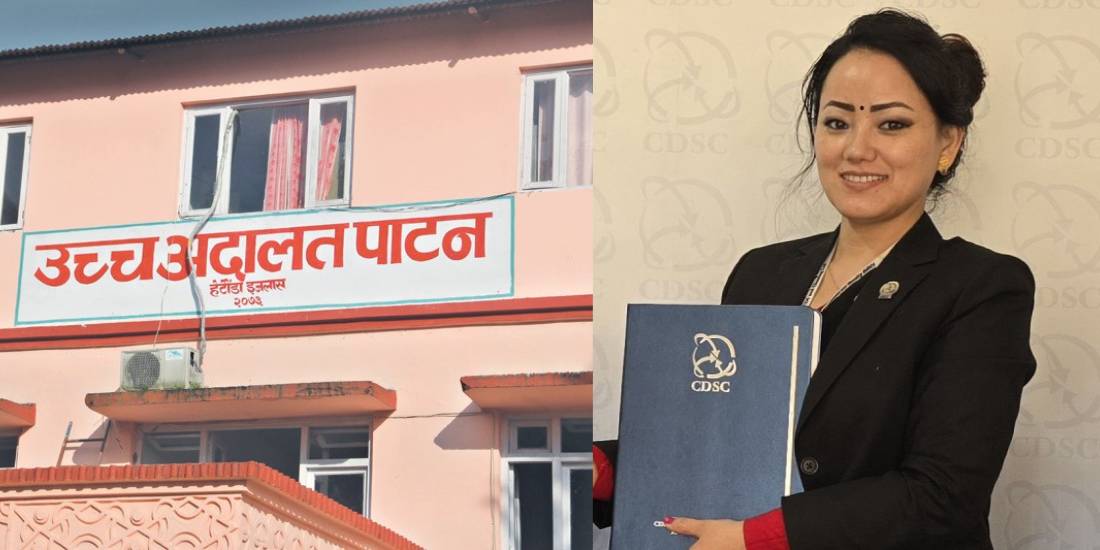
Top2 min readCourt Refuses Interim Relief in Pure Energy’s ISIN Case, Flags Need for Full AdjudicationCourt Refuses Interim Relief in Pure Energy’s ISIN Case, Flags Need for Full Adjudication The dispute over assigning a single International Securities Identification Number (ISIN) to different classes of shares has reached a critical legal juncture, after the High Court Patan declined to issue an interim order sought by Pure Energy Limited. While denying temporary relief, the court has accorded priority to the hearing of the writ petition, underscoring the wider implications of the case for Nepal’s securities market. Pure Energy had approached the court demanding that both promoter and public shares be assigned a single ISIN, arguing that the current practice of separate identifiers was creating unnecessary complications. A joint bench of Justices Suryanath Prakash Adhikari and Narayan Prasad Suvedi ruled that the issue was substantive in nature and required a final determination rather than interim intervention. The dispute over assigning a single International Securities Identification Number (ISIN) to different classes of shares has reached a critical legal juncture, after the High Court Patan declined to issue an interim order sought by Pure Energy Limited. While denying temporary relief, the court has accorded priority to the hearing of the writ petition, underscoring the wider implications of the case for Nepal’s securities market. Pure Energy had approached the court demanding that both promoter and public shares be assigned a single ISIN, arguing that the current practice of separate identifiers was creating unnecessary complications. A joint bench of Justices Suryanath Prakash Adhikari and Narayan Prasad Suvedi ruled that the issue was substantive in nature and required a final determination rather than interim intervention.Dipesh Ghimire·24 Jan, 2026
Top3 min readFormer Planning Commission Leaders Enter Electoral Race, Shift From National Vision to Local PromisesFormer Planning Commission Leaders Enter Electoral Race, Shift From National Vision to Local Promises Two former vice chairpersons of Nepal’s National Planning Commission—once responsible for drafting the country’s long-term development strategies—have stepped into the electoral battlefield ahead of the February 21 House of Representatives election, highlighting a striking contrast between national policy expertise and grassroots electoral politics. The candidates are Dr Govind Raj Pokharel, contesting from Pyuthan, and Dr Swarnim Wagle, running from Tanahun–1. Both are economists with national and international credentials, now seeking voter support in highly competitive constituencies where local dynamics may outweigh technocratic vision.Dipesh Ghimire·24 Jan, 2026
Top2 min readSystem Glitch Turns Into Legal Milestone for Retail Traders in IndiaSystem Glitch Turns Into Legal Milestone for Retail Traders in India An unusual trading incident from India’s derivatives market in 2022 has evolved into a landmark legal precedent, reshaping how responsibility is viewed in broker–client relationships. What began as a technical error at a brokerage firm ultimately led to a court ruling that strengthened the rights of retail traders against large financial institutions. The case revolves around Gajanan Rajguru, a small retail trader whose account held a modest balance of just ₹3,175. Despite the limited funds and the absence of margin or collateral, his trading account was suddenly granted an unusually large exposure limit—nearly ₹40 crore—due to a technical malfunction in the system of Kotak Securities. An unusual trading incident from India’s derivatives market in 2022 has evolved into a landmark legal precedent, reshaping how responsibility is viewed in broker–client relationships. What began as a technical error at a brokerage firm ultimately led to a court ruling that strengthened the rights of retail traders against large financial institutions. The case revolves around Gajanan Rajguru, a small retail trader whose account held a modest balance of just ₹3,175. Despite the limited funds and the absence of margin or collateral, his trading account was suddenly granted an unusually large exposure limit—nearly ₹40 crore—due to a technical malfunction in the system of Kotak Securities.Dipesh Ghimire·24 Jan, 2026
Top2 min readElectric Mini and Micro Buses Gain Ground as Imports Surge in NepalElectric Mini and Micro Buses Gain Ground as Imports Surge in Nepal Electric mini and micro buses are rapidly emerging as a dependable alternative in Nepal’s public transport system, with import figures showing a sharp rise over the past few years. As the domestic electric vehicle (EV) market expands at pace, battery-powered buses in the 11–25 seat segment are increasingly replacing petrol and diesel-powered internal combustion engine (ICE) vehicles, setting new import records. According to data from the Department of Customs, a total of 144 electric mini buses (15–25 seats) and 434 electric micro buses (11–14 seats) were imported by mid-January (Poush) of the current fiscal year 2082/83. In total, 577 EV buses worth Rs 1.80 billion entered the country during this period, generating Rs 423.4 million in government revenue. The figures highlight the growing commercial and fiscal significance of EV-based public transport.Dipesh Ghimire·24 Jan, 2026
Top3 min readNepal–China Border Trade Talks Yield Progress on Connectivity, Trade Facilitation, and InvestmentNepal–China Border Trade Talks Yield Progress on Connectivity, Trade Facilitation, and Investment The third secretary-level meeting of the Nepal–China Coordination Mechanism on Border Trade and Cooperation concluded in Lhasa, the capital of China’s Xizang (Tibet) Autonomous Region, marking another step forward in bilateral economic and trade cooperation. The meeting was held on January 20–21, 2026 (Magh 6–7), according to Nepal’s Ministry of Industry, Commerce and Supplies. The talks focused on a wide range of issues, including cross-border trade, customs facilitation, infrastructure development, transit arrangements, investment promotion, and broader economic cooperation. Officials from both sides described the discussions as constructive, with several understandings reached to improve trade efficiency and reduce logistical bottlenecks along the Nepal–China border.Dipesh Ghimire·24 Jan, 2026