Nepal’s Economy 4 min readNepal’s Economy Shows Signs of Recovery, but Structural Pressures PersistNepal’s Economy Shows Signs of Recovery, but Structural Pressures Persist Nepal’s economy is gradually emerging from a period of severe stress, and recent macroeconomic indicators suggest that the situation is no longer as alarming as it once appeared. While the overall outlook has improved compared to previous years, the pace of recovery remains uneven, and key components of the economy have yet to generate strong momentum. The government continues to pursue measures aimed at restoring economic stability, but the results so far reflect cautious optimism rather than robust growth. Recent quarterly data point to a significant improvement in the external sector. Remittance inflows have increased by more than 11 percent, providing much-needed support to foreign exchange reserves and household consumption. The balance of payments has shifted into a surplus, while foreign exchange reserves have risen to a level sufficient to cover around 14 months of imports of goods and services. Inflation has remained within the government’s target range, easing pressure on household budgets and reinforcing macroeconomic stability.Dipesh Ghimire·7 Jan, 2026
Top4 min readNepal’s Pharmaceutical Industry Grows in Numbers but Struggles for SurvivalNepal’s Pharmaceutical Industry Grows in Numbers but Struggles for Survival Nepal’s pharmaceutical sector has expanded steadily over the past two decades, attracting new investment, creating thousands of jobs, and supplying nearly half of the country’s medicine needs. Despite this growth, domestic drug manufacturers say they are struggling to survive in an environment that favors imports over production and regulation over facilitation. For the last 15 to 20 years, locally manufactured medicines have met around 45 percent of Nepal’s total consumption. The remaining 55 percent continues to be imported, mainly from India, China, Bangladesh, and other countries. While the number of pharmaceutical industries has increased, their share of the domestic market has paradoxically declined, raising concerns about the long-term viability of local production.Dipesh Ghimire·7 Jan, 2026
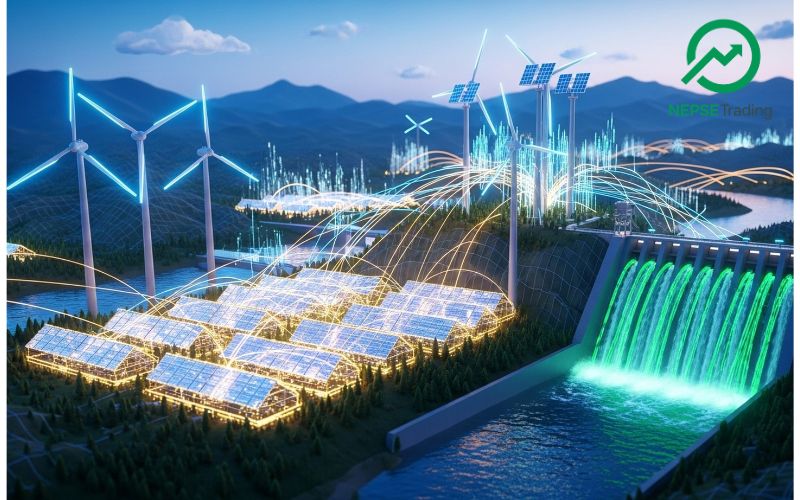
Top4 min readClearing Investment Uncertainty Key to Nepal’s Energy ExpansionClearing Investment Uncertainty Key to Nepal’s Energy Expansion Nepal’s hydropower sector, long regarded as the backbone of the country’s economic transformation, is facing renewed uncertainty due to policy inconsistencies, regulatory delays, and growing investment risks. Industry stakeholders argue that unless the government urgently addresses these issues, the country’s ambitious energy targets may remain out of reach despite strong private-sector interest and vast natural potential. Small-scale hydropower development in Nepal began gaining momentum in the early 2000s, when investors struggled to secure financing, infrastructure, and construction materials. The situation gradually improved after the mid-2000s, as financial institutions became more familiar with energy projects. A major turning point came in 2015, when the government announced a target of generating 10,000 megawatts of electricity within a decade. This policy signal restored investor confidence and triggered a surge in hydropower development.Dipesh Ghimire·7 Jan, 2026
Top4 min readGeopolitics and Global Trade: A System Under PressureGeopolitics and Global Trade: A System Under Pressure The structure of today’s global trade system is deeply rooted in the political realignments that followed the Second World War. The end of the war in 1945 did not merely redraw political boundaries; it reshaped the global economic order. The world gradually split into two ideological and economic camps—one led by the United States, advocating liberal democracy, open markets, and capitalism, and the other led by the Soviet Union, promoting state-controlled economies and collective ownership. Trade, investment, and economic cooperation soon became tools of geopolitical influence rather than neutral economic activities. As ideological rivalry intensified, especially after the onset of the Cold War in 1947, economic policy emerged as a strategic weapon. Western countries expanded trade and financial cooperation within their bloc to strengthen political alliances, while the socialist camp pursued economic coordination among allied states. In this polarized environment, international trade was no longer guided solely by efficiency or comparative advantage; it became an extension of foreign policy and global power competition.Dipesh Ghimire·7 Jan, 2026
Top4 min readNepal’s Pharmaceutical and Health System Under Strain: Structural Gaps, Regulatory Confusion, and Growing Public DiscontentNepal’s Pharmaceutical and Health System Under Strain: Structural Gaps, Regulatory Confusion, and Growing Public Discontent Nepal’s pharmaceutical and healthcare system is facing mounting structural challenges, ranging from unhealthy market competition and regulatory ambiguity to procurement inefficiencies and growing public dissatisfaction with service delivery. Despite a domestic medicine market estimated at around NPR 65 billion annually, systemic weaknesses continue to undermine quality, affordability, and long-term sustainability. One of the most pressing concerns is the prevalence of unhealthy competition within the pharmaceutical sector. Industry stakeholders point out that weak regulatory oversight and the absence of world-class testing laboratories have compromised quality assurance. Although laboratory facilities exist in Nepal, many lack modern infrastructure and skilled human resources, limiting their ability to conduct reliable drug quality assessments. This capacity gap has persisted largely due to the government’s inability to expand trained manpower in line with sectoral growth.Dipesh Ghimire·7 Jan, 2026
Top4 min readPolitical Change Without Economic Transformation Pushes Nepal Into a Fragile PhasePolitical Change Without Economic Transformation Pushes Nepal Into a Fragile Phase Despite decades of political transformation, Nepal continues to struggle with the same economic vulnerabilities that have persisted since the political change of 2007 BS. While governance systems have repeatedly shifted over the past 75 years, tangible improvements in economic conditions have remained elusive. This prolonged gap between political change and economic delivery has steadily weakened investor confidence, directly affecting production, consumption, and overall economic momentum. Economists warn that a prolonged decline in private sector confidence poses a systemic risk. Reduced production and subdued consumption, if sustained, eventually ripple through the entire economy. Without a confident and active private sector, economic recovery remains fragile, regardless of policy intent or political rhetoric.Dipesh Ghimire·6 Jan, 2026
Top3 min readGovernment-Owned Company to Develop 454 MW Kimathangka Arun Hydropower Project with Domestic CapitalGovernment-Owned Company to Develop 454 MW Kimathangka Arun Hydropower Project with Domestic Capital Nepal has taken a significant step toward strengthening domestic investment in large-scale hydropower development, with a financial modality finalized for the 454-megawatt Kimathangka Arun semi-reservoir hydropower project located in Bhote Khola Rural Municipality–2 of Sankhuwasabha district. The project will be developed entirely with domestic capital, marking a strategic shift toward self-reliance in energy infrastructure financing. The total estimated cost of the project, including interest during construction, stands at Rs 97.94 billion. The project will be implemented directly by the government-owned Electricity Generation Company Limited (EGCL), whose shareholders consist primarily of the Government of Nepal and other public sector institutions. The financial structure has been designed with a 70 percent debt component and 30 percent equity, reflecting a balanced risk-sharing approach for a project of this scale.Dipesh Ghimire·6 Jan, 2026
Top5 min readProliferation of Regulators and Policy Paralysis: When Governance Turns into ComplexityProliferation of Regulators and Policy Paralysis: When Governance Turns into Complexity In recent years, Nepal has witnessed a rapid expansion of regulatory bodies, each introduced in the name of good governance, transparency and corruption control. While the intent appears noble on paper, the outcome on the ground has been increasingly counterproductive. As regulatory layers multiply, decision-making has become slower, more cautious and, in many cases, paralysed by fear. This growing institutional complexity is now directly affecting citizens, businesses and the overall momentum of the economy. Within government offices, a culture of risk aversion has taken hold. Officials increasingly prefer inaction over decision-making, driven by the mindset that a steady salary is safer than the potential consequences of taking responsibility. This reluctance has weakened service delivery, delayed projects and strained coordination with the private sector. Instead of facilitating development, governance structures are inadvertently discouraging initiative and accountability.Dipesh Ghimire·5 Jan, 2026
Policy, Investment and Vision5 min readPolicy, Investment and Vision: Reframing Nepal’s Path to Sustainable ProsperityPolicy, Investment and Vision: Reframing Nepal’s Path to Sustainable Prosperity Nepal’s economic reality today rests heavily on remittance inflows that help offset a persistent trade deficit. While these inflows have provided short-term stability, policymakers increasingly acknowledge that remittance-led consumption cannot serve as a durable foundation for national prosperity. The more sustainable alternative lies in expanding domestic production, increasing electricity exports and generating foreign currency within the country itself. Reducing the trade deficit, strengthening industries and creating jobs would ultimately widen the tax base, enabling the state to mobilize larger budgets for development and social protection.Dipesh Ghimire·5 Jan, 2026
Capital Market4 min readOpening Nepal’s Capital Market to Non-Resident Nepalis: Why Technology Reform Is the Missing LinkOpening Nepal’s Capital Market to Non-Resident Nepalis: Why Technology Reform Is the Missing Link Nepal’s capital market has travelled a long way in a relatively short period, evolving from a rudimentary system of paper-based transactions into a fully dematerialized, online trading platform. Yet, despite these reforms, the market remains largely inward-looking. One of the most critical unfinished agendas is the meaningful inclusion of Non-Resident Nepalis (NRNs). Policymakers, regulators and market participants broadly agree that without mobilizing diaspora capital, Nepal’s capital market will struggle to deepen, diversify and support long-term economic growth. However, experience shows that legal intent alone is insufficient; technological reform has become the decisive factor.Dipesh Ghimire·5 Jan, 2026