SEBON
Regulators move toward automated EDIS to curb Rs 486.3 million close-out burden on investors
Capital market regulators have initiated formal groundwork to introduce an automated Electronic Delivery Instruction Slip (Auto EDIS) system, aiming to relieve stock market investors from steep close-out penalties triggered by delayed share transfers after sale executions. CDS and Clearing Limited (CDSC) has submitted a detailed feasibility and implementation study to the Securities Board of Nepal (SEBON), outlining a mechanism that would automatically transfer sold securities without requiring manual confirmation from investors for every transaction. Currently, investors who fail to manually authorize EDIS within the stipulated settlement window face heavy close-out fines—a recurring operational bottleneck that has cost market participants hundreds of millions of rupees over the past five years.
Dipesh Ghimire
2 min read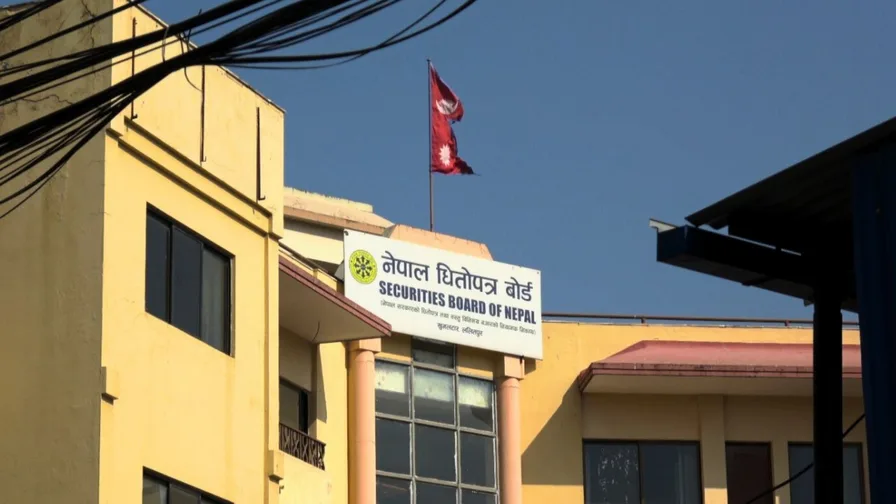
Capital market regulators have initiated formal groundwork to introduce an automated Electronic Delivery Instruction Slip (Auto EDIS) system, aiming to relieve stock market investors from steep close-out penalties triggered by delayed share transfers after sale executions.
CDS and Clearing Limited (CDSC) has submitted a detailed feasibility and implementation study to the Securities Board of Nepal (SEBON), outlining a mechanism that would automatically transfer sold securities without requiring manual confirmation from investors for every transaction.
Currently, investors who fail to manually authorize EDIS within the stipulated settlement window face heavy close-out fines—a recurring operational bottleneck that has cost market participants hundreds of millions of rupees over the past five years.
Under the proposed framework, an Auto EDIS option will be integrated directly into the broker Trade Management System (TMS). Once an investor selects this feature and grants authorization, sold shares will be automatically debited from their demat account and routed into the clearing and settlement pipeline.
Despite the technical readiness to streamline settlement, regulators must first resolve critical legal and procedural questions before rolling out the system. Chief among them is determining the exact legal mandate—specifically whether shareholders should grant power of attorney for automated share transfers to CDSC or to their respective Depository Participants (DPs).
Policy discussions are also underway regarding the scope of investor consent: whether a one-time standing instruction will suffice for all future settlements, or if periodic approvals will be required.
Additionally, technical limitations mean the automated mechanism cannot immediately cover all types of holdings. Because investors are legally required to manually calculate and declare the Weighted Average Cost of Capital (WACC) for shares acquired through corporate actions—such as bonus shares, rights issues, and mergers—Auto EDIS is currently being considered exclusively for shares purchased directly from the secondary market.
SEBON Assistant Spokesperson Tolakanta Neupane confirmed that the board has received CDSC’s report and will reach a policy decision following a thorough regulatory review. In regional markets such as Bangladesh, investors are given the option to opt into Auto EDIS at the time of opening a demat account, though Nepal has yet to finalize its exact operational model.
Official settlement data underscores the urgency of automating share transfers. Over the last five fiscal years alone, Nepali stock investors have paid a cumulative Rs 486.3 million in close-out penalties due to missed EDIS deadlines and settlement defaults.
Annual close-out collections fluctuated significantly with market turnover and volatility. Investors paid Rs 153.5 million in fiscal year 2077/78, Rs 97.8 million in 2078/79, and Rs 41.7 million in 2079/80. However, the burden rebounded to Rs 66.5 million in 2080/81 before nearly doubling to Rs 126.8 million in fiscal year 2081/82.
While close-out penalties have acted as a direct financial drain on retail and institutional traders, they have simultaneously generated steady tax revenue for the state. Over the same five-year period, the government collected Rs 121 million in taxes levied on close-out amounts.
Yearly tax collections from close-out settlements stood at Rs 38.3 million in 2077/78, Rs 24.4 million in 2078/79, Rs 10 million in 2079/80, Rs 16.6 million in 2080/81, and Rs 31.7 million in 2081/82.
Market analysts note that while the state benefits marginally from penalty taxation, eliminating unintentional technical defaults through Auto EDIS is essential for market efficiency, reducing settlement friction, and protecting retail investors from avoidable financial losses.
Written by
Dipesh Ghimire