Nepal’s Economy
Rising Bad Loans Keep Commercial Banks Under Capital Strain Despite 39 Percent Profit Surge
Although the central bank has introduced regulatory relief—including allowing debentures and rights shares, expanding the regulatory retail portfolio limit, lowering credit risk weights, and deferring the counter-cyclical capital buffer for another year—core ratios remain under strain. Under NRB’s Prompt Corrective Action Bylaws 2074 and unified directives, banks failing to meet minimum capital ratios during any interim period of a fiscal year face strict regulatory sanctions, foremost among them an immediate ban on declaring or distributing cash dividends and bonus shares to shareholders.
Dipesh Ghimire
2 min read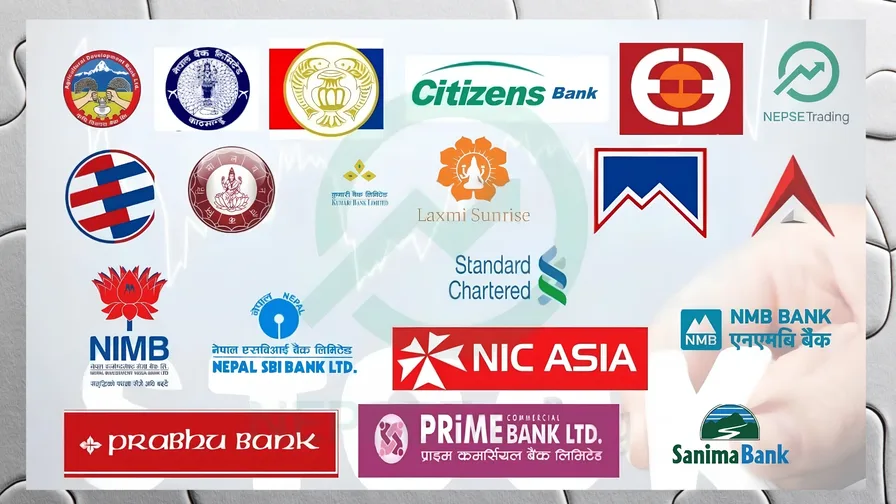
Kathmandu — Nepal’s commercial banks continue to grapple with acute capital adequacy pressure in the first quarter of the current fiscal year, even as headline net profits surged by 39 percent—and by 45.51 percent on a comparative basis to Rs. 19.11 billion from Rs. 13.14 billion in Ashoj last fiscal year. Financial disclosures show that escalating non-performing loans (NPLs) and swelling non-banking assets have eroded core capital buffers, preventing earnings growth from translating into lending capacity.
A closer examination of first-quarter balance sheets reveals a sharp divergence between accounting profits and distributable reserves. While net earnings climbed, commercial banks' distributable profit contracted by Rs. 9.07 billion—falling from Rs. 21.65 billion in the first quarter of FY 2082/83 to Rs. 12.58 billion this quarter. According to former banker Parshuram Kunwar Chhetri, uncollected interest income, mandatory loan-loss provisioning, and dividend payouts from last year's earnings have directly weighed down primary capital accumulation.
Asset quality deterioration remains the central driver of this capital squeeze. The industry's average NPL ratio climbed to 5.64 percent in Q1, up from 4.85 percent in the same period last year and 5.56 percent at the end of Ashadh. Consequently, the average Tier-1 capital adequacy ratio across commercial banks slipped to 9.67 percent—down from 9.96 percent recorded at both the end of Q1 and Q4 of the previous fiscal year—while the average total capital adequacy ratio stood at 12.47 percent.
Under Nepal Rastra Bank’s (NRB) Capital Adequacy Framework 2015, commercial banks must maintain a minimum Tier-1 capital ratio of 8.50 percent and a total capital ratio of 11 percent against risk-weighted assets. Three major lenders—NIC Asia Bank (6.27 percent), Himalayan Bank (8.03 percent), and Prabhu Bank (8.18 percent)—currently sit below the 8.50 percent Tier-1 threshold. Conversely, Standard Chartered Bank leads the sector with a 17.61 percent Tier-1 ratio, followed by Nepal Bank (11.23 percent), Agricultural Development Bank (10.79 percent), and Siddhartha Bank (10.16 percent), while Citizens Bank International stands just above the floor at 8.83 percent.
This capital bottleneck is unfolding despite unprecedented liquidity in the financial system. The central bank is currently absorbing roughly Rs. 1.4 trillion in excess liquidity through daily monetary instruments, driving weighted average deposit rates down to 3.07 percent and lending rates to 6.31 percent. Yet credit expansion remains stagnant because capital-constrained banks cannot legally expand risk-weighted loan portfolios until they either inject fresh capital or aggressively recover defaulted loans and foreclosed collateral.
Although the central bank has introduced regulatory relief—including allowing debentures and rights shares, expanding the regulatory retail portfolio limit, lowering credit risk weights, and deferring the counter-cyclical capital buffer for another year—core ratios remain under strain. Under NRB’s Prompt Corrective Action Bylaws 2074 and unified directives, banks failing to meet minimum capital ratios during any interim period of a fiscal year face strict regulatory sanctions, foremost among them an immediate ban on declaring or distributing cash dividends and bonus shares to shareholders.
Written by
Dipesh Ghimire