Tatopani
Traders Bear Eightfold Freight Surge via Korola as Tatopani Border Closure Drags On
The prolonged shutdown has devastated both large-scale importers and micro-traders along the frontier. Residents of Tatopani, Listikot, Phulpingkatti, and Marming—who historically relied on daily cross-border petty trade in food, household goods, and electronics from Zhangmu to fund household expenses and children's education—have seen their livelihoods completely wiped out. Business leaders from the Sindhupalchok Chamber of Commerce and Industry, the Nepal Himalaya Cross-Border Commerce Association, and transport unions warn that without an immediate, predictable timeline for reopening Tatopani, traders, drivers, and border communities face deepening economic displacement.
Dipesh Ghimire
2 min read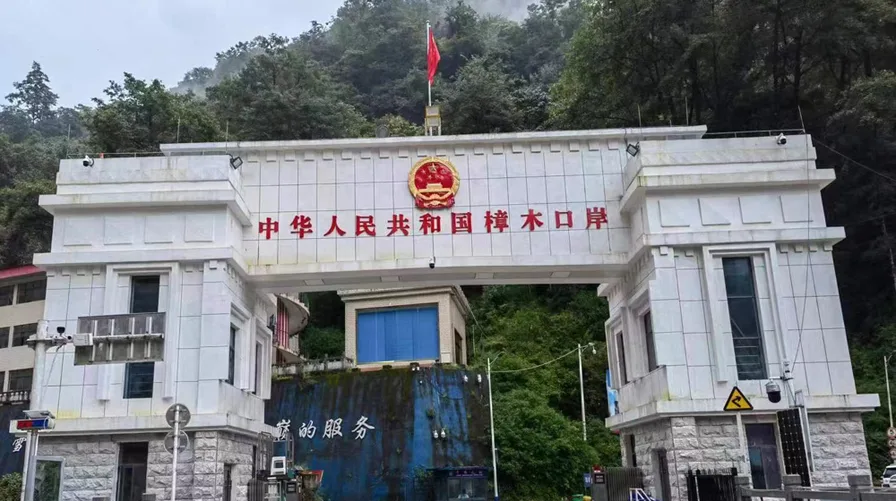
Sindhupalchok — Prolonged uncertainty surrounding the reopening of the Tatopani border crossing—Nepal’s primary overland trade gateway with China—has forced Nepali importers onto costly high-altitude detours, inflating per-container freight expenses eightfold and paralyzing local border economies. With the Rasuwagadhi crossing also crippled by flood and landslide damage, businesses have been compelled to divert shipments through Mustang’s Korola pass despite severe logistical and seasonal constraints.
A comparative assessment of trade logistics illustrates the severe financial burden created by the closure. Whereas transporting a cargo container from Tatopani to Kathmandu typically costs around Rs. 50,000, routing shipments via the Korola crossing drives freight charges up to Rs. 400,000 per container—an additional Rs. 350,000, or a 700 percent surge in transport expenses. Situated roughly 470 kilometers from Kathmandu, the Korola corridor connects to China’s Lize customs post at an elevation of 4,780 meters above sea level, making it commercially unviable as a permanent trade alternative, particularly as winter snowfall threatens to block the Mustang route altogether.
China unilaterally suspended cargo operations at Tatopani on Bhadra 15 until further notice, reopening the checkpoint only briefly between Kartik 1 and 3. According to Sindhupalchok Chief District Officer Shashidhar Ghimire, while tourist movement remains open, Nepali authorities have received no official communication from Beijing or Tibet regarding when container traffic will resume. On the Nepali side, the Division Road Office confirmed that landslides along the 26-kilometer Barhabise–Liping corridor have been cleared to accommodate 40-foot freight containers, leaving only localized road subsidence at Kodari’s Iko area where Chinese crews have been conducting repair work for the past month.
Despite repeated political and diplomatic interventions, the operational deadlock persists at the provincial level in Tibet. Following Dashain, a delegation led by Nepali Communist Party Vice-Chair Agni Prasad Sapkota held three days of discussions with central Chinese Communist Party leaders in Guangzhou on Kartik 9, while Foreign Minister Shishir Khanal raised the issue directly with Chinese Ambassador Zhang Maoming. However, traders report that although central authorities in Beijing appear supportive, administrative bodies in the Tibet Autonomous Region have yet to issue formal reopening instructions to customs, immigration, and clearing offices in Khasa (Zhangmu).
The prolonged shutdown has devastated both large-scale importers and micro-traders along the frontier. Residents of Tatopani, Listikot, Phulpingkatti, and Marming—who historically relied on daily cross-border petty trade in food, household goods, and electronics from Zhangmu to fund household expenses and children's education—have seen their livelihoods completely wiped out. Business leaders from the Sindhupalchok Chamber of Commerce and Industry, the Nepal Himalaya Cross-Border Commerce Association, and transport unions warn that without an immediate, predictable timeline for reopening Tatopani, traders, drivers, and border communities face deepening economic displacement.
Written by
Dipesh Ghimire