NEPSE
RSP's reform blueprint: bold ambition, careful hedges
For now, the document does what a convention proposal is meant to do — it plants a flag. The RSP has used it to define itself as an alternative force organised around democracy, a liberal economy, social justice, good governance and national interest, and to push debates over federalism, the shape of the executive and the conduct of parties onto the national agenda. The harder work — turning a blueprint into a settlement that others will accept — still lies ahead.
Dipesh Ghimire
5 min read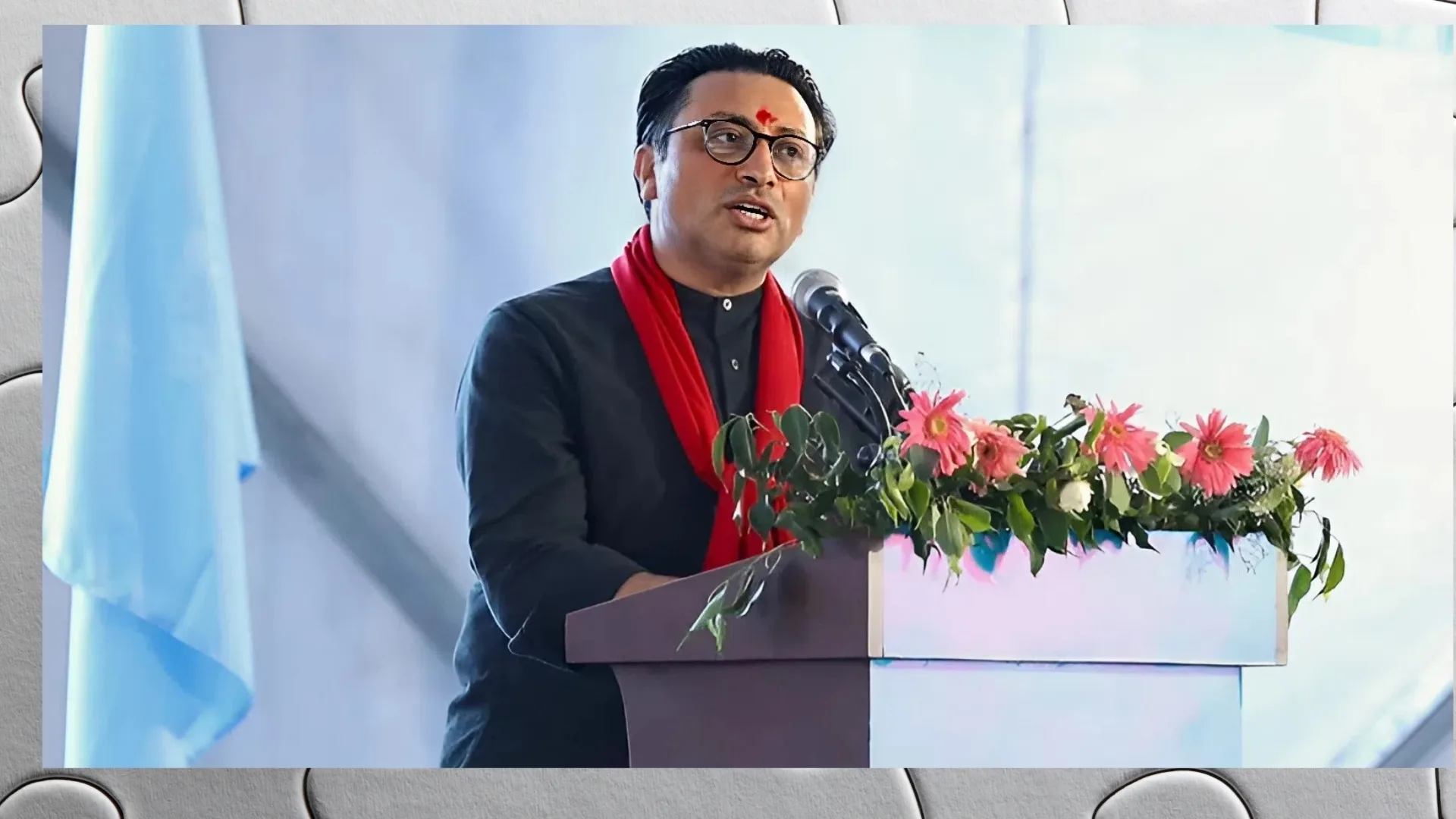
KATHMANDU — On its surface, the 'economic-political proposal' that Vice-chair Dr Swarnim Wagle placed before the Rastriya Swatantra Party's (RSP) first national convention reads like a statement of values: a pluralist democratic party that believes in a liberal economy tempered by social justice. Look closer, however, and the document is more consequential than a mission statement. Folded into its measured language is an agenda that, if pursued, would redraw the basic architecture of the Nepali state — and the way the proposal hedges that ambition is as revealing as the ambition itself.
The framing is deliberate. By claiming both the language of the market — the private sector as the 'principal vehicle' of prosperity — and the language of equity — social justice tied to a welfare state — the RSP is staking out a centrist, third-way position between Nepal's established left and the Nepali Congress. It is an attempt to be broadly appealing: pro-business enough for entrepreneurs, redistributive enough for those left behind. The same breadth, though, exposes the party to a familiar charge — that a platform built to appeal to everyone can struggle to say precisely what it stands for.
The proposal's sharpest edge lies in governance. The party has placed a cluster of structural reforms at the centre of its political pitch: a directly elected prime minister, a bar on sitting MPs becoming ministers, the abolition of provincial assemblies, a roughly one-third cut to the country's 753 local units, party-less local governments, and an overhaul of constitutional bodies. A directly elected premier alone would mark a profound departure from Nepal's parliamentary tradition, nudging the country toward a more presidential executive. Supporters see it as an answer to the chronic instability that has produced a revolving door of coalition governments; critics warn that concentrating a popular mandate in a single office can erode the checks that parliamentary systems rely on.
More contentious still is the call to scrap provincial assemblies and trim local units. Federalism was among the hardest-won outcomes of the 2015 constitution and the peace process, championed especially by Madhes-based and identity movements as a safeguard against centralised rule. By framing the federal tier as oversized and costly, the RSP taps into real public frustration with duplication and expense. But it also reaches into one of Nepal's most divisive settlements, and any serious move in this direction would likely reopen fault lines the constitution was written to close.
This is where the proposal's caution becomes telling. Even as it advances reforms that would require sweeping constitutional change, the document insists that any amendment or rewriting will proceed 'only within the process laid down by the constitution itself'. The juxtaposition is striking — radical ends, orthodox means. The party appears to be signalling that it wants to disrupt the system without being seen to destabilise it, a balancing act that matters all the more given the RSP's rapid rise and growing weight in national politics. Whether sweeping structural change can realistically be delivered through the constitution's demanding amendment thresholds is the open question the proposal does not answer.
Several of the smaller-bore reforms share a single instinct: prying the executive away from the legislature, and parties away from the grassroots. Barring MPs from cabinet posts is aimed at ending the practice of luring lawmakers into government with portfolios in exchange for support — a habit blamed for hollowing out parliamentary oversight. Party-less local governments, likewise, channel a strong anti-partisan, anti-establishment mood. Both ideas are popular in spirit, yet each raises practical questions: about how stable coalitions would be built, and how accountability would function, once the usual party machinery is stripped away.
A second thread runs through the proposal — clean money and clean institutions. The party calls for an overhaul of constitutional bodies, including the Judicial Council, whose appointments have long drawn complaints of political capture, and for transparent fund management by recognised parties. On the economic side, it is pointed in promising to mobilise capital only from 'legitimate sources'. Read together, these planks position the RSP as a party of anti-corruption and financial transparency — a stance with obvious resonance at a moment when investigations into money-laundering and securities offences are unsettling the markets and the political class alike.
The economic chapter is, in many ways, the most conventional and the most technocratic — fitting for a document shaped by a Western-trained economist. It leans on productivity growth as the durable route to higher living standards, and pairs private investment with 'capable public facilitation', the language of an enabling rather than a directing state. Calls for fair competition, effective regulation and an investment- and technology-friendly environment place the party firmly in the market-liberal camp, while the emphasis on employment, social harmony and environmental balance as yardsticks of development signals it does not wish to be read as growth-at-any-cost.
On foreign policy and nationalism, the proposal is studiedly continuous rather than novel. Its commitment to non-alignment, the UN Charter, Panchsheel and an independent foreign policy reassures Nepal's neighbours that an RSP in the ascendancy would not upend established external relations. The prominence given to territorial integrity, sovereignty and national independence serves a domestic purpose too: it inoculates a reform-minded, outward-looking party — one with strong support among the non-resident Nepalis it explicitly courts — against the perennial charge of being insufficiently nationalist.
One phrase captures the proposal's intended self-image. The party declares that it believes 'not in ruling by law but in the rule of law' — that law should be 'people-oriented, not regime-oriented'. The distinction is a serious one in constitutional theory, separating the use of law as an instrument of power from a system in which power itself is bound by law. Invoking it is a bid to present the RSP as principled and constitutionalist, even as its concrete agenda proposes to rewrite parts of the constitutional order.
That is the proposal's defining tension. It asks to be both insurgent and institutional — to overhaul the political system while honouring its rules, to be a party of disruption and of due process at once. The coherence of that position will be tested less on paper than in practice: by whether a relatively young party can build the cross-party consensus that constitutional change in Nepal demands, and by whether voters ultimately reward ambition or grow wary of upheaval.
For now, the document does what a convention proposal is meant to do — it plants a flag. The RSP has used it to define itself as an alternative force organised around democracy, a liberal economy, social justice, good governance and national interest, and to push debates over federalism, the shape of the executive and the conduct of parties onto the national agenda. The harder work — turning a blueprint into a settlement that others will accept — still lies ahead.
Advertisement
Written by
Dipesh Ghimire