SEBON
SEBON Prepares Capital Market Roadmap Amid Investor Concerns, Promises Regulatory Reforms
A stronger regulatory framework, improved disclosure practices, and better enforcement mechanisms could play a key role in building a safer and more reliable capital market environment in Nepal.
Dipesh Ghimire
2 min read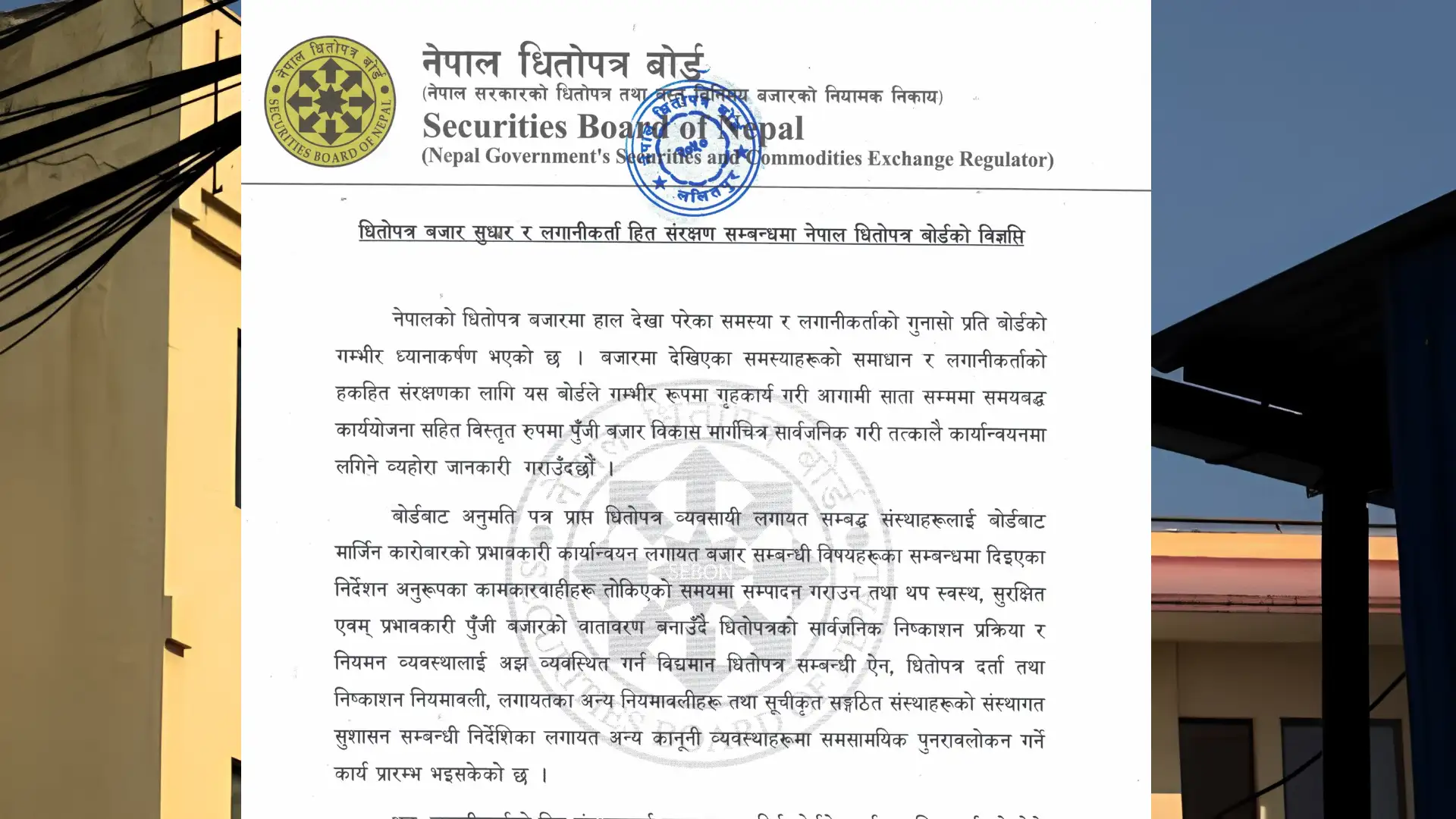
Kathmandu: The Securities Board of Nepal (SEBON) has announced plans to introduce a comprehensive capital market development roadmap within a week, responding to growing concerns among investors over recent market issues and regulatory challenges.
The securities regulator said it has given serious attention to complaints received from investors and ongoing problems in the capital market. SEBON stated that detailed preparations are underway to improve market stability, strengthen investor protection, and create a more transparent trading environment.
According to the board, the upcoming roadmap will include time-bound action plans and will be implemented immediately after its announcement. The move comes as investors have been raising concerns over market performance, regulatory effectiveness, and the implementation of previously announced reforms.
SEBON has also emphasized the need for effective implementation of margin trading facilities. The regulator said it is working to ensure that licensed securities businesses and related institutions comply with instructions issued by the board within the specified timeframe.
The focus on margin trading comes as more brokerage companies are preparing to expand credit-based trading services. Market participants expect margin facilities to increase liquidity and trading activity, although regulators have highlighted the need for proper risk management to prevent excessive speculation.
Alongside operational reforms, SEBON has started reviewing existing legal frameworks governing Nepal’s capital market. The review process aims to update securities laws, public issuance procedures, listing regulations, and corporate governance standards for listed companies.
The board plans to examine major legal instruments, including the Securities Act, Securities Registration and Issuance Regulations, and guidelines related to institutional governance of listed companies. The objective is to make regulatory provisions more suitable for the changing needs of the capital market.
Market observers believe that regulatory reform has become necessary as Nepal’s stock market has expanded in terms of investors, transaction volume, and market participation. However, challenges related to transparency, investor confidence, corporate governance, and market infrastructure continue to affect market development.
SEBON has urged investors not to make decisions based on market rumours, speculation, or misleading information. The regulator advised investors to evaluate companies, conduct proper analysis, and consider their own risk-taking capacity before making investment decisions.
The announcement indicates a shift toward a more structured reform approach by the securities regulator. However, the effectiveness of the roadmap will depend largely on timely implementation, coordination among market institutions, and the ability to address long-standing issues affecting investor confidence.
A stronger regulatory framework, improved disclosure practices, and better enforcement mechanisms could play a key role in building a safer and more reliable capital market environment in Nepal.
Advertisement
Written by
Dipesh Ghimire