Iran-US War
Two Chokepoints, One Crisis: How the Iran-US War Could Squeeze the World's Oil Lifeline
Taken together, the developments point to a conflict that is expanding along three axes at once — militarily across the Gulf, economically along the oil routes, and politically from Washington to Beirut. For analysts, the central worry is no longer just who prevails between Iran and the United States, but whether the world's energy supply and trade arteries can withstand pressure on two chokepoints simultaneously. Until either the strikes ease or the sea lanes are secured, the risk premium on Middle Eastern stability — and on the oil the world depends on — will only keep rising.
Dipesh Ghimire
3 min read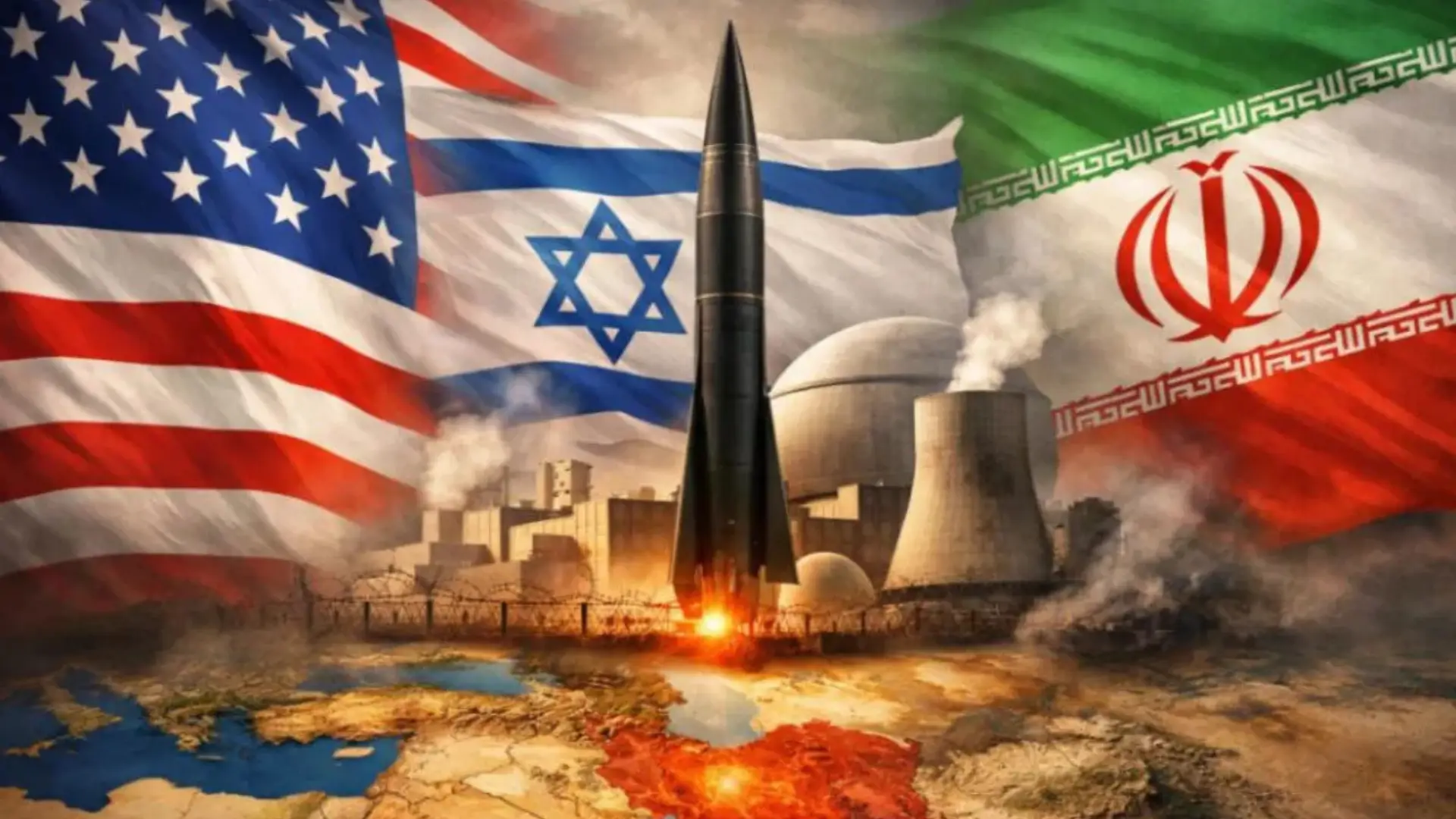
The escalating confrontation between Iran and the United States has moved beyond a bilateral exchange of fire into something with far wider consequences: a direct threat to the narrow sea lanes through which much of the world's energy flows. What began as a series of airstrikes has, within days, drawn in third countries, non-state armed groups and the global shipping industry — turning a regional conflict into a potential shock to the world economy.
The most immediate signal of that shift is the pattern of Iran's retaliation. Rather than confining its response to Israeli or purely American targets, Tehran has struck US installations in Bahrain, Kuwait and Jordan. The choice is telling. By hitting bases spread across the Gulf's Arab states, Iran is signalling that any country hosting American forces becomes fair game — a strategy designed to raise the political cost for Washington's regional partners and to widen the battlefield beyond its own borders. It also pulls previously cautious Gulf governments closer to a war they had hoped to avoid.
The exchange has taken on its own dangerous momentum. With US airstrikes now in their tenth consecutive night and President Trump publicly promising that Iran will "pay a far greater price" for American military deaths, the conflict has entered a phase where each side feels compelled to answer the last blow with a heavier one. This is the classic escalation trap: once retaliation becomes a matter of prestige rather than strategy, the off-ramps narrow, and fresh strikes on southern Iran follow warnings almost automatically.
But the sharpest economic danger lies at sea, in the Strait of Hormuz. The reported attack on an oil tanker — striking hard enough to force the crew into lifeboats — along with Iran's own account of two tankers ablaze after explosions, marks a shift from threats to action. Hormuz is not just another shipping lane; it is the single most important oil chokepoint on the planet, through which a very large share of the world's seaborne crude passes. Even the perception that it is no longer safe is enough to send insurance premiums and freight rates soaring, whether or not the strait is formally closed.
Layered on top of Hormuz is a second front further west. The Houthi declaration of a naval blockade against Saudi Arabia, framed as an "eye for an eye" answer to Riyadh's alleged blockade of Yemen, extends the crisis to the Bab al-Mandeb strait. This is the crucial detail that transforms the situation from serious to potentially systemic: the world's oil trade depends heavily on two narrow passages, and each is now under threat from a different actor. The estimate that a simultaneous disruption of both Hormuz and Bab al-Mandeb could cut global oil supply by roughly 7 percent captures the stakes — a shortfall of that magnitude would ripple through fuel prices worldwide, including in import-dependent economies like Nepal's.
The Houthis' role also illustrates how the conflict has slipped beyond the control of any single government. As a group backed by Iran but acting on its own initiative, their blockade cannot be switched off simply by pressuring Tehran or Riyadh directly. Their track record reinforces the concern: after the Gaza war began in 2023, Houthi attacks in the Red Sea already forced shipping companies to reroute vessels around the southern tip of Africa, adding significant cost and time to global trade. A fresh blockade threatens to repeat and deepen that disruption, this time against Saudi exports specifically.
The political and financial dimensions of the war are now catching up with the military ones. US Defense Secretary Pete Hegseth being summoned to answer the Senate over a $60 billion war budget suggests domestic scrutiny is mounting even as the campaign expands — a reminder that prolonged conflicts eventually collide with questions of cost and public support at home. At the same time, the Lebanese president's planned White House visit to discuss disarming Hezbollah and withdrawing Israeli forces from southern Lebanon hints that Washington may be trying to close down one flank of the wider regional confrontation even as another flares.
Taken together, the developments point to a conflict that is expanding along three axes at once — militarily across the Gulf, economically along the oil routes, and politically from Washington to Beirut. For analysts, the central worry is no longer just who prevails between Iran and the United States, but whether the world's energy supply and trade arteries can withstand pressure on two chokepoints simultaneously. Until either the strikes ease or the sea lanes are secured, the risk premium on Middle Eastern stability — and on the oil the world depends on — will only keep rising.
Advertisement
Written by
Dipesh Ghimire