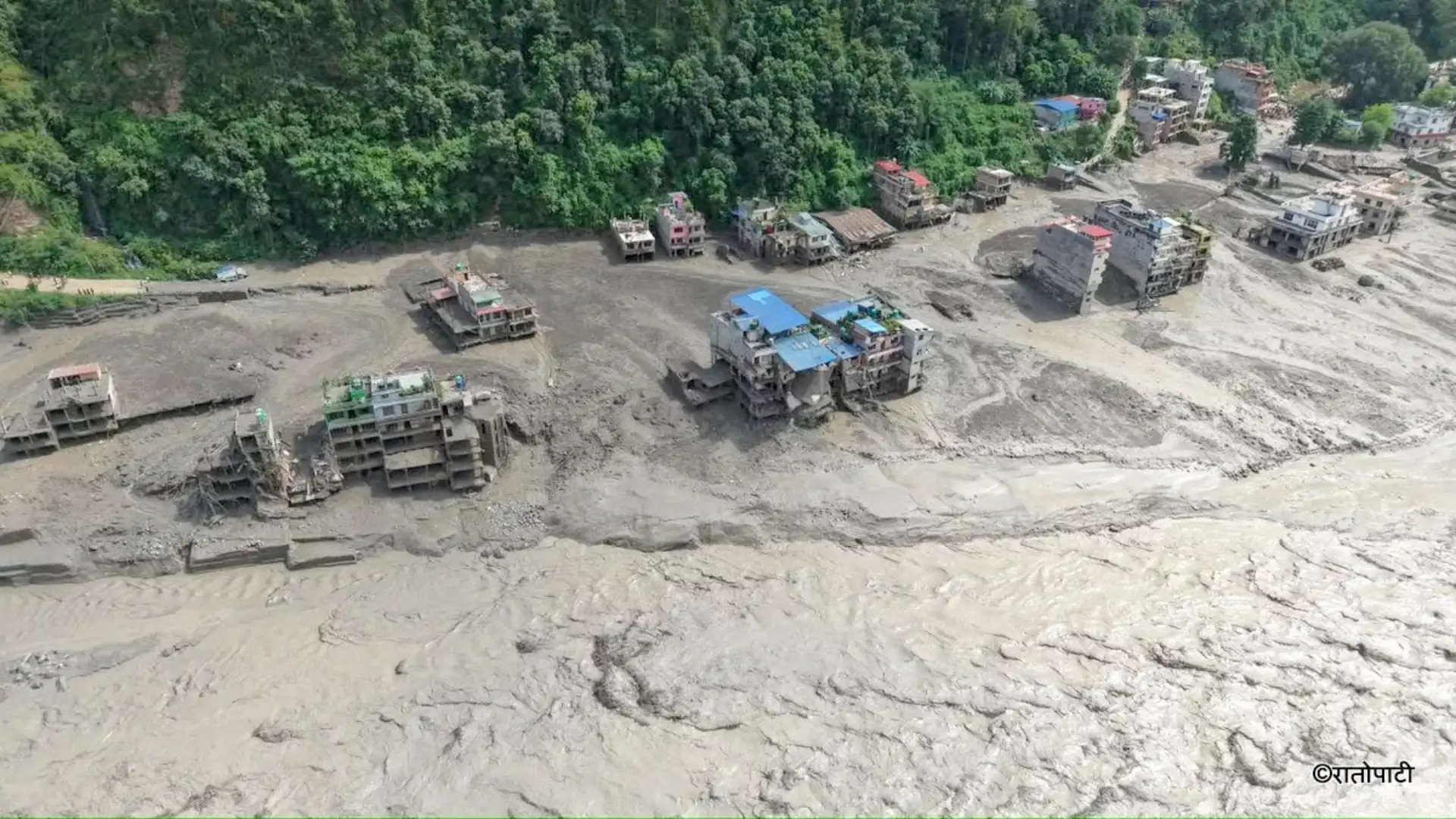
काठमाडौं — भोटेकोशीमा आएको विनाशकारी बाढीपछि प्रभावित क्षेत्रमा नेपालका सुरक्षा निकाय र अन्तर्राष्ट्रिय टोलीको समन्वयमा उद्धार तथा राहत कार्य तीव्र पारिएको छ। हालसम्म रसुवा, धादिङ, नुवाकोट लगायतका ८ जिल्लाबाट ६७५ जनाको शव फेला परेको छ। विपद्को यस घडीमा नेपाललाई सघाउन छिमेकी मुलुक भारत र चीनसहित विभिन्न दातृ निकायहरूले प्राविधिक तथा आर्थिक सहयोग उपलब्ध गराएका छन्।
विशेषगरी जलविद्युत् आयोजनाका सुरुङमा फसेका नागरिकको उद्धारका लागि भारत र चीनका विशेषज्ञ टोली फिल्डमा खटिएका छन्। भारतले १३ सदस्यीय सुरुङ उद्धार टोली, डीएनए परीक्षणका लागि १९ सदस्यीय फरेन्सिक विज्ञ र थप ११ टन राहत सामग्रीसहित आइतबार चौथो उडान काठमाडौं पठाएको छ। यसैगरी, चीनबाट पनि ५० टन आपत्कालीन राहत सामग्री र ४ जना सुरुङ उद्धार विशेषज्ञसहित जनमुक्ति सेनाका दुई ढुवानी विमान काठमाडौं अवतरण गरेका छन्।
बाढी प्रभावित क्षेत्रमा नेपाली सेना, नेपाल प्रहरी र सशस्त्र प्रहरी बलका गरी १८ हजार ७ सयभन्दा बढी सुरक्षाकर्मी परिचालित छन्। शनिबार साँझसम्म हवाई तथा स्थलमार्गबाट ७ हजार ५१४ जनाको सकुशल उद्धार गरिएको छ, जसमध्ये २७९ जना जलविद्युत् आयोजनाका सुरुङमा फसेकाहरू हुन्। फेला परेका शवहरूमध्ये पहिचान हुन नसकेकाहरूको डीएनए सुरक्षित राखेर सरकारी निर्देशिकाअनुसार ‘एयरटाइट ब्याग’मा व्यवस्थापन गर्ने कार्य भइरहेको छ भने चिनिएका शव परिवारलाई बुझाइँदैछ।
यसैबीच, विपद् व्यवस्थापन र पुनःस्थापनाका लागि अन्तर्राष्ट्रिय समुदायबाट उल्लेख्य आर्थिक सहयोगको प्रतिबद्धता आएको छ। विश्व बैंकले १६७ मिलियन अमेरिकी डलर सहुलियतपूर्ण कर्जा दिने भएको छ भने एसियाली विकास बैंक (एडीबी) ले ५ मिलियन डलर अनुदान र डेढ लाख डलर प्राविधिक सहायता दिने घोषणा गरेको छ। यसका साथै, अष्ट्रेलिया सरकारले १ मिलियन र अमेरिकी सरकारले ५ लाख डलर आर्थिक सहयोग उपलब्ध गराउने प्रतिबद्धता जनाएका छन्।
KATHMANDU — Search and rescue operations have been significantly intensified in the Bhote Koshi flood-hit areas, with the death toll climbing to 675 across eight districts, including Rasuwa, Dhading, and Nuwakot. As Nepal grapples with the massive devastation, neighboring countries India and China, along with various international agencies, have mobilized technical and financial assistance to support over 18,700 deployed Nepali security personnel.
A major priority of the ongoing operation is rescuing individuals trapped inside various hydropower tunnels. To assist Nepali forces, specialized tunnel rescue teams from both neighboring nations have arrived in the capital. India dispatched its fourth relief flight on Sunday morning, carrying 11 tons of supplies, a 13-member tunnel rescue squad, and a 19-member forensic team to aid in DNA analysis. Similarly, two Chinese People's Liberation Army (PLA) transport aircraft landed at Tribhuvan International Airport with 50 tons of emergency relief materials and four tunnel rescue specialists.
By Saturday evening, rescue teams had successfully evacuated 7,514 people via air and land routes, including 279 individuals safely extracted from flooded hydropower tunnels. Meanwhile, authorities are strictly following government guidelines for managing the deceased. Unidentified victims are being kept in airtight bags with their DNA profiles preserved for future identification, while identified bodies are being handed over to grieving families.
To aid in the long-term management and rehabilitation of the affected areas, the international community has pledged substantial financial support. The World Bank has announced a $167 million concessional loan, and the Asian Development Bank (ADB) has committed a $5 million grant along with $150,000 for technical assistance. Additionally, the Australian and US governments have pledged $1 million and $500,000, respectively, to bolster ongoing relief efforts.