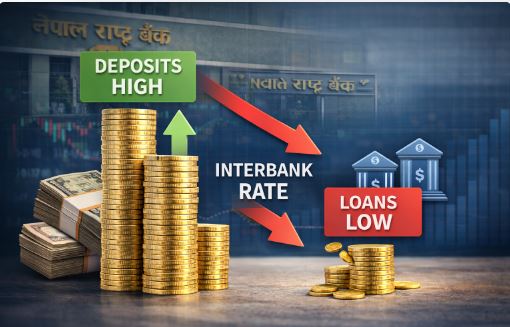
काठमाडौँ । चालु आर्थिक वर्ष २०८२/८३ को माघ मसान्तसम्म बैंक तथा वित्तीय संस्थाबाट निजी क्षेत्रमा प्रवाहित कर्जा ४ प्रतिशतले बढेर ५७ खर्ब १९ अर्ब ५४ करोड रुपैयाँ पुगेको छ। यो वृद्धि अघिल्लो वर्षको ५.६ प्रतिशतको तुलनामा कम भएको छ, जसले अर्थतन्त्रमा लगानी र उत्पादन क्षेत्रको माग कमजोर भएको संकेत गर्दछ।बैंकिङ प्रणालीमा निक्षेप भने तीव्र गतिमा वृद्धि भएको छ। माघसम्म कुल निक्षेप ६ प्रतिशतले बढेर ७६ खर्ब ९७ अर्ब ५९ करोड रुपैयाँ पुगेको छ। वार्षिक आधारमा निक्षेप १४.९ प्रतिशतले बढेको छ, जसले बैंकहरूमा पर्याप्त तरलता रहेको देखाउँछ, तर यसले कर्जा विस्तारमा प्रभावकारी तरिकाले योगदान गर्न सकेको छैन।क्षेत्रगत रूपमा हेर्दा, उपभोग्य क्षेत्रमा कर्जा १०.६ प्रतिशतले बढेको छ, जबकि कृषि क्षेत्रमा कर्जा १.४ प्रतिशतले घटेको छ, जसले उत्पादनमुखी लगानीमा कमजोर संकेत व्यक्त गर्दछ। कर्जा प्रवाह वाणिज्य बैंकबाट ४.२ प्रतिशत, विकास बैंकबाट ३ प्रतिशत र वित्त कम्पनीबाट १.८ प्रतिशतले बढेको छ।कुल निक्षेप संरचनामा चल्ती निक्षेप ६.५ प्रतिशत, बचत निक्षेप ४२.८ प्रतिशत र मुद्दती निक्षेप ४१.६ प्रतिशत रहेको छ, जसले दीर्घकालीन निक्षेपको आकर्षण घट्दै गएका संकेत गर्छ।
Top
1 min read
NEPSE TRADING
नेपालमा कर्जा र निक्षेपको वृद्धिCredit and Deposit Growth in Nepal
Kathmandu. As of the end of the current fiscal year 2082/83, the credit extended to the private sector by banks and financial institutions has increased by 4%, reaching NPR 57.19 trillion. However, this growth is significantly slower compared to the 5.6% increase seen in the previous year, indicating weak demand in investment and production sectors in the economy.On the other hand, deposits in the banking system have been growing at a rapid pace. By the end of Magh, total deposits increased by 6%, reaching NPR 76.98 trillion. On an annual basis, deposits have grown by 14.9%, indicating sufficient liquidity in banks, though this liquidity has not been effectively converted into loan expansion.Sector-wise, loans to the consumer sector grew by 10.6%, while loans to agriculture decreased by 1.4%, signaling weak investment in production sectors. Loan flow has increased by 4.2% from commercial banks, 3% from development banks, and 1.8% from finance companies.The deposit structure comprises 6.5% in demand deposits, 42.8% in savings deposits, and 41.6% in term deposits, indicating reduced attraction to long-term deposits.
Advertisement