NEPSEtrading

Live NEPSE data, charts, broker analysis and portfolio tools for investors in Nepal.

Subscribe to our newsletter

Weekly insights from the NEPSE market in your inbox.

Marketminds Investment Group Private Limited

Registration
DOIB certificate no. 4680-2081/2082
Editor-in-chief
Dipesh Ghimire, Director
9802363868, 9851119988
Office
Koteshwor 32, Kathmandu
Phone
01-5253221, +977 9709066745
Email

Contact support

Market

  • Stocks
  • Sectors

Company

  • About Us
  • Our Team
  • Terms of Use
  • Our Policy
  • Training
  • Contact Us

Help

  • Support
  • Report
  • FAQ

Get the app

Markets, signals and alerts on your phone.

Get it onGoogle Play

More from NEPSE Trading

  • Stock EducationFree share market courses
  • EconomyNepal and world economic data
  • BFIS CompareBank rates, loans and insurance
  • Nepal's CapitalsMutual fund NAV and dividends
  • JobsNepalJobs in Nepal

nepsetrading.com is an online news portal that provides insights into trading and investment by analyzing the stock market and the global economy. We create charts based on the analysis of various indicators. Please do not rely solely on this information for investment decisions. Self-study is crucial. Use this information only as an educational and informational resource.

© 2026 nepsetrading.com. All rights reserved. Owned and operated by Marketminds Investment Group Private Limited.·Charts powered by TradingView

  • Portfolio
  • Explore
  • Calendar
  • Chart
  • Social
  • News
  • Account
  1. News
  2. Education
  3. PM Shah at UNGA: A Shift in Diplomatic Protocol and a Firm Demand for Climate Justice

संयुक्त राष्ट्रसंघमा प्रधानमन्त्री शाह : तामझामविहीन यात्रादेखि जलवायु न्यायको बलियो वकालतसम्मPM Shah at UNGA: A Shift in Diplomatic Protocol and a Firm Demand for Climate Justice

NEPSE TRADINGPublished on September 26, 20263 min read
संयुक्त राष्ट्रसंघमा प्रधानमन्त्री शाह : तामझामविहीन यात्रादेखि जलवायु न्यायको बलियो वकालतसम्म

विदेश भ्रमणका क्रममा देखिने परम्परागत सरकारी तामझामलाई तोड्दै प्रधानमन्त्री बालेन्द्र शाह ८१औँ संयुक्त राष्ट्रसंघीय महासभामा सहभागी हुन न्युयोर्क पुगेका छन्। अघिल्ला सरकार प्रमुखहरूले जस्तो रातो कार्पेट, सेनाको सलामी र जम्बो टोलीको सट्टा उनी कतार एयरवेजको सामान्य उडानबाट अमेरिका प्रस्थान गरेका हुन्। विमानस्थलमा गृहमन्त्री सुधन गुरुङ र पर्यटनमन्त्री गनेश पौडेल मात्रै बिदाइका लागि पुग्नुले उनको यो भ्रमणलाई पूर्ण रूपमा औपचारिकताभन्दा 'काममा केन्द्रित' बनाएको सन्देश दिएको छ। विदेश उड्नुअघि संसदलाई पूर्वजानकारी गराउने पुरानो अभ्यासलाई समेत थाती राखेर उनी सिधै महासभाको एजेन्डा र प्रस्तुतिमा केन्द्रित भएका थिए।

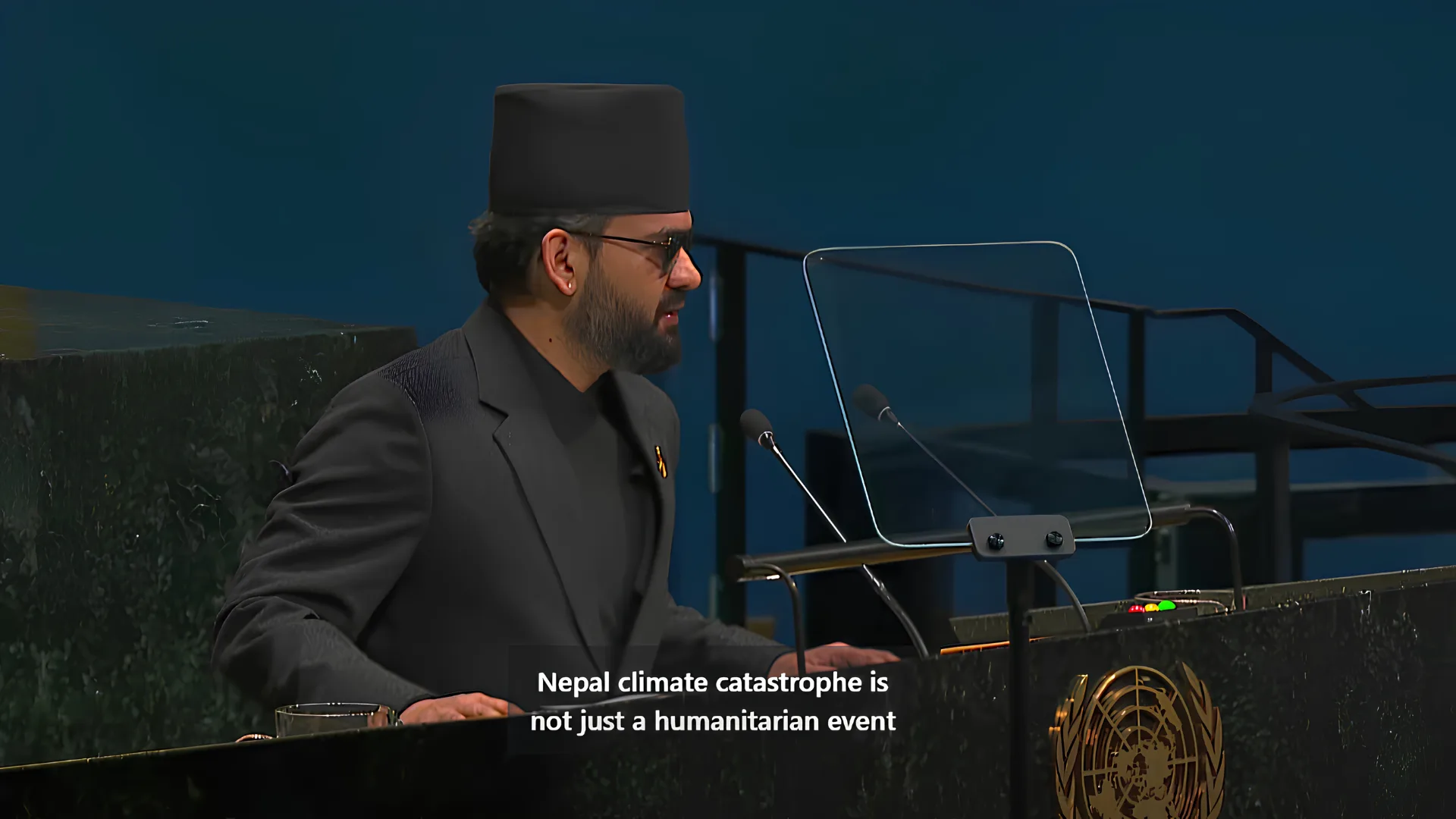
महासभाको मञ्चबाट शुक्रबार गरिएको करिब १४ मिनेट लामो अंग्रेजी सम्बोधनमा प्रधानमन्त्री शाहले नेपालको स्थानीय विपद्लाई विश्वव्यापी जलवायु संकटको ऐनाका रूपमा प्रस्तुत गरे। हालै भोटेकोशी र त्रिशूली नदी क्षेत्रमा आएको बाढीलाई उनले नेपालको मात्र समस्या नभई सिंगो विश्वका लागि दिइएको गम्भीर चेतावनी भएको प्रस्ट पारे। संयुक्त राष्ट्रसंघका महासचिवले सगरमाथा क्षेत्रबाट दिएको चेतावनीलाई विश्वका राजनीतिक नेतृत्वले बेवास्ता गरेको भन्दै उनले हिमालको पर्यावरण बिग्रिँदा नेपालसहित भारत, चीन र समग्र दक्षिण एसियाकै ठूलो जनसंख्या गम्भीर जोखिममा पर्नेतर्फ अन्तर्राष्ट्रिय समुदायको ध्यानाकर्षण गराए।

जलवायु न्यायलाई सम्बोधनको केन्द्रमा राखेका प्रधानमन्त्रीले हरितगृह ग्यास उत्सर्जनमा नगण्य भूमिका भए पनि नेपालले भारी मूल्य चुकाइरहेको तथ्य पेस गरे। जलवायुजन्य विपद्पछिको पुनर्निर्माण र पुनःस्थापनाका लागि नेपालजस्ता देशलाई ऋणको भार नभई पूर्ण रूपमा अनुदान सहयोग आवश्यक रहेको उनको स्पष्ट अडान थियो। यसैलाई मध्यनजर गर्दै उनले नेपाल, भारत र चीन सम्मिलित 'हिमालय जलवायु उत्थानशीलता संयन्त्र' निर्माणको नयाँ र व्यावहारिक प्रस्ताव अघि सारेका छन्। हिमतालहरूको निरन्तर अनुगमन, पूर्वसूचना प्रणालीको विकास र भू–उपग्रह तथ्यांक आदानप्रदानका लागि यो संयन्त्र फलदायी हुने उनको तर्क छ।

सम्बोधनका क्रममा उनको प्रस्तुति शैली र प्रविधिको प्रयोगले पनि यसपटक निकै चर्चा पायो। अन्तर्राष्ट्रिय मञ्चहरूमा शीर्ष नेताहरूले प्रयोग गर्ने 'टेलीप्रम्प्टर' प्रविधिको सहायताले उनले धाराप्रवाह अंग्रेजीमा आफ्नो धारणा राखेका थिए। प्राविधिक रूपमा परिष्कृत देखिए पनि सम्बोधनको अन्त्य भने उनले नितान्त मौलिक शैलीमा गरे। पशुपतिनाथ र गौतम बुद्धको स्मरण गर्दै विश्व कल्याणको कामनासहित 'धन्यवाद, नमस्ते' भनेर मञ्च छाडेका शाहको यो सम्बोधनलाई एसोसिएटेड प्रेस (एपी) र रोयटर्सजस्ता प्रतिष्ठित अन्तर्राष्ट्रिय सञ्चारमाध्यमले उच्च प्राथमिकताका साथ प्रकाशन गरेका छन्।

रोचक कुरा के छ भने, प्रधानमन्त्री शाहको यो अन्तर्राष्ट्रिय प्रस्तुतिले स्वदेशमा दलगत सीमाभन्दा माथि उठेर समर्थन जुटाएको छ। एमाले नेता गोकुल बाँस्कोटाले सम्बोधनलाई 'दृढ र सार्थक' भन्दै देशको भावना बोलेकोमा प्रशंसा गरेका छन् भने राप्रपाका ज्ञानेन्द्र शाहीले यसले जनतामा आशा जगाएको प्रतिक्रिया दिएका छन्। कांग्रेस उपसभापति विश्वप्रकाश शर्माले यसअघि नै दिएको सुझावअनुसार जलवायु र भोटेकोशी बाढीको मुद्दाले अन्तर्राष्ट्रिय मञ्च पाएको भन्दै सन्तोष व्यक्त गरेका छन्।

अन्तर्राष्ट्रिय मञ्चमा नेपालको बलियो उपस्थिति जनाएर प्रधानमन्त्री शाह असोज १० गते स्वदेश फर्किँदैछन्। महासभाको सम्बोधनमार्फत विश्वको ध्यान तान्न उनी सफल भए पनि अबको मुख्य चुनौती भनेको मञ्चमा उठाइएका विषयलाई कूटनीतिक रूपमा कार्यान्वयन गराउनु हो। प्रधानमन्त्री स्वदेश फर्किएपछि पनि परराष्ट्रमन्त्री शिशिर खनालको नेतृत्वमा हुने अन्य कूटनीतिक भेटघाटहरूले 'हिमालय जलवायु संयन्त्र' र 'अनुदानमा आधारित वित्तीय सहयोग'को एजेन्डालाई कसरी निष्कर्षमा पुर्‍याउँछन् भन्ने कुराले नै यस भ्रमणको वास्तविक कूटनीतिक सफलता निर्धारण गर्नेछ।

Shedding the entrenched pageantry of Nepali statesmanship, Prime Minister Balendra Shah embarked on his journey to the 81st United Nations General Assembly (UNGA) in New York on Asoj 6 with a starkly minimalist approach. Foregoing the traditional military salutes, red carpets, and jumbo delegations that typically accompany a head of government's departure, Shah opted for a standard Qatar Airways commercial flight. Bypassing the customary pre-departure parliamentary briefing, he was seen off at the airport by just two cabinet members—Home Minister Sudhan Gurung and Tourism Minister Ganesh Poudel. This calculated departure from VIP protocol signaled a strictly business-first attitude, setting the tone for a diplomatic mission heavily focused on core policy issues rather than ceremonial optics.

Upon taking the global stage on Friday, Asoj 9, Prime Minister Shah delivered a fluent 14-minute address in English that sharply elevated Nepal’s localized environmental disasters to the forefront of the global climate discourse. Rather than presenting the recent devastating floods in the Bhotekoshi and Trishuli river corridors as mere domestic tragedies, he framed them as an urgent, blaring warning to the international community. Recalling the UN Secretary-General’s previous climate warnings from the Everest region, Shah delivered a poignant critique of global political leaders for failing to translate glaring scientific evidence into concrete action. He underscored that the rapid destabilization of the fragile Himalayan ecosystem is not an isolated Nepali crisis, but an existential threat to massive populations across India, China, and the broader South Asian region.

The cornerstone of Shah’s address was a forceful demand for climate justice, anchored in the principle that vulnerable nations must not be penalized for a crisis they did not create. Highlighting Nepal’s negligible contribution to global greenhouse gas emissions, he argued vehemently against burdening developing nations with additional debt for climate-induced damages. Instead, he demanded that post-disaster recovery and reconstruction be financed exclusively through international grants. Moving beyond grievances, the Prime Minister pitched a pragmatic regional strategy: the establishment of a trilateral "Himalayan Climate Resilience Mechanism" led by Nepal, India, and China. This proposed framework aims to fortify joint early warning systems, facilitate the sharing of critical satellite data, and ensure rigorous monitoring of high-risk glacial lakes.

Shah’s delivery style also generated significant domestic interest, marking a modernization in Nepal's international presentation. Utilizing a teleprompter—a standard tool for global heads of state that sparked widespread curiosity and debate on Nepali social media—he delivered a seamless and highly polished speech. Despite the modern technical delivery and the English medium, he rooted his closing remarks firmly in Nepali cultural identity, invoking the blessings of Lord Pashupatinath and the teachings of Buddha before signing off with a traditional "Dhanyabad, Namaste." This assertive and culturally grounded messaging successfully captured the attention of major international news agencies, with the Associated Press (AP) emphasizing his framing of the floods as a global alarm, and Reuters highlighting his "grants, not loans" appeal for climate finance.

Back in Kathmandu, the Prime Minister’s UNGA outing achieved a rare feat: sweeping bipartisan applause. Political leaders across the spectrum praised the speech for effectively voicing the nation’s core geopolitical and environmental realities. Rastriya Prajatantra Party lawmaker Gyanendra Shahi lauded the address for instilling hope among the citizenry, while CPN-UML leader Gokul Baskota publicly commended the speech as "firm, meaningful, and forceful," noting that Shah had authentically articulated the country's sentiments. Similarly, Nepali Congress Vice President Bishwa Prakash Sharma expressed satisfaction, having previously advised the Prime Minister to center his UN agenda precisely on the Bhotekoshi disaster and empirical climate facts.

As Prime Minister Shah prepares to return to Nepal on Asoj 10, the immediate success of his international address transitions into a long-term diplomatic challenge. While he has successfully captured global media attention and unified domestic political factions, the true measure of this mission will lie in its execution. With Foreign Minister Shishir Khanal taking charge of the remaining sideline meetings and diplomatic coordination, Nepal now faces the critical task of lobbying the international community to transform Shah's rhetoric—specifically the Himalayan resilience mechanism and the demand for grant-based climate funding—into binding international agreements and tangible financial support.

Trending News

  • नाफा सुरक्षित गर्ने होडले नेप्सेमा १०.८९ अंकको विश्राम, प्राविधिक सूचक भन्छन्— 'बजार अझै सुरक्षित जोनमै'Profit-Booking Triggers a 10.89-Point Pause in NEPSE; Technical Indicators Signal Market Remains in a Safe Zone

    NEPSE TRADING26 Nov, 2026

  • मनि वर्ल्ड सेक्युरिटिज तीन दिनका लागि निलम्बितMoney World Securities Suspended for Three Days

    NEPSE TRADING26 Nov, 2026

  • दुई जलविद्युत् कम्पनीको आईपीओ पाइपलाइनमा, ८० लाख ७७ हजार कित्ता सेयर आउनेTwo Hydropower Companies in IPO Pipeline to Issue Over 8 Million Shares

    NEPSE TRADING26 Nov, 2026

Related News

  • नाफा सुरक्षित गर्ने होडले नेप्सेमा १०.८९ अंकको विश्राम, प्राविधिक सूचक भन्छन्— 'बजार अझै सुरक्षित जोनमै'Profit-Booking Triggers a 10.89-Point Pause in NEPSE; Technical Indicators Signal Market Remains in a Safe Zone
  • मनि वर्ल्ड सेक्युरिटिज तीन दिनका लागि निलम्बितMoney World Securities Suspended for Three Days
  • दुई जलविद्युत् कम्पनीको आईपीओ पाइपलाइनमा, ८० लाख ७७ हजार कित्ता सेयर आउनेTwo Hydropower Companies in IPO Pipeline to Issue Over 8 Million Shares
  • ३० हजार मेगावाट लक्ष्य पूरा गर्न नयाँ ऊर्जा मिश्रणको खाका बन्दैNew Energy Mix Framework Underway to Meet 30,000 MW Target
  • दुई कम्पनीको लाभांश सुरक्षित गर्ने आज अन्तिम दिनLast Day Today to Secure Dividends of Two Companies