Nepal’s Economy
Beyond Relief: Stakeholders Advocate Public-Private Partnerships for Resilient Post-Disaster Housing
Facilitated by Architect Pramila Shilpakar from Khwopa Engineering College, the discourse sent a clear message: disaster management must become an inseparable core of urban development. The expo, jointly organized by the Nepal Land and Housing Developers Association, its federation, and the Nepal Chamber of Commerce, began on mid-September and showcases innovative construction technologies, housing solutions, and infrastructure practices.
Dipesh Ghimire
3 min read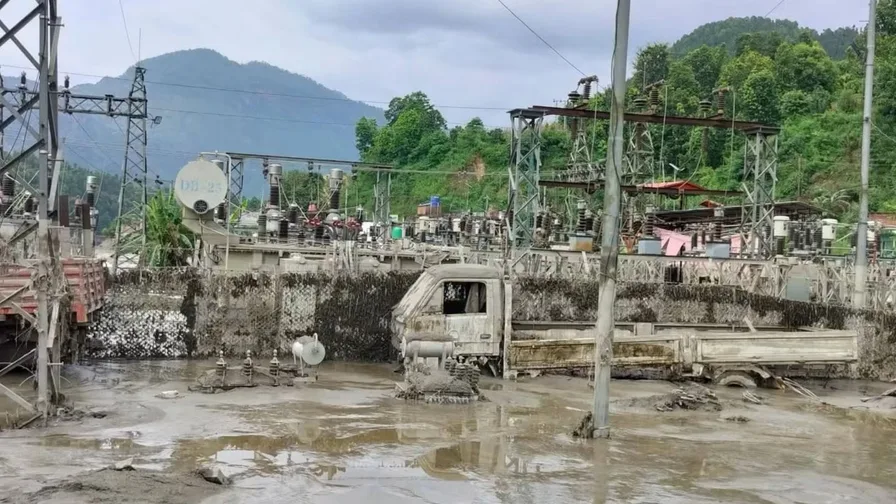
Amid escalating natural disasters and haphazard urbanization that result in massive losses of life and property each year, urban planners, policymakers, and private sector leaders have stressed the urgent need for a paradigm shift in Nepal’s housing sector. Stakeholders have concluded that the government’s reactive tradition of scrambling for rescue and relief post-disaster must be replaced by proactive risk identification and sustainable, integrated settlement development through a robust Public-Private Partnership (PPP) model.
This consensus emerged during a special panel discussion at the ongoing ‘Nepal Land, Housing and Construction Expo-2026’ at Bhrikutimandap in Kathmandu. Participants expressed deep concern over Nepal's narrow definition of urban development, which is often equated simply with road expansion, arguing that integrated planning is the only viable solution to mitigate the impact of climate-induced and geological disasters.
A Crisis of Implementation and Engineering Experts pointed out that while Nepal does not lack building codes or policies, their implementation remains dreadfully weak. Architect Nabin Devkota from the Society of Nepalese Architects (SONA) highlighted a severe disconnect and conflict among regulatory bodies. He lamented that local governments often treat building permits merely as a revenue-generating tool rather than a mechanism for ensuring civic safety, a negligence that has continuously fueled poor engineering practices across the country.
Echoing these concerns, Dr. Mandip Subedi of the Nepal Geotechnical Society emphasized the mandatory need for rigorous soil and geographical testing before any structural foundation is laid. He noted a deeply flawed national tendency to look for building standards only after a catastrophe has struck. According to Subedi, while Nepal has succeeded in developing the "hardware" of physical infrastructure, it has drastically failed to integrate the "software"—namely, scientific research, disaster preparedness, and integrated planning.
Losing Touch with Traditional Wisdom Urban development encompasses much more than high-rises and widened roads. Architect Biresh Shah, Director of the Kathmandu Institute, described a city as a holistic reflection of its economy, community, culture, geography, and sociology. Pointing to the historic inner cities of the Kathmandu Valley built some 800 years ago, Shah argued that early settlements stand as prime examples of excellent architecture and indigenous disaster management. He cautioned that modern urban planning over the last six decades has lost its soul and originality, urging modern developers not to erase heritage and traditional knowledge in the name of modernization.
Regulating River Corridors Addressing the government’s perspective, Prakash Aryal, Deputy Development Commissioner at the Kathmandu Valley Development Authority (KVDA), underscored the necessity of a comprehensive policy to regulate unmanaged settlements, particularly those encroaching on vulnerable river corridors. He highlighted the need to digitize the building permit system and continually update building codes to reflect evolving seismic and flood risks. Drawing lessons from recent devastating floods in Rasuwa and the Bhote Koshi region, Aryal urged all state agencies to adopt risk-sensitive land use planning.
The Private Sector’s Plea: Shedding the ‘Broker’ Stigma Meanwhile, the private sector—the largest investor in housing and infrastructure—demanded a change in the state's perception of their industry. Deepak Kumar Malhotra, Senior Vice President of the Nepal Chamber of Commerce, presented data showing that the real estate sector sustains approximately 240 ancillary industries, ranging from cement and steel to financial services. He urged the government and the public to stop stigmatizing legitimate housing developers as mere "land brokers."
Malhotra stated that the private sector is fully prepared to construct affordable housing for the middle class and flood victims. However, for this to materialize, the government must ease rigid bureaucratic hurdles regarding ownership transfers and introduce practical policies allowing the sale of apartments to foreign nationals.
Furthermore, Engineer Deepak Kunwar, President of the Nepal Land and Housing Developers Association, made a significant pledge. He announced that if the government provides safe public land to relocate citizens from high-risk disaster zones, the private sector is ready to build safe, integrated settlements on a "no-profit" basis. Pointing to the growing threats of glacial lake outburst floods (GLOFs) and landslides, Kunwar urged the government to immediately initiate PPP-model housing projects across all seven provinces.
Facilitated by Architect Pramila Shilpakar from Khwopa Engineering College, the discourse sent a clear message: disaster management must become an inseparable core of urban development. The expo, jointly organized by the Nepal Land and Housing Developers Association, its federation, and the Nepal Chamber of Commerce, began on mid-September and showcases innovative construction technologies, housing solutions, and infrastructure practices.
Advertisement
Written by
Dipesh Ghimire