Chery QQ
Chery QQ Makes Nepal Debut With 400-km Claimed Range, Introductory Price From Rs 3.09 Million
With a promotional starting price of Rs 3.099 million and a claimed range of around 400 kilometres, the QQ enters the market with an aggressive combination of pricing and specifications. Whether that translates into sustained sales will become clearer once consumers begin comparing its real-world performance and ownership costs with rival electric crossovers available in Nepal.
Dipesh Ghimire
4 min read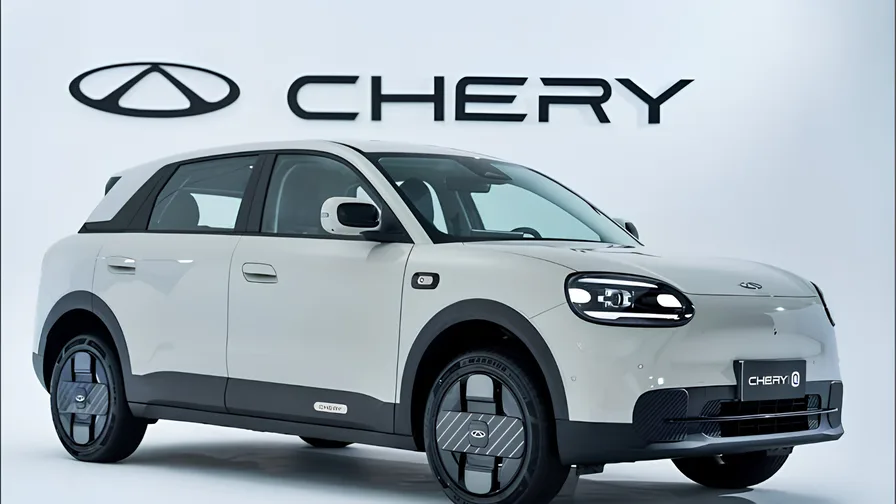
Pioneer Moto Corp, the authorised distributor of Chery vehicles in Nepal, has introduced the Chery QQ, expanding its electric vehicle portfolio at a time when competition in Nepal's urban EV segment is intensifying.
The new electric crossover is being positioned primarily as a city-oriented vehicle, combining a compact design with an electric powertrain intended to meet the daily mobility requirements of urban consumers. The company is targeting buyers looking for an EV that can serve both routine commuting and occasional longer-distance travel without moving into the higher-priced electric SUV category.
One of the major selling points of the Chery QQ is its 41.2-kWh battery pack. It is paired with a 90-kW electric motor, giving the vehicle considerably more power than many entry-level city EVs currently available in the market.
According to the company, the vehicle can travel around 400 kilometres on a full charge under the New European Driving Cycle, or NEDC, testing standard. Actual driving range, however, may vary depending on road conditions, traffic, driving behaviour, passenger load, use of air conditioning and Nepal's varying terrain.
A claimed range of around 400 kilometres gives the QQ an important marketing advantage in Nepal, where driving range and charging availability remain key considerations for consumers shifting from petrol-powered vehicles to electric alternatives.
The vehicle is based on a rear-wheel-drive platform, meaning power is delivered to the rear wheels. The configuration is expected to contribute to a more balanced driving character while differentiating the model from several front-wheel-drive electric cars targeted at the mass market.
Beyond its powertrain, Chery appears to be placing significant emphasis on design. The QQ has already gained international recognition, including the Red Dot Design Award 2025 and the iF Design Award 2026, according to the distributor.
Such recognition could help Chery strengthen the vehicle's positioning among younger and design-conscious consumers, particularly as EV purchases in Nepal are increasingly influenced not only by operating costs but also by styling, technology and cabin features.
The exterior follows a clean and contemporary design approach, while the cabin adopts a relatively minimalist layout. Special lighting elements, a spacious passenger compartment and a premium-oriented interior have been incorporated to give the crossover a more modern character.
The emphasis on cabin space could also be significant for the Nepali market. Although many buyers are attracted to compact EVs because of their ease of use on congested city roads, consumers often remain reluctant to compromise heavily on passenger comfort and interior practicality.
Pioneer Moto Corp has introduced the vehicle in two variants — Comfort and Premium.
The regular price of the Comfort variant has been fixed at Rs 3.449 million, while the Premium variant carries a price tag of Rs 3.599 million.
Under the company's NAIMA promotional offer, however, the Comfort variant is available for Rs 3.099 million, while the Premium version has been offered at Rs 3.299 million.
The introductory pricing translates into a discount of Rs 350,000 on the Comfort variant and Rs 300,000 on the Premium variant compared with their respective regular prices.
The difference between the two variants is also notable from a pricing perspective. At regular prices, the Premium model costs Rs 150,000 more than the Comfort version. Under the promotional offer, that gap increases to Rs 200,000.
For buyers, the final choice between the two variants is therefore likely to depend on whether the additional equipment and comfort features available in the Premium version justify the higher upfront cost.
At an introductory price slightly above Rs 3 million, Chery is placing the QQ in one of the most competitive areas of Nepal's electric passenger vehicle market.
This segment has expanded rapidly as distributors introduce increasingly capable EVs with larger batteries, better-equipped cabins and longer claimed driving ranges. Price competition has also become more aggressive, forcing brands to offer discounts and introductory packages to attract buyers.
The QQ's combination of a 41.2-kWh battery, 90-kW motor and claimed 400-km NEDC range suggests that Chery is attempting to compete on specifications rather than relying solely on a low entry price.
For urban users, the battery capacity should theoretically reduce the frequency of charging during normal daily commuting. For consumers occasionally travelling outside major cities, however, practical usability will continue to depend on real-world range, charging speed and the availability of charging stations along major highways.
Nepal has emerged as an increasingly important market for electric passenger vehicles, supported by lower operating costs and growing consumer interest in alternatives to petrol and diesel vehicles.
Against that backdrop, distributors are increasingly competing on battery size, range, technology, safety, interior features, after-sales service and pricing rather than simply on the availability of an electric drivetrain.
The arrival of the Chery QQ adds another option to that expanding market. Its international design recognition could strengthen its appeal, but its longer-term performance in Nepal will ultimately depend on factors beyond styling and headline specifications.
Real-world driving range, battery reliability, charging performance, spare-parts availability, resale value and after-sales support are likely to play a major role in determining how strongly the vehicle competes with established EV brands.
For Pioneer Moto Corp, the launch also represents an opportunity to strengthen Chery's presence in Nepal's rapidly evolving electric mobility market.
With a promotional starting price of Rs 3.099 million and a claimed range of around 400 kilometres, the QQ enters the market with an aggressive combination of pricing and specifications. Whether that translates into sustained sales will become clearer once consumers begin comparing its real-world performance and ownership costs with rival electric crossovers available in Nepal.
Advertisement
Written by
Dipesh Ghimire