Top
Energy Promises Return to Center Stage as Parties Revive Ambitious Election Agendas
Energy Promises Return to Center Stage as Parties Revive Ambitious Election Agendas As Nepal once again moves toward elections, energy has re-emerged as a central theme in political manifestos. Major parties are presenting electricity as the “key to prosperity,” raising targets for megawatt production, promoting export visions, and linking hydropower with green hydrogen and digital transformation. The numbers look impressive on paper, but for many voters, a fundamental question remains unanswered: how many of the past promises were actually fulfilled. During previous elections, similar commitments were made with equal enthusiasm. Parties pledged rapid expansion of generation capacity, higher per capita consumption, and improved export infrastructure. Yet, years later, critical problems related to power purchase agreements (PPAs), transmission bottlenecks, and regulatory uncertainty continue to limit the sector’s growth. Despite soaring targets, structural challenges remain largely unresolved.
Dipesh Ghimire
4 min read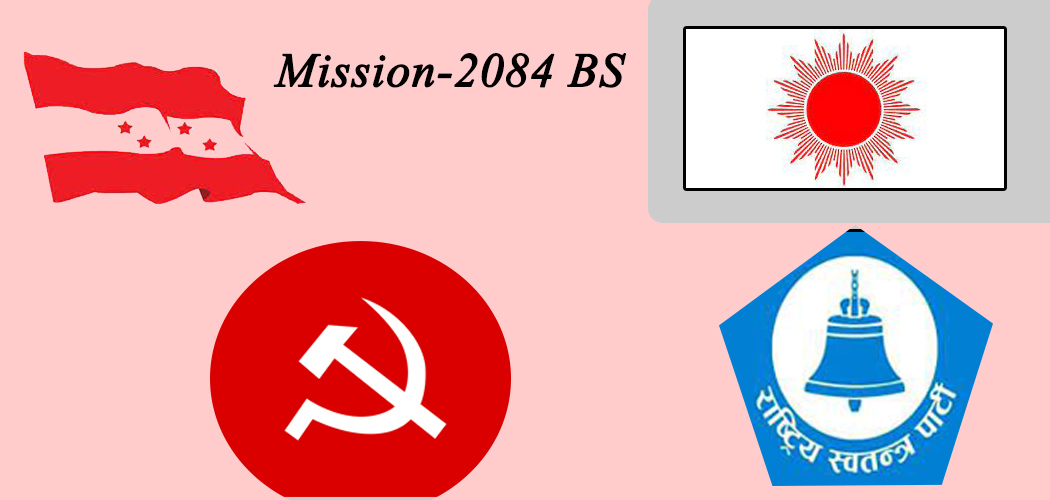
As Nepal once again moves toward elections, energy has re-emerged as a central theme in political manifestos. Major parties are presenting electricity as the “key to prosperity,” raising targets for megawatt production, promoting export visions, and linking hydropower with green hydrogen and digital transformation. The numbers look impressive on paper, but for many voters, a fundamental question remains unanswered: how many of the past promises were actually fulfilled.
During previous elections, similar commitments were made with equal enthusiasm. Parties pledged rapid expansion of generation capacity, higher per capita consumption, and improved export infrastructure. Yet, years later, critical problems related to power purchase agreements (PPAs), transmission bottlenecks, and regulatory uncertainty continue to limit the sector’s growth. Despite soaring targets, structural challenges remain largely unresolved.
In the 2019 (2079 BS) elections, the Communist Party of Nepal (Unified Marxist–Leninist) had pledged to raise installed capacity to 6,500 megawatts within five years and increase per capita consumption to 700 units. After forming the government, however, the party introduced the “take-and-pay” provision in the 2025 (2082 BS) budget without alternative mechanisms, effectively stalling new PPAs and slowing project development.
Similarly, the Nepali Congress had earlier focused on expanding clean energy for cooking and reducing carbon emissions. While it now brands itself as “Congress 2.0,” many of its energy-related commitments remain largely unchanged, raising questions about policy continuity and innovation.
The former Maoist force, now operating under the banner of the Communist Party of Nepal, had once promised to make every citizen a shareholder in hydropower projects. That vision, like many others, remained largely symbolic. The Rastriya Prajatantra Party had pledged nationwide grid connectivity and industrial integration, but these plans also failed to materialize in a meaningful way.
After the 2019 elections, political instability dominated national priorities. Coalition changes, power struggles, and frequent government reshuffles diverted attention from economic reform. As a result, many infrastructure and energy initiatives were delayed, and promised institutional reforms never progressed beyond policy documents.
Although private investment helped increase electricity generation to some extent, large-scale projects, industrial expansion, and domestic energy utilization remained limited. Most structural reforms related to transmission networks, consumption growth, and market integration stayed confined to political manifestos.
Public frustration gradually intensified and culminated in the Gen Z movement of 2025 (2082 BS), which challenged major state institutions and exposed deep political mistrust. The protests disrupted governance for nearly two days, pushing the country into a period of uncertainty that eventually led to parliamentary dissolution and another round of elections.
New Manifestos, Familiar Commitments
In the post-movement political environment, parties have once again returned to voters with fresh manifestos that largely echo previous pledges—this time with even bigger targets.
The Nepali Congress has promised to raise installed capacity to 14,000 megawatts within five years, increase per capita consumption to 750 units, and introduce a new Electricity Act. However, attempts to replace the existing law have repeatedly stalled in parliament since 2008, casting doubt on the feasibility of this commitment.
The party has also reiterated plans to advance mega projects such as Budhi Gandaki, Dudhkoshi, and Pancheshwar, expand transmission lines, and promote clean cooking programs. Yet, many of these projects have faced long-standing financial and political hurdles.
The CPN-UML has renewed its ambition to turn Nepal into South Asia’s clean energy export hub. Its manifesto proposes doubling both production and consumption, developing solar and green hydrogen, and ensuring year-round supply stability. Observers note that many of these proposals resemble those in earlier documents, repackaged with new terminology.
The Rastriya Swatantra Party has introduced a different narrative, linking surplus electricity to data centers, artificial intelligence, and cloud computing. It envisions building a “digital economy powered by energy,” with a long-term goal of reaching 30,000 megawatts and simplifying project approvals through a single-window system.
The Rastriya Prajatantra Party has declared the coming decade an “Energy Production Decade,” targeting 28,500 megawatts by 2035. Its plan emphasizes private sector participation, green hydrogen, electric mobility, and industrial expansion.
The Communist Party of Nepal has proposed raising capacity to 15,000 megawatts in five years, reopening stalled PPAs, and increasing the share of renewable energy. It has also prioritized cooperation with India and Bangladesh for electricity exports.
A newly emerging political force, the Ujyaalo Nepal Party, led by former energy chief Kulman Ghising, has placed public participation at the center of its energy agenda. The party proposes hydropower share ownership for every household, the creation of a public energy fund, and the establishment of a national prosperity fund through export revenues.
Big Targets, Bigger Implementation Gaps
Despite differences in presentation, most parties share a common narrative: increase production, expand exports, and promote industrialization through energy. What separates them is not the destination, but the route they claim to follow. However, past experience has made voters cautious about accepting these promises at face value.
Energy experts argue that Nepal’s core challenge is not limited to generation capacity. Transmission infrastructure remains inadequate, domestic consumption is still low, policies frequently change, and the investment climate lacks long-term stability. Without addressing these structural weaknesses, even the most ambitious targets are unlikely to be realized.
They warn that inconsistent regulations, delayed approvals, and political interference continue to discourage investors. At the same time, limited industrial demand restricts the productive use of surplus electricity, forcing banks and developers into financial uncertainty.
As election campaigns intensify, energy will once again dominate political speeches and policy documents. But for voters and businesses alike, the credibility of these promises will depend less on projected megawatts and more on concrete plans for execution. In a sector shaped by long gestation periods and heavy capital requirements, implementation—not ambition—remains the true measure of political commitment.
Advertisement
Written by
Dipesh Ghimire