NEPSE
Five Decades of Nepal's Securities Market: From a Single Trading Centre to NEPSE
The half-century arc from the Securities Marketing Centre to today's NEPSE captures something essential about how Nepal builds institutions — carefully, incrementally, and with significant state involvement at every stage. The foundations that were laid in 2033 BS, strengthened by legislation in 2040 BS, and institutionally consolidated in 2050 BS have created a functioning secondary market where previously none existed. That is a genuine achievement. But the market's next phase of development — broadening participation, deepening liquidity, introducing new products, and connecting Nepal's capital market more meaningfully to regional and global flows — will require governance structures, regulatory independence, and competitive dynamics that the current framework, shaped so heavily by state ownership, may find difficult to generate on its own.
Dipesh Ghimire
3 min read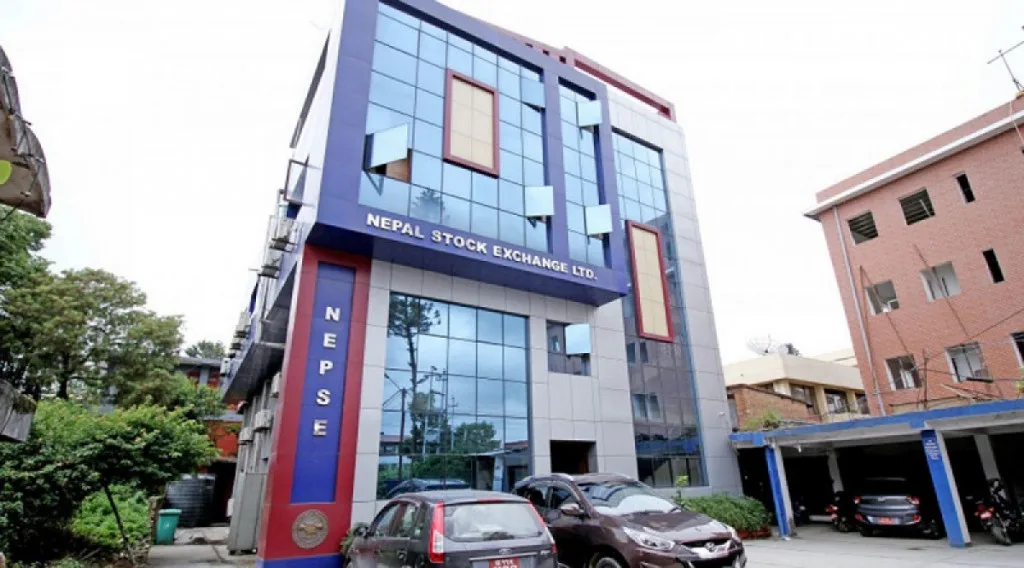
Nepal's journey into organized capital markets began more than five decades ago, but it was neither smooth nor swift. Built on fragile legal foundations, repeatedly restructured, and shaped by the limitations of each era it passed through, the country's securities market has arrived at its present form through a process of gradual, sometimes halting, institutional evolution.
The formal beginning came on Ashadh 22, 2033 BS, when the government established the Securities Marketing Centre in line with the industrial policy of 2030 BS. The centre introduced a system for the daily buying and selling of government bonds — the first organized arrangement of its kind in Nepal — and that date is rightly regarded as the birth of the country's formal securities market. The institution was incorporated under the Companies Act of 2021 BS, which created an immediate problem. The legal framework governing companies was not designed to regulate securities trading, and the absence of dedicated securities legislation meant the centre could not fully perform the role it was created to fulfil.
That gap was addressed in 2040 BS with the enactment of the Securities Trading Act — Nepal's first legislation specifically designed to govern the trading of securities. The following year, the Securities Marketing Centre was renamed the Securities Exchange Centre, and with the new legal backing in place, the institution began taking on a more substantive role. It started approving securities issuances by organized institutions, managing the listing process, and overseeing transactions — effectively serving as both the regulator and the operator of Nepal's securities market simultaneously. This dual role was a product of the times and of the limited institutional capacity available, but it planted the seeds of a structural tension that more developed markets resolve by separating these functions clearly.
The most significant reform came in 2050 BS, when the government moved to modernize the capital market by establishing Nepal Stock Exchange Limited — NEPSE. On Poush 23 of that year, NEPSE received the official license to operate Nepal's secondary securities market, and it has remained the country's sole authorized stock exchange ever since. The transition from the Securities Exchange Centre to NEPSE represented a meaningful step forward in institutional specialization, creating a dedicated exchange focused on providing a platform for trading securities already issued and distributed by organized institutions and listed for public trading.
NEPSE's current ownership structure reveals something important about the nature of Nepal's capital market. The government of Nepal holds 58.66 percent of NEPSE's capital — an outright majority that makes it the dominant owner by a substantial margin. Nepal Rastra Bank holds 9.5 percent, the Employees Provident Fund holds 10 percent, Rastriya Banijya Bank holds 11.23 percent, two other commercial banks together account for 10 percent, and the remaining market participants share just 0.60 percent. When you add up all the state-linked entities — the government itself, the central bank, the state-owned provident fund, and the state-owned commercial bank — they together control well over 89 percent of NEPSE.
This ownership concentration carries significant implications that deserve careful consideration. NEPSE is formally structured as a limited company, implying commercial operation and accountability to shareholders. But when nearly nine-tenths of the ownership rests with government and government-linked institutions, the practical dynamics are quite different from those of a commercially driven exchange. Decisions about governance, technology investment, fee structures, and market development are inevitably shaped by the priorities and constraints of the dominant public-sector owners rather than by competitive market pressures. In most countries that have developed deep and efficient capital markets, stock exchanges have over time moved toward broader ownership, including participation from brokers, institutional investors, and in some cases public shareholders — a process that introduces accountability and competitive incentives that purely government-owned structures can struggle to generate.
The half-century arc from the Securities Marketing Centre to today's NEPSE captures something essential about how Nepal builds institutions — carefully, incrementally, and with significant state involvement at every stage. The foundations that were laid in 2033 BS, strengthened by legislation in 2040 BS, and institutionally consolidated in 2050 BS have created a functioning secondary market where previously none existed. That is a genuine achievement. But the market's next phase of development — broadening participation, deepening liquidity, introducing new products, and connecting Nepal's capital market more meaningfully to regional and global flows — will require governance structures, regulatory independence, and competitive dynamics that the current framework, shaped so heavily by state ownership, may find difficult to generate on its own.
Advertisement
Written by
Dipesh Ghimire