iCAR V27 Hybrid SUV
iCAR V27 Hybrid SUV Enters Nepal With Off-Road Focus and 1,200-km Claimed Range
iCAR V27 Hybrid SUV The success of the model will depend on whether consumers consider its hybrid technology and performance advantages sufficient to justify the higher price compared with conventional SUVs and fully electric alternatives already available in Nepal.
Dipesh Ghimire
3 min read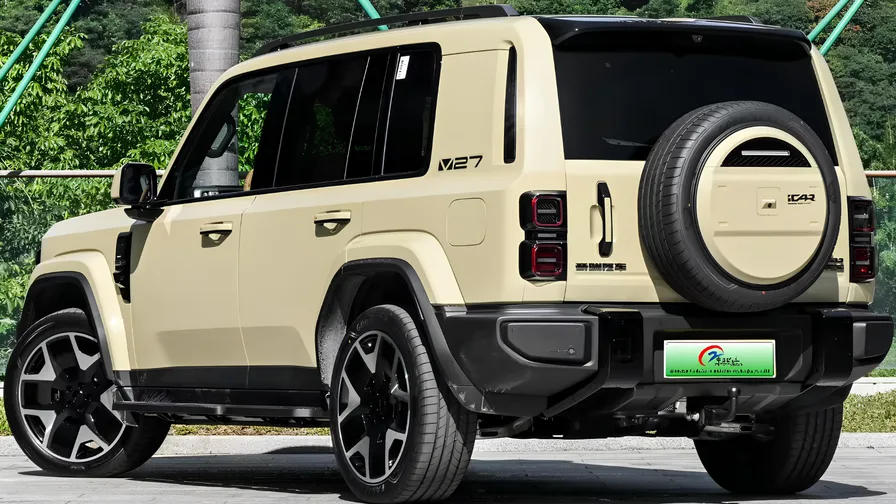
KATHMANDU — SPG Automobile, the authorised distributor of iCAR vehicles in Nepal, has introduced the iCAR V27, a new hybrid SUV targeting consumers seeking a combination of long-distance capability, off-road performance and electric driving convenience.
The vehicle was unveiled at the NAIMA Mobility Expo 2026 as part of the company's expansion into Nepal's growing hybrid and new-energy vehicle market. With increasing demand for vehicles that can reduce fuel consumption while maintaining long-distance usability, hybrid SUVs are emerging as an alternative between conventional petrol models and fully electric vehicles.
Under the NAIMA promotional offer, the price of the iCAR V27 has been set at Rs 5.099 million. The company has also announced a regular price of Rs 5.399 million, meaning buyers can receive an introductory benefit of Rs 300,000 during the promotional period.
The V27 comes with a plug-in hybrid powertrain combining a 1.5-litre turbocharged petrol engine with a battery-powered electric system. This configuration allows the vehicle to operate in electric mode for shorter urban journeys while using the petrol engine for extended travel.
The SUV is equipped with a 31.3-kWh LFP (Lithium Iron Phosphate) battery pack, which provides a pure electric driving range of around 145 kilometres, according to the company. LFP battery technology is widely used in electric vehicles because of its durability, thermal stability and longer cycle life compared with some other battery chemistries.
For users travelling longer distances, the hybrid system provides a major advantage. iCAR claims that the V27 can deliver a combined driving range of around 1,200 kilometres with a full fuel tank and fully charged battery, reducing concerns about charging availability during long journeys.
The all-wheel-drive version of the V27 is designed to offer strong performance. It produces a maximum output of 335 kW and generates 505 Nm of torque, figures that place it among the more powerful SUVs entering Nepal's premium hybrid segment.
The vehicle can accelerate from zero to 100 kilometres per hour in approximately 5.5 seconds, indicating that the company is targeting not only practicality but also performance-oriented SUV buyers.
The dimensions of the V27 reflect its positioning as a large SUV. It measures 5,055 mm in length, 1,976 mm in width and 1,894 mm in height, with a 2,910-mm wheelbase.
The longer wheelbase and wider body are expected to provide a spacious cabin, better passenger comfort and improved stability, especially during highway driving and rough-road conditions. Such characteristics could appeal to Nepali consumers who frequently travel across varied terrain where road conditions can change significantly between urban and rural areas.
Unlike compact urban SUVs, the V27 appears aimed at buyers looking for a larger vehicle capable of handling family travel, highway journeys and occasional off-road use. Its hybrid technology attempts to address one of the major limitations faced by fully electric vehicles in Nepal — charging infrastructure availability outside major cities.
However, the vehicle enters a market where competition is becoming increasingly strong. Buyers in Nepal are now comparing vehicles based on not only purchase price but also battery technology, after-sales support, maintenance costs, resale value and long-term reliability.
At the same time, the real-world performance of the vehicle, including actual electric range, fuel efficiency, charging convenience and off-road capability under Nepal's road conditions, will determine its acceptance among buyers.
With a promotional price of around Rs 5.1 million, strong power output, all-wheel-drive capability and a claimed 1,200-kilometre combined range, the iCAR V27 enters Nepal's SUV market with specifications designed to compete in the premium hybrid category.
The success of the model will depend on whether consumers consider its hybrid technology and performance advantages sufficient to justify the higher price compared with conventional SUVs and fully electric alternatives already available in Nepal.
Advertisement
Written by
Dipesh Ghimire