Nepal’s Commercial Banks
Nepal’s Commercial Banks See Profit Recovery, Earnings Rise 19 Percent in 11 Months
The latest figures show that Nepal’s banking sector is gradually strengthening, but the growing gap between high-performing and weaker institutions suggests that competition and financial discipline will play an increasingly important role in determining future success.
Dipesh Ghimire
2 min read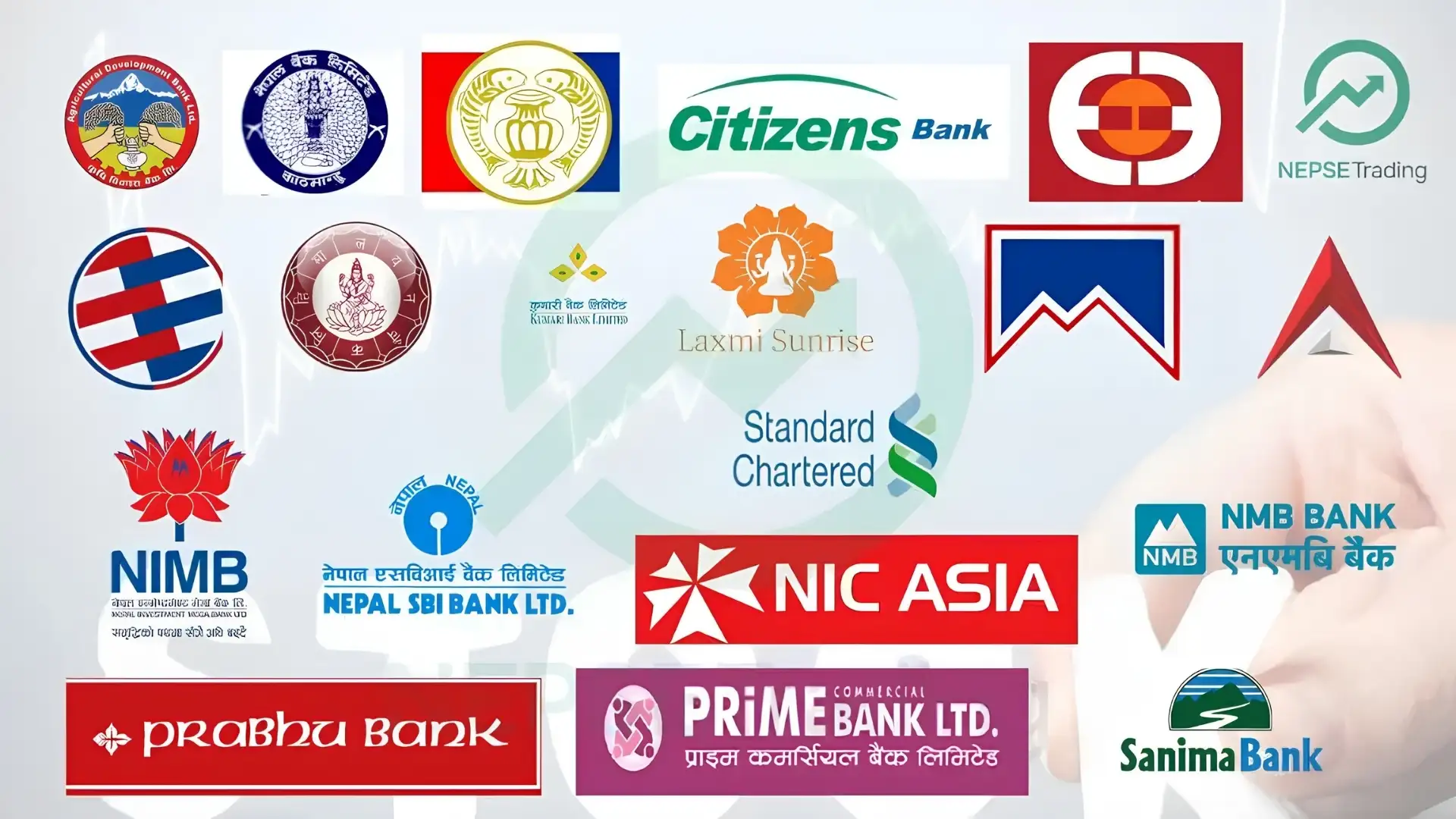
Kathmandu — Nepal’s commercial banking sector has shown a notable improvement in profitability during the first 11 months of the current fiscal year, indicating a gradual recovery in financial performance despite continued challenges in the economy.
According to the latest financial data, 20 commercial banks earned a combined net profit of Rs 64.56 billion from Shrawan to Jestha of the fiscal year 2082/83. The figure is significantly higher than the Rs 53.97 billion recorded during the same period last year, reflecting an annual growth of around 19 percent.
The rise in profits suggests that the banking sector has been able to improve earnings through better financial management, recovery of loans, and operational efficiency. However, the performance has not been uniform across all banks, with some institutions recording strong growth while others faced pressure on profitability.
Nabil Bank maintained its position as the most profitable commercial bank in Nepal. The bank posted a net profit of Rs 8.49 billion during the review period, compared to Rs 6.40 billion a year earlier. Its earnings increased by more than 32 percent, making it the leading bank in terms of profit size.
Global IME Bank ranked second with a net profit of Rs 5.97 billion. However, unlike Nabil Bank, its profit declined slightly compared to the previous year, showing that larger market presence alone does not always guarantee higher earnings growth.
Kumari Bank emerged as the fastest-growing bank in terms of profitability. The bank’s profit jumped to Rs 4.70 billion from Rs 371 million in the same period last year. The sharp increase reflects a significant improvement in its financial performance compared to the previous year.
Several other banks also recorded positive growth. Prime Commercial Bank, Rastriya Banijya Bank, NMB Bank, and Sanima Bank showed strong improvement in earnings. Rastriya Banijya Bank’s profit increased significantly to Rs 3.72 billion, while Sanima Bank recorded a profit growth of more than 44 percent.
However, not all banks benefited from the improving trend. Nepal Investment Mega Bank reported a decline in profit, earning Rs 4.49 billion compared to Rs 5.68 billion last year. Everest Bank also saw its profit decrease slightly during the review period.
The mixed results highlight the changing dynamics within Nepal’s banking sector. While some banks have successfully expanded profitability, others are facing challenges related to loan recovery, interest income pressure, and maintaining asset quality.
The improvement in overall banking profit comes at a time when banks have been operating under pressure from slower credit expansion, changing interest rates, and cautious lending practices. The rise in earnings indicates that financial institutions have adapted to the changing environment by focusing on cost control, risk management, and efficient operations.
However, analysts suggest that sustainable profitability will depend on the quality of future lending rather than short-term profit growth. As credit demand increases and economic activities recover, banks will need to maintain a balance between expansion and risk management.
The latest figures show that Nepal’s banking sector is gradually strengthening, but the growing gap between high-performing and weaker institutions suggests that competition and financial discipline will play an increasingly important role in determining future success.
Advertisement
Written by
Dipesh Ghimire