Top
Trump Revives Proposal to Cap US Credit Card Interest Rates at 10 Percent With Bipartisan Push
For financial markets and major card-issuing banks, legislative momentum behind this proposal introduces significant regulatory and earnings risk. Even if a final compromise settles above the 10 percent threshold, bipartisan scrutiny over the USD 160 billion annual interest burden signals growing political willingness to curb high-margin consumer lending practices.
Dipesh Ghimire
3 min read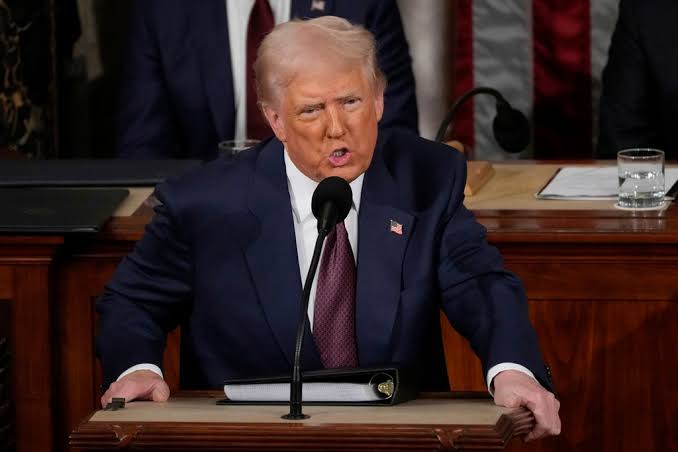
WASHINGTON — A proposal to cap credit card interest rates at 10 percent across the United States has returned to the center of economic debate after President Donald Trump signaled readiness to collaborate with Democratic lawmakers to push the measure through Congress. Researchers estimate that enacting the ceiling could save American consumers roughly USD 100 billion annually in interest payments.
Speaking in an interview with Fox News on Saturday, Trump criticized credit card issuers for generating excessive profits and pledged to revive the rate cap initiative. He had originally campaigned on the 10 percent cap during the 2024 presidential race, though earlier efforts stalled amid fierce pushback from banking lobbies and insufficient backing within his own Republican Party.
With Democratic leadership positioned across both chambers of Congress, Trump expressed optimism that the legislation now stands a stronger chance of passage. Prominent Democratic lawmakers, including Senator Elizabeth Warren and Representative Maxine Waters, alongside Republican Senator Josh Hawley, have previously championed similar rate-cap measures, with Warren reiterating her call for consumer relief following Trump's remarks.
Data from the Federal Reserve Bank of New York shows that the average credit card interest rate in the United States currently stands at 22.2 percent. Enforcing a 10 percent statutory cap would slash borrowing costs by more than half, offering substantial financial relief to households carrying revolving balances.
According to the Consumer Financial Protection Bureau (CFPB), approximately 195 million Americans held credit cards in 2024, paying a combined USD 160 billion in interest charges over the course of the year—underscoring how heavily high-interest debt weighs on household budgets.
Total US credit card debt has continued to climb steadily. New York Fed figures indicate that aggregate credit card balances reached a then-record USD 1.23 trillion in the third quarter of 2025 before surging further to USD 1.285 trillion in the third quarter of 2026, intensifying political pressure to rein in borrowing costs.
Major banks and card networks have strongly opposed the proposed cap, warning that a rigid 10 percent ceiling would make it unprofitable to extend unsecured credit to lower-income households and borrowers with weak credit histories. Industry groups argue that lenders would be forced to revoke credit lines for higher-risk consumers while scaling back popular rewards programs and cardholder perks.
Conversely, economic researchers and proponents of the cap contend that while bank profit margins and ancillary rewards would shrink, the credit card industry would remain profitable overall while delivering massive direct savings to working families.
The intensifying debate underscores a fundamental policy tension in American consumer finance: balancing immediate debt-cost relief for households against banks' ability to price credit risk and maintain broad access to unsecured lending.
President Trump's pivot toward bipartisan cooperation on a 10 percent credit card interest rate cap highlights a rare populist convergence in US economic policy, driven by mounting household debt burdens.
With total US credit card balances expanding from USD 1.23 trillion in Q3 2025 to USD 1.285 trillion in Q3 2026—and average annual percentage rates (APRs) hovering at 22.2 percent—interest expenses have become a major drag on consumer disposable income. Because credit card debt is revolving and unsecured, high interest rates compound rapidly, trapping millions of borrowers in persistent debt cycles even as headline inflation moderates.
From a banking economics standpoint, a mandatory 10 percent cap would fundamentally disrupt the risk-based pricing model that underpins the US consumer credit market. Credit card issuers rely on high APRs to offset elevated default rates on unsecured loans and to subsidize lucrative cashback and travel rewards programs for prime customers. Cutting maximum rates by more than half would likely trigger credit rationing—meaning subprime and near-prime borrowers could lose access to formal credit lines altogether, potentially pushing them toward costlier alternative lenders such as payday loans.
For financial markets and major card-issuing banks, legislative momentum behind this proposal introduces significant regulatory and earnings risk. Even if a final compromise settles above the 10 percent threshold, bipartisan scrutiny over the USD 160 billion annual interest burden signals growing political willingness to curb high-margin consumer lending practices.
Written by
Dipesh Ghimire