Popular News
Unplanned Urbanization Leaves Nepal’s Cities Strained as Vision for New Cities Stalls
Unplanned Urbanization Leaves Nepal’s Cities Strained as Vision for New Cities Stalls Kathmandu — Nepal’s rapid and largely unplanned urbanization has emerged as one of the country’s most pressing long-term challenges, raising serious concerns about livability, sustainability, and the future of its cities—especially the capital, Kathmandu. The trend of rural-to-urban migration began accelerating in 1996 (2052 BS) with the outbreak of the Maoist armed conflict, as insecurity pushed people toward urban centers. After the peace process, the movement intensified. Earnings from foreign employment further fueled the trend, as returning migrant workers invested heavily in urban land and housing. However, while cities expanded rapidly, the state failed to build urban infrastructure at a pace capable of supporting this growth.
Dipesh Ghimire
5 min read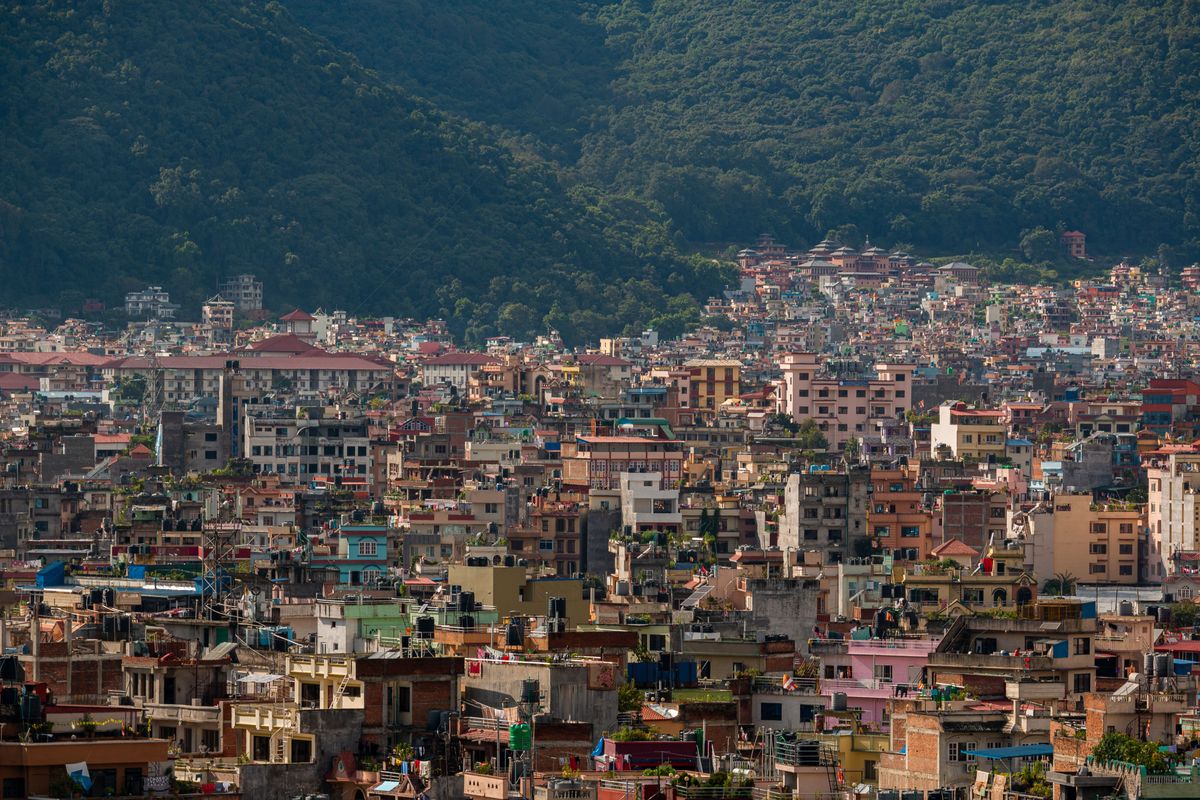
Kathmandu — Nepal’s rapid and largely unplanned urbanization has emerged as one of the country’s most pressing long-term challenges, raising serious concerns about livability, sustainability, and the future of its cities—especially the capital, Kathmandu.
The trend of rural-to-urban migration began accelerating in 1996 (2052 BS) with the outbreak of the Maoist armed conflict, as insecurity pushed people toward urban centers. After the peace process, the movement intensified. Earnings from foreign employment further fueled the trend, as returning migrant workers invested heavily in urban land and housing. However, while cities expanded rapidly, the state failed to build urban infrastructure at a pace capable of supporting this growth.
Cities Grew, Planning Did Not
Urban development typically evolves from the expansion of settlements into structured cities—but this requires long-term planning. In Nepal, such planning has been minimal. While some areas adopted land pooling projects and limited site-and-service models to guide settlement growth, these efforts were scattered and insufficient.
Cities generate economic activity, consumption, and tax revenue. Yet, revenue generated from urban areas has rarely been reinvested into structured urban development. As a result, cities like Kathmandu have grown organically and chaotically, with little regard for future needs.
Major urban development projects in the Kathmandu Valley stalled due to a lack of direct government investment. Although initiatives supported by the World Bank and the Asian Development Bank (ADB)—such as integrated and dense urban development programs—are ongoing, the government itself has remained reluctant to invest substantially in city-building. Plans are frequently announced, feasibility studies commissioned, but implementation remains elusive.
Kathmandu today is visibly congested and disorganized, yet there is no widely accepted vision of what the capital should look like in the next 20 or 30 years. In contrast, cities abroad are guided by comprehensive master plans that clearly define residential zones, commercial districts, green spaces, and infrastructure corridors. In Nepal, houses were built first; management came later—if at all.
Land Ownership: The Core Constraint
One of Nepal’s biggest structural obstacles to planned urban development is private land ownership. Since the 1970s, land ownership disputes and fragmentation intensified. After the promulgation of the 2015 Constitution, land became firmly established as an individual fundamental right, making acquisition by the state both legally complex and financially prohibitive.
Any public project now requires compensation, often at market rates. Given limited fiscal capacity, the government struggles to acquire land at scale. This has made planned urbanization extremely expensive, if not impossible, under current models. As land prices soar, so does the cost of infrastructure, leaving many urban projects stuck on paper.
The Case for Planned Urban Expansion
Without intervention, Kathmandu’s congestion will worsen dramatically. Despite widening nearly 600 kilometers of roads over the past decade, traffic congestion remains severe. A five-kilometer commute during office hours already takes close to an hour; in the future, it could take twice as long.
To ease pressure on the historic core of the city, new planned cities are essential. Properly planned urban areas would allow for adequate parking, designated commercial zones, residential areas, and open spaces—features that Kathmandu currently lacks.
Planned expansion would also encourage population redistribution. Residents from overcrowded inner-city neighborhoods could relocate to better-managed areas, reducing density and strain on existing infrastructure. This, in turn, would help preserve heritage zones and improve overall quality of life.
However, resistance persists. Property owners in existing urban centers often fear that new cities will reduce land values, creating political and social barriers to long-term planning.
Fragmentation and Weak Regulation
Urban standards remain weak. Land parcels as small as one anna can legally be subdivided, resulting in dense, inaccessible neighborhoods. In developed countries, inheritance often triggers heavy taxation, discouraging excessive fragmentation. In Nepal, simple name transfers are sufficient, accelerating land division and undermining urban order.
Municipalities have also permitted housing construction on fertile agricultural land, blurring the line between urban and rural zones. As a result, farmland has been lost without meeting even basic urban infrastructure standards.
Population growth further compounds the problem. Existing infrastructure cannot support future demand, yet expansion continues without clear direction. Green spaces are shrinking, and even government-owned land is frequently encroached upon for large buildings.
Climate Risks and Infrastructure Blind Spots
Recent flooding in Kathmandu exposed another flaw of unplanned urbanization. Drainage systems, river corridors, and groundwater recharge zones were ignored as construction spread. Concrete surfaces now prevent rainwater absorption, increasing runoff and flood risk while depleting groundwater reserves.
Water supply projects like Melamchi also raise unanswered questions. As supply increases, so does wastewater. Without integrated planning, future floods could have severe consequences.
Stalled New City and Ring Road Plans
The Kathmandu Valley Development Authority once proposed four major new cities within the Valley—one spanning 100,000 ropanis and three of 10,000 ropanis each. Despite detailed planning based on land pooling models, the cabinet returned the proposal citing lack of guaranteed funding. Ironically, land pooling would have reduced the need for direct government expenditure.
Land in these proposed zones has remained frozen for years without progress, creating hardship for residents and violating legal limits on land restriction periods.
Similarly, the long-discussed Outer Ring Road has stalled despite significant preliminary investment. The road could have transformed traffic flow by allowing east–west transit without entering the city core. Political resistance, fragmented decision-making, and lack of sustained commitment have repeatedly derailed the project.
Satellite Cities: Idea Without Execution
Satellite city concepts—such as in Banepa, Dhulikhel, Panauti, or parts of Nuwakot—remain largely theoretical. Without fast, reliable transport links, people are unwilling to relocate. Successful satellite cities require not just housing, but employment, education, healthcare, and seamless connectivity.
Beyond Roads: Economic Activity Matters
Infrastructure alone does not create cities. Roads without economic activity lead to migration patterns that destroy farmland without creating viable urban centers. Along the Mid-Hill Highway, settlements expanded haphazardly, but many proposed “model cities” failed to materialize due to lack of jobs and services.
Ultimately, migration in Nepal is driven primarily by employment. Without local economic opportunities, people will continue to gravitate toward the capital or move abroad.
A Question of Political Will
At the heart of Nepal’s urban crisis lies weak state capacity and short-term thinking. Planning cities requires vision, patience, and upfront investment—benefits that accrue over decades, not election cycles. While private sector and donor-funded projects have played roles, the absence of strong government leadership has left urbanization directionless.
The Way Forward
Nepal does not lack ideas or technical expertise; it lacks execution, coordination, and political resolve. Planned cities, land pooling, satellite towns, and integrated transport networks are all viable. What is missing is a binding national urban vision, enforced land-use regulation, and a robust post-planning implementation mechanism.
Without decisive action, Nepal risks locking itself into decades of congestion, environmental stress, and declining urban livability. With it, the country still has a chance to build cities that are resilient, inclusive, and fit for future generations.
Advertisement
Written by
Dipesh Ghimire