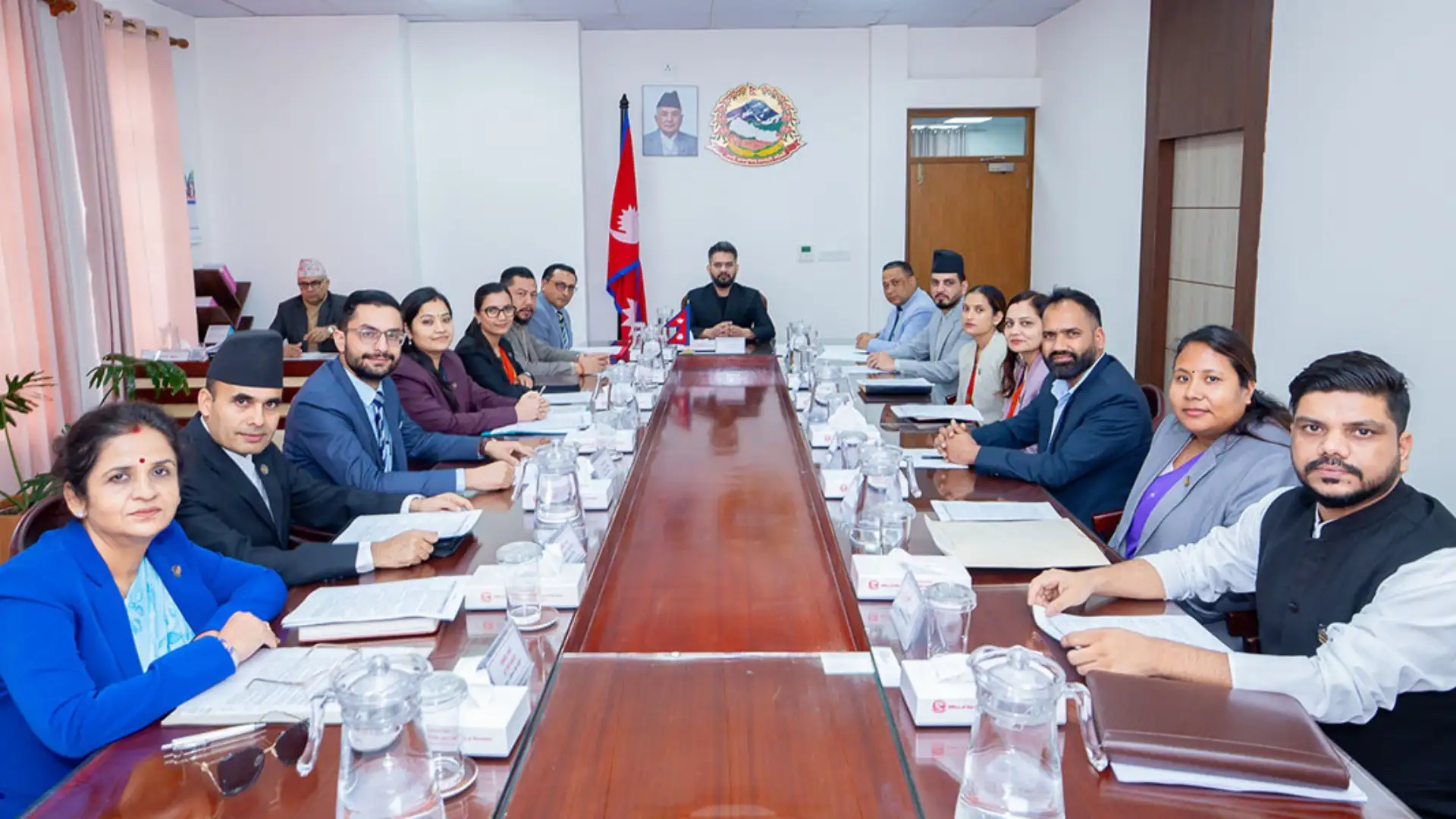
Kathmandu — The government has claimed early signs of economic recovery within 100 days of its reform-oriented tenure, citing improvements in revenue collection, rising investor confidence, and stronger engagement from development partners.
Authorities said the policy measures introduced under the leadership of the Rastriya Swatantra Party (RSP) and economic direction set by Finance Minister Swarnim Wagle have begun showing results in strengthening the overall economic environment.
The government said it has focused on improving the investment climate by scrapping outdated laws, removing unnecessary regulatory bodies, and reforming tax-related policies to ease business operations. Officials claim these steps have increased private sector confidence and encouraged investment expansion.
A key priority of the administration is its long-term vision of expanding the economy significantly over the next several years, targeting rapid growth through sectors such as energy, tourism, ICT, agriculture, and infrastructure. The government has aligned its budget with this “mission-based” economic transformation strategy.
Officials said governance reforms have also emphasized digital service delivery, performance-based monitoring, and stricter accountability mechanisms to improve efficiency in public institutions. The aim is to shift from traditional bureaucratic processes to result-oriented administration.
The government has also introduced reforms in public services, including an electronic pension verification system for more than 350,000 pensioners, eliminating the need for physical presence and reducing administrative costs.
Another major policy change includes the introduction of bi-monthly salary payments for federal employees, aimed at improving cash flow in the economy and boosting consumer demand.
Revenue administration has also been strengthened through digital tax monitoring systems and tighter enforcement mechanisms to reduce leakage and improve transparency.
In addition, fiscal discipline measures such as reductions in fuel allowances for government officials have been introduced as part of broader efforts to control public expenditure.
Authorities said trade, investment promotion, and economic diplomacy have been prioritized, with active engagement in international forums and efforts to attract foreign investment into Nepal’s infrastructure and development sectors.
Interpretation: Reform Push vs Delivery Challenge
Economists say the policy direction reflects a strong reform agenda focused on liberalization, digitization, and fiscal restructuring. However, they caution that the real test will be implementation capacity and sustained economic productivity.
While early indicators such as improved revenue collection and investor sentiment appear positive, experts note that long-term growth will depend on structural changes in production, exports, and job creation rather than policy announcements alone.
For now, the government’s 100-day report signals optimism and reform momentum, but sustaining this trajectory will require consistent execution and institutional stability.