रास्वपा : मौद्रिक नीतिका लागि ७ बुँदे सुझाव, शेयर धितो कर्जा र पूँजीबजार सुधारमा जोडRSP Proposes Seven-Point Agenda for Monetary Policy 2083/84, Focuses on Capital Market Reforms
काठमाडौं । राष्ट्रिय स्वतन्त्र पार्टी (रास्वपा) अन्तर्गतको मुद्रा तथा पूँजीबजार विभागले आगामी आर्थिक वर्ष २०८३/०८४ को मौद्रिक नीतिका लागि नेपाल राष्ट्र बैंकसमक्ष सात बुँदे सुझाव पेश गरेको छ। पार्टीले वित्तीय प्रणालीलाई थप गतिशील बनाउने, पूँजीबजारमा संस्थागत सहभागिता बढाउने र लगानीमैत्री वातावरण सिर्जना गर्ने उद्देश्यसहित सुझाव सार्वजनिक गरेको जनाएको छ।
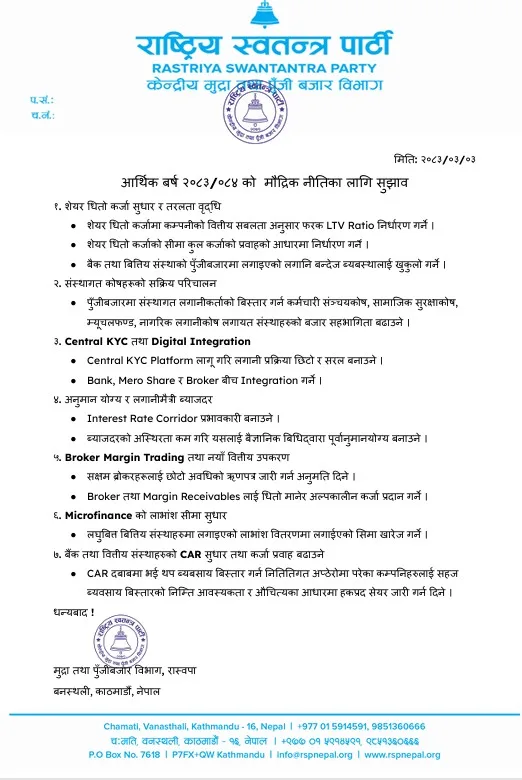
रास्वपाले सबैभन्दा पहिले शेयर धितो कर्जा प्रणालीमा सुधार आवश्यक रहेको उल्लेख गरेको छ। कम्पनीको वित्तीय अवस्था र आधारभूत सबलताका आधारमा फरक–फरक Loan to Value (LTV) Ratio निर्धारण गर्नुपर्ने, शेयर धितो कर्जाको सीमा समग्र कर्जा प्रवाहको आधारमा तय गर्नुपर्ने तथा बैंक तथा वित्तीय संस्थाले पूँजीबजारमा गर्न पाउने लगानीसम्बन्धी विद्यमान बन्देजलाई खुकुलो बनाउनुपर्ने सुझावमा उल्लेख गरिएको छ।
पार्टीले संस्थागत लगानीकर्ताको भूमिका विस्तार गर्न पनि जोड दिएको छ। कर्मचारी सञ्चय कोष, सामाजिक सुरक्षा कोष, नागरिक लगानी कोष, म्युचुअल फण्डलगायत संस्थाहरूको पूँजीबजारमा सहभागिता बढाइए बजारमा स्थायित्व र दीर्घकालीन लगानी संस्कृतिको विकास हुने विश्वास रास्वपाको छ।
सुझावमा डिजिटल पूर्वाधारको एकीकरणलाई पनि प्राथमिकता दिइएको छ। लगानी प्रक्रिया सहज र छिटो बनाउन Central KYC Platform लागू गर्नुपर्ने तथा बैंक, मेरो सेयर र ब्रोकर प्रणालीबीच प्रत्यक्ष डिजिटल एकीकरण गर्नुपर्ने माग गरिएको छ। यसबाट लगानीकर्ताले एउटै प्रणालीमार्फत सहज सेवा प्राप्त गर्न सक्ने अपेक्षा गरिएको छ।
त्यसैगरी, ब्याजदरलाई अनुमानयोग्य र स्थिर बनाउने व्यवस्था गर्नुपर्ने सुझाव पनि समावेश गरिएको छ। रास्वपाले Interest Rate Corridor लाई प्रभावकारी रूपमा कार्यान्वयन गर्दै ब्याजदरमा हुने अस्थिरता घटाउन र वैज्ञानिक विधिबाट पूर्वानुमानयोग्य प्रणाली विकास गर्नुपर्ने आवश्यकता औंल्याएको छ।
रास्वपाले ब्रोकर मार्जिन ट्रेडिङ र नयाँ वित्तीय उपकरणको विकासका लागि सक्षम ब्रोकर कम्पनीलाई छोटो अवधिका ऋणपत्र जारी गर्न अनुमति दिनुपर्ने तथा ब्रोकरको Margin Receivables लाई धितो मानेर अल्पकालीन कर्जा प्रवाह गर्न सकिने व्यवस्था गर्नुपर्ने सुझाव दिएको छ। यसले बजारमा थप तरलता प्रवाह हुने र कारोबार विस्तारमा सहयोग पुग्ने विश्वास गरिएको छ।
लघुवित्त वित्तीय संस्थामाथि लगाइएको लाभांश वितरण सीमा पुनरावलोकन गर्नुपर्ने माग पनि सुझावमा समेटिएको छ। लाभांश वितरणमा रहेको सीमा हटाइए संस्थाहरूको प्रतिस्पर्धात्मक क्षमता बढ्ने र लगानीकर्ताको आकर्षणसमेत वृद्धि हुने रास्वपाको तर्क छ।
यस्तै, बैंक तथा वित्तीय संस्थाको पूँजी पर्याप्तता अनुपात (CAR) सम्बन्धी दबाबका कारण व्यवसाय विस्तारमा समस्या परेका कम्पनीलाई आवश्यकताको आधारमा हकप्रद शेयर जारी गर्न सहज व्यवस्था गर्नुपर्ने सुझाव पनि दिइएको छ। यसले वित्तीय संस्थाको कर्जा प्रवाह क्षमता विस्तार गर्न सहयोग पुग्ने र समग्र अर्थतन्त्रमा लगानी बढाउन सकारात्मक प्रभाव पार्ने रास्वपाको विश्वास छ।
रास्वपाले आफ्ना यी सुझावहरू कार्यान्वयन भएमा नेपालको पूँजीबजार थप व्यवस्थित, प्रविधिमैत्री र लगानीकर्तामैत्री बन्ने तथा वित्तीय प्रणालीमा दीर्घकालीन स्थायित्व कायम गर्न सहयोग पुग्ने अपेक्षा व्यक्त गरेको छ।
Kathmandu: The Monetary and Capital Market Department of the Rastriya Swatantra Party (RSP) has submitted a seven-point recommendation for the Monetary Policy of Fiscal Year 2083/84 (2026/27), urging the central bank to introduce reforms aimed at improving liquidity, strengthening Nepal’s capital market, and creating a more investment-friendly financial environment.
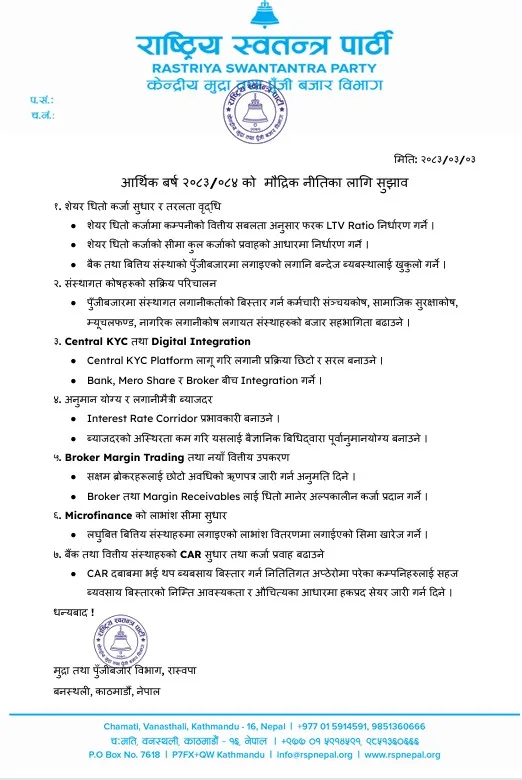
One of the party’s key recommendations is the reform of share-backed lending policies. RSP has suggested that the Loan-to-Value (LTV) ratio should be determined based on the financial strength and stability of listed companies rather than applying a uniform standard. It has also proposed that limits on share-backed loans should be linked to the overall credit portfolio and that existing restrictions on banks and financial institutions investing in the capital market should be eased.
The party has also emphasized the need to increase institutional participation in the stock market. It recommends encouraging organizations such as the Employees Provident Fund, Social Security Fund, Citizen Investment Trust, mutual funds, and other institutional investors to play a larger role in the market, arguing that greater institutional participation would enhance market stability and long-term investment.
Highlighting the importance of technology-driven reforms, RSP has called for the implementation of a Central KYC Platform to simplify and speed up the investment process. It has also proposed greater digital integration between banks, Mero Share, and brokerage systems, enabling investors to access services more efficiently through interconnected platforms.
The recommendations further stress the importance of predictable and investment-friendly interest rates. According to the party, the Interest Rate Corridor should be made more effective to reduce volatility in lending rates and establish a scientific framework that allows businesses and investors to better anticipate future interest rate movements.
RSP has also proposed reforms related to broker margin trading and new financial instruments. The party suggests allowing financially capable brokerage firms to issue short-term debt instruments and enabling banks to provide short-term credit by recognizing brokers’ margin receivables as collateral. Such measures, it argues, would improve market liquidity and facilitate smoother trading activities.
Another recommendation concerns the dividend distribution cap imposed on microfinance institutions. RSP has urged policymakers to remove the existing ceiling, stating that doing so would strengthen the sector’s competitiveness and improve investor confidence.
Finally, the party has addressed the issue of Capital Adequacy Ratio (CAR) requirements for banks and financial institutions. It has proposed allowing companies facing capital constraints to issue rights shares based on necessity and justification, arguing that such flexibility would support business expansion and ultimately increase credit flow within the economy.