पीपीपी मोडलमा बन्ने वेस्ट सेती ४०० केभी प्रसारण लाइन अघि बढ्योWest Seti 400 kV Transmission Line Advances Under PPP Model
पश्चिम नेपालका ठूला जलविद्युत् आयोजनाको बिजुली राष्ट्रिय प्रसारण प्रणालीमा जोड्ने वेस्ट सेती ४०० केभी प्रसारण लाइन आयोजना सार्वजनिक–निजी साझेदारी (पीपीपी) मोडलमा अघि बढेको छ। प्रसारण पूर्वाधारमा निजी क्षेत्रसँगको यस्तो सहकार्य नेपालकै लागि नयाँ अभ्यास हो।
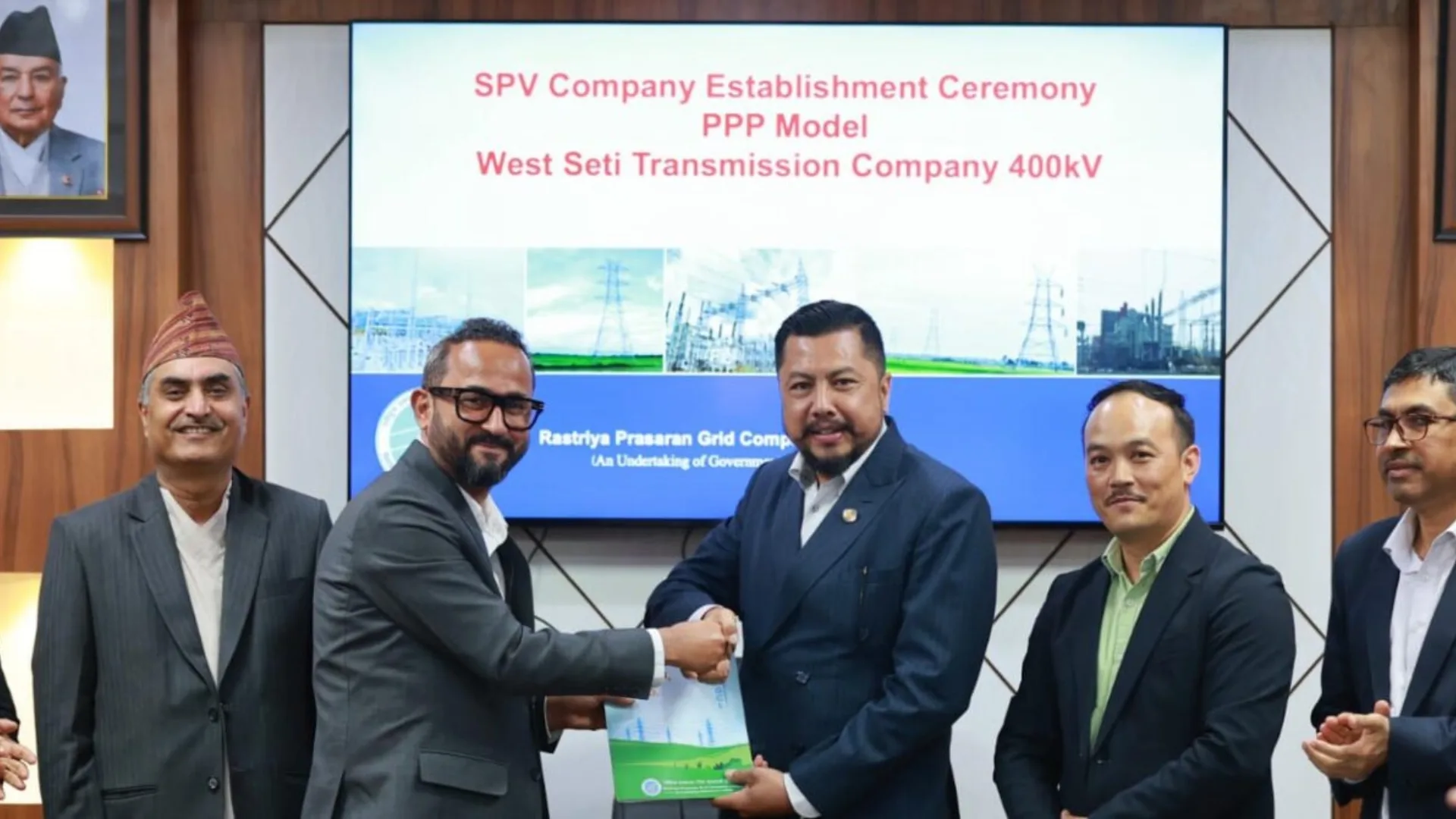
आयोजना कार्यान्वयन गर्न ‘वेस्ट सेती ट्रान्समिसन लिमिटेड’ नामक विशेष प्रयोजन कम्पनी (एसपीभी) गत जेठ १३ गते दर्ता भइसकेको छ। राष्ट्रिय प्रसारण ग्रिड कम्पनी (आरपीजीसीएल) को सञ्चालक समितिले लगानीको ढाँचा स्वीकृत गरेपछि दर्ता प्रक्रिया टुंगिएको हो। करिब २० अर्ब रुपैयाँ लागत अनुमान गरिएको आयोजना ३० प्रतिशत इक्विटी र ७० प्रतिशत ऋणमा बन्नेछ।
सोमबार संस्थापक साझेदारलाई सम्बोधन गर्दै ऊर्जामन्त्री विराज भक्त श्रेष्ठले निजी क्षेत्रको सक्रियता अब प्रसारण पूर्वाधारतिर पनि फैलिएको बताए। प्रसारण लाइनलाई ‘लाइफ लाइन’ भन्दै उनले यस्तो साझेदारीले ऊर्जा क्षेत्रमा नयाँ युग सुरु गर्ने विश्वास व्यक्त गरे। ‘निजी क्षेत्रले जोखिम उठाएर अघि बढेको छ, आयोजना सफल पार्न सरकार पछि हट्दैन,’ उनले भने।
कम्पनीको सेयरमा सरकारी पक्षको ५१ प्रतिशत स्वामित्व रहनेछ — आरपीजीसीएलको २६, चिलिमेको १२.५ र चैनपुर सेती हाइड्रोपावरको १२.५ प्रतिशत। निजी क्षेत्रतर्फ समृद्धि इनर्जीको २५.१, ङादी ग्रुप पावरको ७ र स्युरी ङादी पावरको ६.९ प्रतिशत रहनेछ भने बाँकी १० प्रतिशत सर्वसाधारणका लागि छुट्याइएको छ।
बझाङको चैनपुर सबस्टेसनबाट डोटीको बनलेक हुँदै कैलालीको दोधोधरा सबस्टेसनसम्म करिब १४५ किलोमिटर लामो यो ४०० केभी डबल सर्किट लाइन बन्नेछ। निर्माण अवधि पाँच वर्ष तोकिएको छ भने आवश्यक जग्गा प्राप्ति र प्रारम्भिक सर्वेक्षण सकिएको छ।
यही लाइनमार्फत ७५० मेगावाटको पश्चिम सेती, ४५० मेगावाटको सेती नदी–६ र १७० मेगावाटको अपर सेतीलगायत आयोजनाको बिजुली राष्ट्रिय प्रणालीमा जोडिनेछ। करिब २ हजार ५०० मेगावाटसम्म विद्युत् निकासी क्षमता विकास गर्ने लक्ष्य राखिएको यो आयोजनाले सीमापार विद्युत् व्यापार र ऊर्जा सुरक्षालाई समेत बलियो बनाउने अपेक्षा गरिएको छ।
The West Seti 400 kV Transmission Line, designed to connect electricity from major hydropower projects in western Nepal to the national grid, is being advanced under the Public-Private Partnership (PPP) model. Such collaboration with the private sector in transmission infrastructure is a new practice for Nepal.
A special purpose vehicle (SPV) named 'West Seti Transmission Limited' has been registered on May 27 (Jeth 13) to implement the project. The registration was completed after the board of directors of the Rastriya Prasaran Grid Company Limited (RPGCL) approved the investment structure. Estimated to cost around Rs 20 billion, the project will be built with 30 percent equity and 70 percent debt.
Addressing the founding partners on Monday, Energy Minister Biraj Bhakta Shrestha said the private sector's active role had now expanded into transmission infrastructure as well. Calling the transmission line the 'lifeline' of the energy sector, he expressed confidence that such partnerships would usher in a new era. "The private sector has stepped forward by taking on risk, and the government will not back away from its responsibility in completing the project successfully," he said.
The government side will hold 51 percent ownership in the company — RPGCL with 26 percent, Chilime with 12.5 percent, and Chainpur Seti Hydropower with 12.5 percent. On the private side, Samriddhi Energy will hold 25.1 percent, Ngadi Group Power 7 percent, and Syuri Ngadi Power 6.9 percent, while the remaining 10 percent has been set aside for the general public.
The roughly 145-kilometre, 400 kV double-circuit line will run from the Chainpur substation in Bajhang, through Banlek in Doti, to the Dodhodhara substation in Kailali. The construction period has been set at five years, and the necessary land acquisition and preliminary survey have already been completed.
Through this line, electricity from projects including the 750 MW West Seti, the 450 MW Seti River-6, and the 170 MW Upper Seti will be fed into the national grid. With a target of developing power export capacity of up to around 2,500 MW, the project is expected to strengthen cross-border power trade and energy security as well.