Top
CIB Tightens Grip on Financial Sector as NRB’s Supervisory Weakness Exposed
CIB Tightens Grip on Financial Sector as NRB’s Supervisory Weakness Exposed In recent months, Nepal Police’s Central Investigation Bureau (CIB) has widened its investigative net over the country’s banking and financial institutions, signaling a new era of aggressive enforcement against financial misconduct. As economic irregularities continue to surface, the CIB has increasingly stepped into a space traditionally dominated by Nepal Rastra Bank (NRB), raising questions about the effectiveness of the nation’s financial regulator.
Dipesh Ghimire
4 min read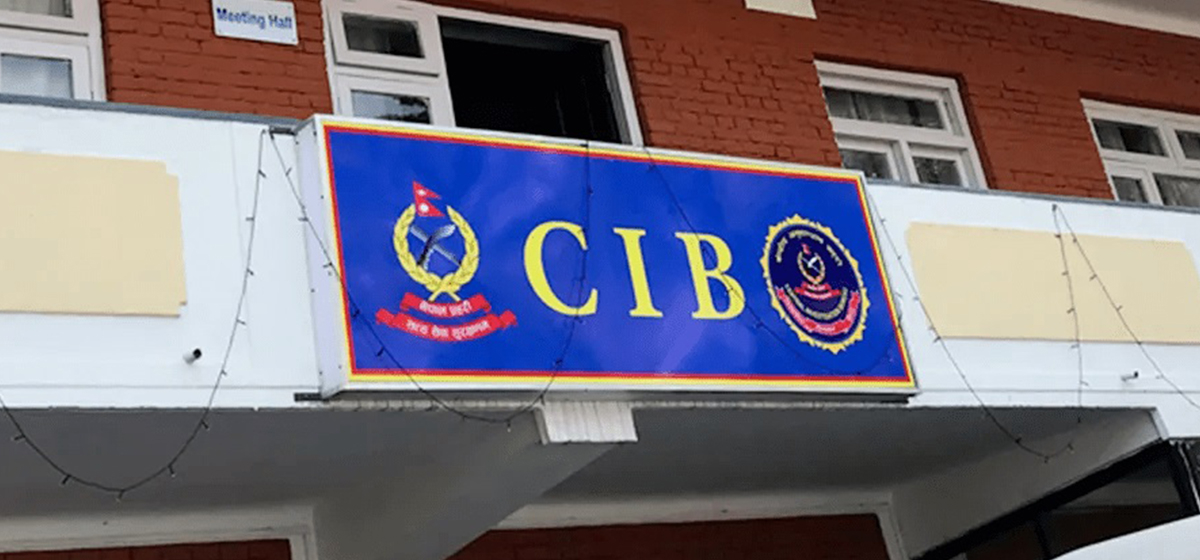
In recent months, Nepal Police’s Central Investigation Bureau (CIB) has widened its investigative net over the country’s banking and financial institutions, signaling a new era of aggressive enforcement against financial misconduct. As economic irregularities continue to surface, the CIB has increasingly stepped into a space traditionally dominated by Nepal Rastra Bank (NRB), raising questions about the effectiveness of the nation’s financial regulator.
Regulator Under Scrutiny as Criminal Complaints Rise
Nepal Rastra Bank is legally mandated to supervise licensed banks and financial institutions, ensuring their capital adequacy, asset quality, liquidity, governance standards, and overall financial health. Through on-site inspections and off-site monitoring of quarterly and annual statements, NRB claims to safeguard depositors and maintain systemic stability.
However, despite this supervisory framework, the scale of irregularities surfacing in recent years reveals deep loopholes in regulatory oversight. Large commercial banks—often considered pillars of financial confidence—have been found issuing loans against weak or counterfeit collateral, approving credit to serve board members’ personal interests, and engaging in questionable mergers that concealed bad assets.
These lapses have pushed several high-value complaints beyond NRB’s administrative authority and directly into the jurisdiction of the CIB, which deals with criminal offenses such as fraud, embezzlement, loan misuse, and illegal financial transfers.
Four Major Banks Under Investigation in Just Two Years
CIB sources confirm that four commercial banks have come under investigation under the Banking Offence and Punishment Act in the past two years alone. One of the cases was forwarded directly by NRB, while the remaining investigations were initiated based on complaints from depositors, employees, and other regulatory bodies.
The cases range from improper loan approvals and inflated collateral valuations to misuse of depositor funds. Some banks are also battling internal board disputes, governance breakdowns, and controversies arising from pre-merger asset valuation irregularities. Complaints related to merger-era misconduct—long buried inside institutional archives—are now resurfacing under CIB’s scrutiny.
CIB is also examining a high-profile case in which a bank allegedly facilitated multi-million-rupee loans using forged collateral documents, a scandal that has shaken public trust in the sector.
NRB’s Limited Authority Leaves Criminal Gaps
NRB officials acknowledge that while they can supervise financial health and regulatory compliance, their authority does not extend to criminal prosecution. Many infractions they discover do not meet the threshold of criminal offense, but those that do must be handled by law-enforcement agencies.
This blurred boundary between supervisory oversight and criminal accountability has allowed many top-level bank executives to dismiss serious misconduct as mere “supervisory weaknesses.” By exploiting this grey area, insiders have been able to hide fraudulent practices behind layers of bureaucratic ambiguity.
According to CIB insiders, NRB previously forwarded very few cases for criminal investigation. But with fraud complaints surging and some banks repeatedly ignoring NRB directives, the central bank is now increasingly forced to coordinate with law enforcement.
Regulatory Loopholes: A Systemic Crisis Exposed
CIB’s recent investigations have exposed structural weaknesses that go well beyond individual bad actors. Inspectors often notify banks 15 days in advance before conducting on-site inspections—giving institutions ample time to hide irregularities, adjust ledgers, or temporarily “fix” compliance issues.
Even more concerning are reports that some inspection team members have been influenced by financial incentives, job favors for relatives, or cheap loans, severely undermining the credibility of the supervisory process. This environment has emboldened those engaged in financial misconduct, allowing them to operate with limited fear of consequences.
Political interference has further eroded regulatory independence, with influential bankers and board members often leveraging political connections to dilute or delay enforcement actions.
CIB’s Intervention Becomes the ‘Last Line of Defense’
With supervisory mechanisms failing to control persistent wrongdoing, the CIB’s involvement now resembles a financial integrity campaign—a last attempt to protect depositors and restore confidence in Nepal’s financial architecture. For the first time in years, major commercial banks find themselves answerable to criminal investigators rather than accommodating regulators.
CIB officials believe that the cracks in supervision allowed financial crimes to flourish. Weak enforcement, lenient penalties, and internal collusion created an environment where institutions could misuse public deposits without fear of serious consequences.
A Call for NRB’s Institutional Reform
Experts argue that the unfolding situation is not merely a scandal involving a handful of banks, but a deeper reflection of systemic failure within the regulatory ecosystem. Unless NRB undergoes internal restructuring, strengthens independence from political pressure, and embraces zero-tolerance enforcement, financial crime cases will continue funneling into police jurisdiction.
The rising number of CIB investigations highlights that regulatory oversight alone is no longer sufficient. Nepal’s financial stability now hinges on stronger coordination between NRB and CIB, transparent supervision, and an uncompromising approach to financial governance.
The turmoil within Nepal’s banking sector illustrates a critical moment for the country’s financial governance. CIB’s interventions have triggered alarm—but they also represent an opportunity for structural reform. Unless regulators reinforce credibility and accountability, depositors and the broader economy will ultimately bear the cost of institutional failure.
Nepal’s financial system is now undergoing its greatest stress test in decades, and how the central bank responds will determine whether confidence is restored—or further eroded—in the backbone of the national economy.
Advertisement
Written by
Dipesh Ghimire