Floods
Govt Proposes Rs 559 Billion Mega-Reconstruction Masterplan Following Devastating Monsoonal Floods
Recognizing the dangerous failure of communication channels during the disaster, the Ministry of Information and Communication has proposed over Rs 870 million to establish resilient mobile BTS towers, satellite backup systems, and internet continuity plans. Furthermore, security apparatuses—the primary first responders during such calamities—are seeking capacity upgrades. The Armed Police Force (APF) has requested over Rs 1.64 billion, heavily focused on procuring specialized search and rescue equipment for future preparedness, while Nepal Police requires Rs 18.2 million for immediate physical infrastructure repairs.
Dipesh Ghimire
2 min read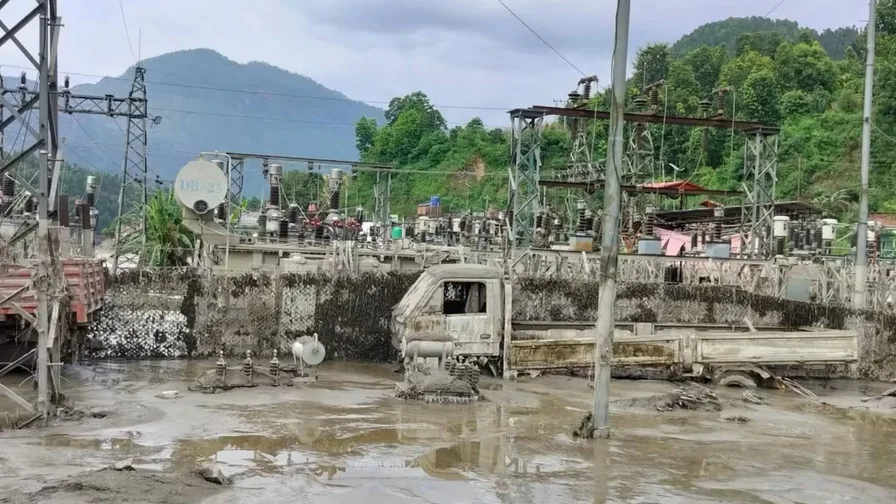
Following the massive infrastructural and economic devastation triggered by recent floods in the Tekoshi, Kaligandaki, and Budhigandaki river basins, the government has charted out a colossal Rs 559.72 billion recovery masterplan. Encompassing 504 targeted projects, the comprehensive blueprint has been forwarded to the Ministry of Finance for budgetary approval, marking one of the most ambitious post-disaster recovery efforts in Nepal's recent history.
The sweeping recommendation comes in the wake of the 21st meeting of the National Disaster Risk Reduction and Management Council (NDRRMC). According to Dr. Dharmaraj Upreti, Executive Chief of the National Disaster Risk Reduction and Management Authority (NDRRMA), the multi-billion-rupee proposal was meticulously drafted by categorizing line-ministry demands into immediate life-saving interventions and medium-to-long-term rehabilitation efforts.
An analysis of the proposed budget reveals a sobering reality: the lion’s share of the financial burden stems from severe damage to the nation's transport network. The Ministry of Physical Infrastructure and Transport bears the heaviest portfolio, with an astonishing Rs 374.07 billion requested purely for 47 immediate road rehabilitation projects in areas outside the Bhotekoshi-Trishuli corridor. The Bhotekoshi-Trishuli sector itself, which witnessed catastrophic highway washouts, requires over Rs 49 billion for immediate and long-term rural and national highway overhauls. This disproportionate allocation underscores how deeply the recent climatic events have crippled Nepal’s connectivity and trade routes.
Beyond highways, local connectivity and utilities have been highly prioritized to restore normalcy. The infrastructure ministry has earmarked Rs 1.32 billion across 104 immediate water supply projects. Crucially, the restoration of traditional crossing methods—which are lifelines for rural Nepal—demands significant capital. Over Rs 1.47 billion is slated for long-term suspension bridge reconstruction, alongside an immediate Rs 500 million injection to replace highly vulnerable wire crossings (Tuins). Separate funds have also been allocated for specific damages caused by the late September (Ashoj) floods, including the Mahakali river bridge.
The economic ripple effect of the disaster is equally evident in the demands of other critical sectors. The Ministry of Energy, Water Resources, and Irrigation has pitched a combined Rs 2.54 billion plan focusing on river training in the Narayani basin, solar installations, and the modernization of early warning systems. The education sector requires Rs 2.53 billion to rebuild schools, furnish classrooms, and establish ICT labs across seven major projects. Meanwhile, the agriculture and forestry sectors have requested over Rs 1.21 billion to restore provincial veterinary services and fisheries, highlighting the deep agrarian losses suffered by local farmers.
Recognizing the dangerous failure of communication channels during the disaster, the Ministry of Information and Communication has proposed over Rs 870 million to establish resilient mobile BTS towers, satellite backup systems, and internet continuity plans. Furthermore, security apparatuses—the primary first responders during such calamities—are seeking capacity upgrades. The Armed Police Force (APF) has requested over Rs 1.64 billion, heavily focused on procuring specialized search and rescue equipment for future preparedness, while Nepal Police requires Rs 18.2 million for immediate physical infrastructure repairs.
Advertisement
Written by
Dipesh Ghimire