Top
Investment Board Approves Rs 171.65 Billion for Large Projects, Energy Emerges as Core Growth Driver
Investment Board Approves Rs 171.65 Billion for Large Projects, Energy Emerges as Core Growth Driver The Investment Board Nepal (IBN) has approved investments totaling Rs 171.65 billion for 55 large-scale projects as of December 31, 2025. In US dollar terms, the approved investment amounts to approximately USD 11.92 billion. The data indicates a clear policy and investor preference toward long-term, capital-intensive sectors, particularly energy, as Nepal seeks to accelerate economic growth through large infrastructure-led development. According to IBN, the energy sector alone accounts for nearly four-fifths of the total approved investment. A total of 40 energy projects have received approval, with a combined investment commitment of Rs 133.71 billion. This overwhelming concentration suggests that Nepal’s hydropower potential, renewable energy expansion, and transmission infrastructure remain the most bankable and internationally attractive segments of the economy.
Dipesh Ghimire
3 min read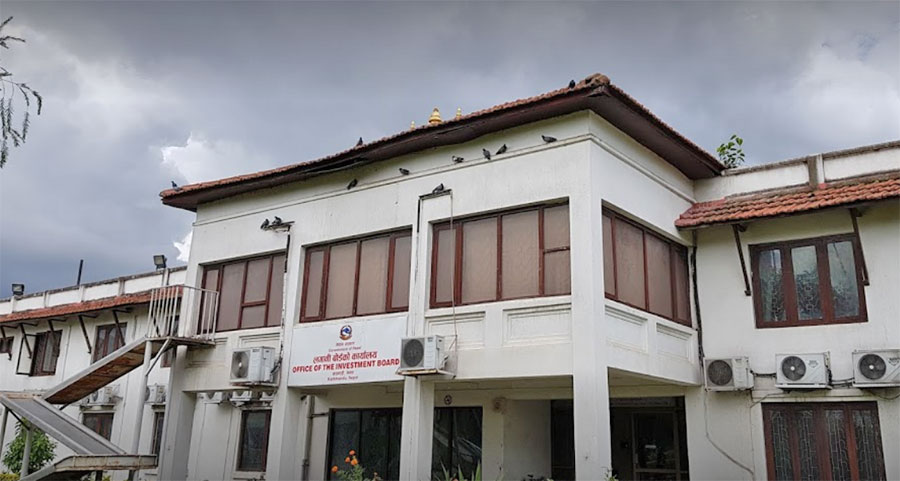
The Investment Board Nepal (IBN) has approved investments totaling Rs 171.65 billion for 55 large-scale projects as of December 31, 2025. In US dollar terms, the approved investment amounts to approximately USD 11.92 billion. The data indicates a clear policy and investor preference toward long-term, capital-intensive sectors, particularly energy, as Nepal seeks to accelerate economic growth through large infrastructure-led development.
According to IBN, the energy sector alone accounts for nearly four-fifths of the total approved investment. A total of 40 energy projects have received approval, with a combined investment commitment of Rs 133.71 billion. This overwhelming concentration suggests that Nepal’s hydropower potential, renewable energy expansion, and transmission infrastructure remain the most bankable and internationally attractive segments of the economy.
Experts note that the dominance of energy investment reflects both opportunity and structural limitation. While energy projects offer scale, export potential, and long-term returns, the relatively low diversification into other sectors highlights persistent challenges in attracting large-scale investment into manufacturing, services, and innovation-driven industries.
Manufacturing stands as the second-largest recipient of approved investment, with nine projects accounting for Rs 23.69 billion. Although significantly lower than energy, this allocation signals gradual progress in industrial development. Analysts say the figures indicate cautious investor confidence, as manufacturing in Nepal continues to face constraints related to logistics, market size, productivity, and policy consistency.
Other sectors have received comparatively modest but strategically relevant approvals. Infrastructure projects account for Rs 6.49 billion through a single project, while tourism has attracted Rs 7.16 billion across two projects. Utility-sector investments totaling Rs 5.91 billion across three projects further reflect selective engagement beyond the energy sector. These numbers suggest that while non-energy sectors are on the policy radar, scaling them remains a challenge.
IBN has identified energy, agriculture, health, information and communication technology, manufacturing, transport, urban infrastructure, tourism, and mining as priority investment sectors. Within energy, hydropower, solar power, transmission lines, and distribution networks have been prioritized. In agriculture, the focus on agro-processing, mechanization, and organic fertilizer reflects an effort to move away from subsistence farming toward value-added production.
Transport infrastructure has also been positioned as a long-term growth enabler. Priority areas include expressways, railways, cable cars, tunnels, airports, and logistics hubs. In tourism, the emphasis has shifted toward hotels, resorts, integrated tourism zones, and destination development, indicating a policy push to increase tourist spending rather than just arrival numbers.
From a policy perspective, IBN’s investment approvals are backed by a relatively robust legal framework. The board operates under laws such as the Public–Private Partnership and Investment Act 2019, the Foreign Investment and Technology Transfer Act 2019, the Industrial Enterprises Act 2020, and the Special Economic Zone Act 2016. Supporting policies, including the Foreign Investment Policy 2014 and the Trade Logistics Policy 2022, aim to reduce regulatory uncertainty for investors.
Established in 2011, Investment Board Nepal is chaired by the Prime Minister and serves as the apex body for large-scale investments. It holds the authority to approve public–private partnership projects above Rs 6 billion and energy projects exceeding 200 megawatts. This centralized mandate positions IBN as a key institution in shaping Nepal’s long-term investment trajectory.
IBN’s stated objective is to attract domestic and foreign investment into priority sectors to support socio-economic transformation. By encouraging private-sector participation in infrastructure and services, the board aims to generate employment, improve productivity, and strengthen Nepal’s economic resilience. However, analysts argue that approvals alone are not sufficient, and timely project implementation will be the real test of policy effectiveness.
Economic Diplomacy Gains Institutional Focus
In a parallel move, IBN has appointed Undersecretary Manoj Regmi as its economic diplomacy contact person to strengthen international investment coordination. According to board officials, the role is designed to improve communication between the Ministry of Foreign Affairs, Nepali diplomatic missions abroad, and potential investors.
The contact person will be responsible for facilitating information exchange, addressing investor concerns, and coordinating efforts to promote Nepal as an investment destination. The appointment follows feedback from Nepali missions overseas, which had emphasized the need for a clear institutional focal point for investment-related inquiries.
Observers believe that institutionalizing economic diplomacy could help bridge the gap between investment approval and actual capital inflow. While Nepal has made progress in approving large projects, converting commitments into operational projects remains a persistent challenge. Effective coordination through diplomatic channels may play a critical role in closing that gap.
Advertisement
Written by
Dipesh Ghimire