SEBON
IPO Pipeline Swells to Rs 71.42 Billion as Manufacturing Sector Leads Capital Mobilization
While the sheer volume of a Rs 71.42 billion pipeline highlights strong corporate appetite for equity financing, it does not imply an immediate liquidity drain on the financial system. An application at SEBON is merely the first step in a stringent regulatory funnel. The board conducts rigorous evaluations of each company's financial disclosures, credit ratings, corporate governance, and statutory compliance before granting the final issuance permit. Consequently, this massive capital demand will not flood the market simultaneously but will be systematically staggered over several months or years. Ultimately, the growing presence of manufacturing and hospitality firms in the IPO pipeline is a highly positive indicator for the Nepal Stock Exchange (NEPSE), promising a more diversified and resilient secondary market that accurately reflects the broader national economy.
Dipesh Ghimire
2 min read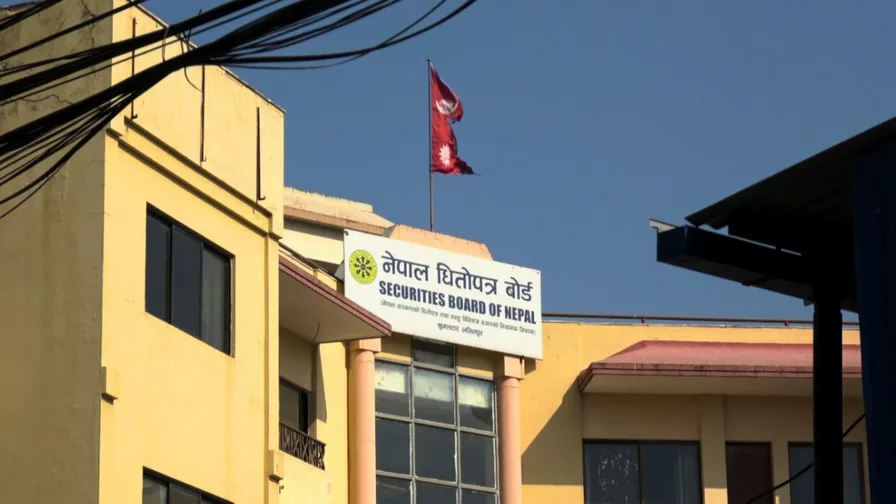
KATHMANDU — Nepal’s primary stock market is witnessing a massive influx of capital demand, with the total Initial Public Offering (IPO) pipeline at the Securities Board of Nepal (SEBON) surpassing Rs 71.42 billion. As of mid-October (Ashoj 27), diverse corporate entities have submitted applications seeking regulatory approval to issue a combined 510.98 million shares to the public.
A critical structural shift is evident in the sectoral composition of these pending applications. The manufacturing and processing sector now heavily dominates the pipeline, seeking to raise over Rs 35.71 billion—accounting for nearly half of the total proposed volume. This marks a significant departure from the historical dominance of the financial and energy sectors, signaling that "real sector" industries are increasingly bypassing expensive bank loans to leverage equity markets for capacity expansion and corporate restructuring. The hydropower sector remains a strong second, with developers queuing up to raise Rs 19.09 billion through new public issues.
Beyond manufacturing and energy, the diversification of the primary market is expanding steadily. The hotel and tourism sector has proposed IPOs worth Rs 6.60 billion, capitalizing on the post-pandemic recovery in hospitality. Furthermore, companies categorized under the 'others' sector are seeking Rs 6.13 billion, investment firms have applied for Rs 3.20 billion, and the emerging micro-insurance sector is looking to inject Rs 675 million in equity.
The momentum of applications has remained robust, with five new companies adding Rs 1.90 billion to the pending pipeline in the month of Ashoj alone. These firms have proposed issuing 19.01 million shares at a par value of Rs 100. Moonlight Hydropower leads this recent batch with a massive Rs 924.14 million issuance proposal. It is followed by Peace Energy at Rs 320 million, Sasha Engineering Hydropower at Rs 310 million, Unitech Hydropower at Rs 197 million, and Hotel Siraichuli at Rs 150 million.
While Hotel Siraichuli’s offering is exclusively targeted at the general public, the four hydropower developers have structured their offerings in standard tranches for both project-affected locals and the general public. Leading merchant banks have been appointed as issue managers to underwrite and facilitate these offerings, with Nabil Investment Banking, NIMB Ace Capital, Machhapuchchhre Capital, and Laxmi Sunrise Capital handling the respective portfolios.
While the sheer volume of a Rs 71.42 billion pipeline highlights strong corporate appetite for equity financing, it does not imply an immediate liquidity drain on the financial system. An application at SEBON is merely the first step in a stringent regulatory funnel. The board conducts rigorous evaluations of each company's financial disclosures, credit ratings, corporate governance, and statutory compliance before granting the final issuance permit. Consequently, this massive capital demand will not flood the market simultaneously but will be systematically staggered over several months or years. Ultimately, the growing presence of manufacturing and hospitality firms in the IPO pipeline is a highly positive indicator for the Nepal Stock Exchange (NEPSE), promising a more diversified and resilient secondary market that accurately reflects the broader national economy.
Advertisement
Written by
Dipesh Ghimire