Neglect in Infrastructure: A C
Neglect in Infrastructure: A Crisis of Priorities and Execution in Nepal’s Development Agenda
Neglect in Infrastructure: A Crisis of Priorities and Execution in Nepal’s Development Agenda Nepal’s economic, social, and geographic realities make infrastructure development far more than a matter of convenience. Roads, bridges, airports, energy systems, and irrigation networks directly shape the quality of life of citizens, determine the pace of economic growth, strengthen national integration, and influence the country’s competitiveness in the regional and global arena. Yet, despite decades of planning and repeated political commitments, Nepal continues to struggle with weak prioritization, fragmented investment, and poor execution in infrastructure development. One of the most persistent problems is the absence of a clear, long-term national vision that translates into disciplined budget allocation. Hundreds of infrastructure projects—ranging from highways and bridges to hydropower, irrigation, and tourism facilities—remain stalled midway. Instead of concentrating resources on a limited number of high-impact projects, the state has spread its budget thinly across numerous small and low-priority schemes. This approach has diluted outcomes and delayed the economic returns that well-planned infrastructure is supposed to generate.
Dipesh Ghimire
4 min read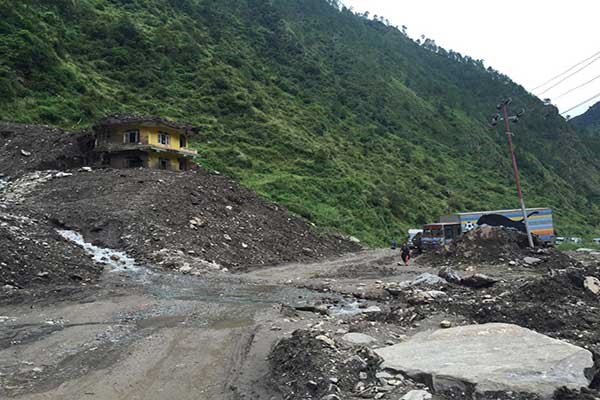
Nepal’s economic, social, and geographic realities make infrastructure development far more than a matter of convenience. Roads, bridges, airports, energy systems, and irrigation networks directly shape the quality of life of citizens, determine the pace of economic growth, strengthen national integration, and influence the country’s competitiveness in the regional and global arena. Yet, despite decades of planning and repeated political commitments, Nepal continues to struggle with weak prioritization, fragmented investment, and poor execution in infrastructure development.
One of the most persistent problems is the absence of a clear, long-term national vision that translates into disciplined budget allocation. Hundreds of infrastructure projects—ranging from highways and bridges to hydropower, irrigation, and tourism facilities—remain stalled midway. Instead of concentrating resources on a limited number of high-impact projects, the state has spread its budget thinly across numerous small and low-priority schemes. This approach has diluted outcomes and delayed the economic returns that well-planned infrastructure is supposed to generate.
Transportation infrastructure illustrates this problem most clearly. Highways are the arteries of the national economy, carrying the majority of long-distance passenger and freight traffic. From these trunk roads, feeder highways and local roads branch out to connect provincial and local centers. In principle, planners prioritize highways first, then feeder roads, and only afterward local roads. In practice, Nepal has reversed this logic. A significant portion of the highway network is either incomplete, unpaved, or severely deteriorated, forcing vehicles to crawl at unsafe speeds. Even roads officially categorized as blacktopped often function as narrow, single-lane stretches lacking basic safety features.
The consequences are visible across the country. More than two hundred local government headquarters are still not connected by reliable road networks. In remote but high-potential tourism districts such as Mustang, Manang, Dolpa, Humla, and Mugu, all-weather blacktopped access remains incomplete or absent. These are precisely the regions where improved connectivity could unlock tourism, trade, and local employment. Yet, instead of accelerating such strategic links, large sums are routinely diverted to scattered ward-level and constituency-based road projects with limited economic impact.
Budgetary choices further reinforce this imbalance. While nationally prioritized highway projects receive comparatively modest allocations, local and fragmented road schemes command larger shares of public spending. Maintenance budgets for existing highways have also been reduced, even as roads face increasing damage from heavy traffic and recurring floods and landslides. As a result, the cost of transport remains high, travel times remain long, and road safety risks persist—undermining productivity across the economy.
The problem is not limited to roads. Aviation infrastructure shows similar misalignment. Airports with minimal or no regular flights continue to receive investment, often without rigorous economic or commercial feasibility studies. In contrast, resources that could upgrade or expand already busy regional hubs are spread thin. When infrastructure is built without clear demand, it becomes a fiscal burden rather than a growth driver.
Weak execution compounds poor prioritization. Projects are often approved without adequate preparatory work, such as land acquisition, utility relocation, environmental clearance, or inter-agency coordination. When these prerequisites are not resolved in advance, construction stalls, costs escalate, and contractors lose confidence. Delayed payments—sometimes extending more than a year—further strain construction companies, discouraging timely completion and increasing the risk of abandonment.
Public procurement laws are frequently blamed for these failures, but the deeper issue lies in implementation. Large projects are routinely underfunded on an annual basis, receiving only a fraction of the budget required for timely completion. This creates liquidity shortages, disrupts cash flow, and turns multi-year projects into decades-long undertakings. While instances of malpractice by contractors exist, they are not the dominant cause of delay; inconsistent budgeting and weak state management play a far greater role.
Environmental and forestry regulations add another layer of complexity. Tree-cutting approvals and forest land clearances can take years, even for nationally important infrastructure. In several cases, projects backed by foreign grants or loans have stalled because permits were delayed beyond the interest or patience of donors. The uneven application of rules—where private projects sometimes secure approvals faster than public ones—raises further concerns about consistency and governance.
Private sector participation, which could ease the fiscal burden on the state, remains underutilized. Although private investment has played a major role in hydropower and tourism infrastructure, it has struggled to enter road development. Unclear policies, shifting decisions, and weak contractual credibility have discouraged potential investors, even on corridors with high traffic volumes and strong revenue potential. Without a more predictable and investor-friendly framework, Nepal risks missing opportunities to leverage private capital for public benefit.
Underlying many of these challenges is a governance issue. Political influence over administrative postings, frequent transfers, and the dominance of partisan considerations have weakened institutional capacity. Skilled professionals are often not placed where their expertise is most needed, while coordination among ministries and agencies remains poor. This fragmentation undermines accountability and slows decision-making at every stage of project implementation.
In sum, Nepal’s infrastructure crisis is not a result of resource scarcity alone, but of misplaced priorities, fragmented planning, and weak execution. To break this cycle, the state must focus on a smaller number of high-return projects, ensure adequate multi-year financing, complete preparatory work before construction begins, and strengthen coordination across institutions. Only by shifting away from politically driven, small-scale schemes toward strategic national investments can infrastructure once again become a genuine engine of economic growth rather than a symbol of missed opportunity.
Advertisement
Written by
Dipesh Ghimire