Top
New Poverty Estimates Reveal Deep Regional and Local-Level Inequalities in Nepal
New Poverty Estimates Reveal Deep Regional and Local-Level Inequalities in Nepal The latest report titled “Small Area Poverty Estimation 2023” released by the National Statistics Office presents a stark and uneven picture of poverty in Nepal. While the headline figure shows that 20.27 percent of the population still lives below the poverty line, the data reveal far deeper disparities when poverty is examined across geography, provinces, districts, and local governments. At the national level, the report suggests gradual progress in reducing poverty over time. However, this progress has not been evenly distributed. Several districts and local governments, particularly in Karnali and Sudurpaschim provinces, continue to experience poverty levels far above the national average. The findings indicate that development gains have remained concentrated in certain regions, leaving large sections of the country behind.
Dipesh Ghimire
3 min read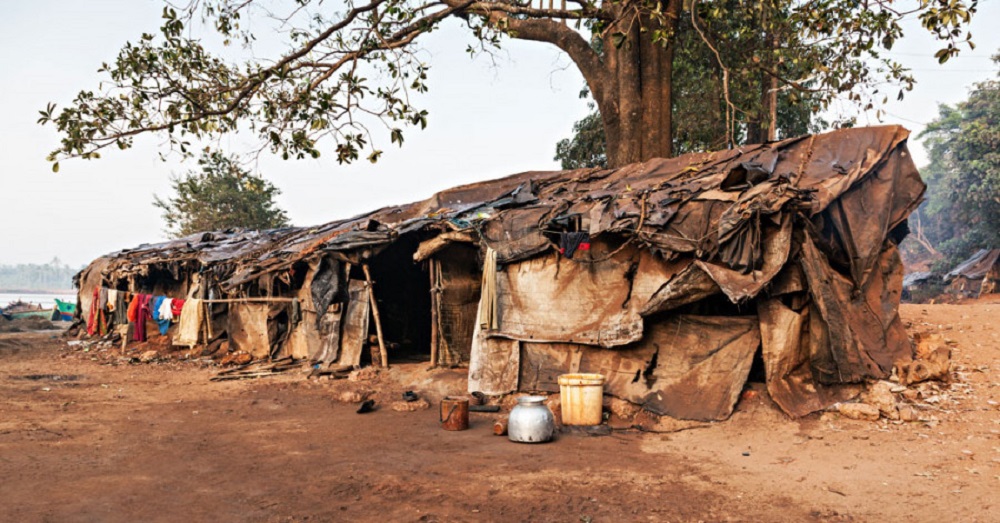
The latest report titled “Small Area Poverty Estimation 2023” released by the National Statistics Office presents a stark and uneven picture of poverty in Nepal. While the headline figure shows that 20.27 percent of the population still lives below the poverty line, the data reveal far deeper disparities when poverty is examined across geography, provinces, districts, and local governments.
At the national level, the report suggests gradual progress in reducing poverty over time. However, this progress has not been evenly distributed. Several districts and local governments, particularly in Karnali and Sudurpaschim provinces, continue to experience poverty levels far above the national average. The findings indicate that development gains have remained concentrated in certain regions, leaving large sections of the country behind.
A comparison between rural and urban areas highlights a clear structural divide. The poverty rate in rural areas stands at 24.66 percent, significantly higher than the 18.34 percent recorded in urban areas. Rural livelihoods remain heavily dependent on agriculture, making household income vulnerable to weather shocks, fluctuating market prices, and low productivity. Urban areas benefit from better access to jobs, services, and markets, resulting in lower poverty rates.
However, the report also reveals an important contradiction. Although poverty rates are lower in urban areas, poverty concentration is higher. About 62 percent of Nepal’s poor population resides in urban areas, compared to roughly 37 percent in rural areas. This reflects rapid urbanization, population density, and the migration of low-income households to cities in search of work, where many end up in informal and insecure livelihoods.
Provincial-level data further illustrate stark inequalities. Sudurpaschim Province records the highest poverty rate at 34.16 percent, followed by Karnali Province at 26.69 percent and Lumbini Province at 24.35 percent. In contrast, Gandaki Province has the lowest poverty rate at 11.88 percent, while Bagmati Province stands at 12.59 percent. Within Bagmati, the Kathmandu Valley records an even lower poverty rate of 7.38 percent, reflecting its concentration of economic opportunities and services.
The disparities become even more pronounced at the local government level. Junichande Rural Municipality in Jajarkot district records the highest poverty rate in the country at 77.89 percent. Other local units such as Soru Rural Municipality in Mugu, Dhakari Rural Municipality in Achham, Sigas Rural Municipality in Baitadi, and Kamalbazar Municipality in Achham also report poverty rates exceeding 65 percent. In these areas, the majority of households struggle to meet even basic needs.
Most of the local governments with extremely high poverty rates are located in remote hill and mountain regions. These areas face chronic shortages of roads, health facilities, quality schools, communication infrastructure, and employment opportunities. Limited arable land, dependence on traditional farming systems, exposure to natural disasters, and weak access to foreign employment opportunities further compound poverty levels.
The report also highlights another critical dimension: areas with relatively low poverty rates can still have large numbers of poor people. For instance, Kathmandu Metropolitan City has a poverty rate of just 6.87 percent, yet due to its large population, more than 59,000 residents live below the poverty line. Similar patterns are observed in Nepalgunj Sub-Metropolitan City, Ghorahi Sub-Metropolitan City, municipalities in Kapilvastu, and Gulariya Municipality in Bardiya.
Experts argue that high poverty levels in regions like Karnali and Sudurpaschim are driven by deep-rooted structural factors. Geographic isolation, historically low state investment, social exclusion, weak local economies, and limited industrial activity have reinforced long-term deprivation. Poor road connectivity makes it difficult to transport agricultural products to markets, reducing income opportunities and discouraging private investment.
The Small Area Poverty Estimation report provides crucial guidance for policymakers. It suggests that poverty reduction strategies can no longer rely solely on national or provincial averages. Instead, policies must be localized, taking into account not just poverty rates, but also poverty intensity and inequality at the community level. Targeted interventions, rather than one-size-fits-all programs, are increasingly necessary.
Overall, while Nepal has made measurable progress in reducing poverty, the distribution of that progress remains deeply uneven. The data clearly point to the need for long-term, inclusive, and region-specific development strategies, particularly in Karnali and Sudurpaschim. Investment in infrastructure, education, healthcare, skill development, agricultural modernization, and local employment generation will be critical if Nepal is to translate economic growth into equitable poverty reduction.
Advertisement
Written by
Dipesh Ghimire