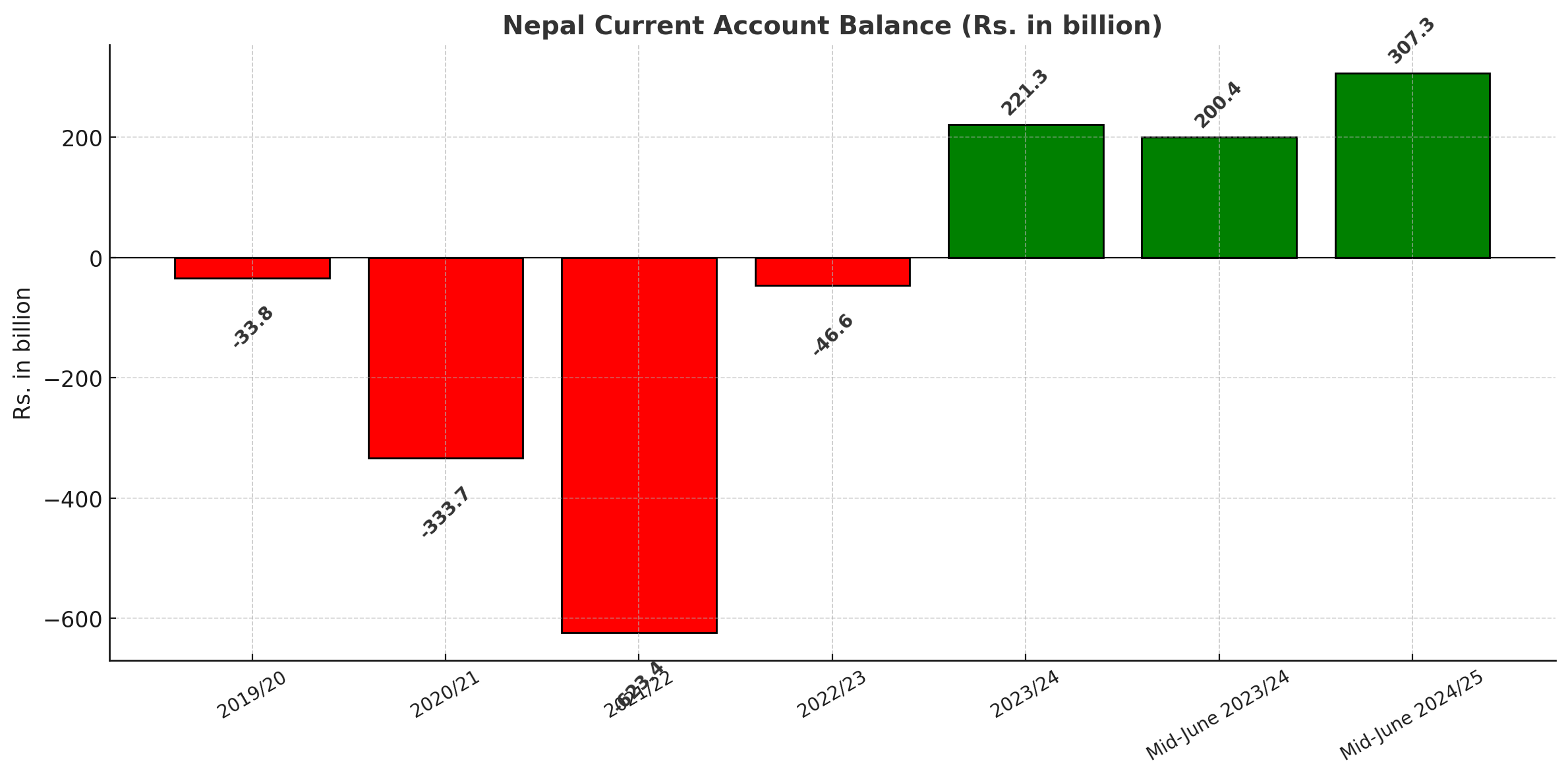
Export1 min readNepal’s Current Account Rebounds Sharply Amid Continued External Sector ImprovementNepal’s current account position has shown a dramatic reversal in recent years. From persistent deficits peaking at Rs. 623.4 billion in 2021/22, the balance steadily recovered to a modest deficit of Rs. 46.6 billion in 2022/23. This positive momentum continued strongly, as the account turned into a surplus of Rs. 221.3 billion in 2023/24. As of mid-June 2024/25, the surplus further expanded to Rs. 307.3 billion. This turnaround reflects improved remittance inflows, moderated import growth, and a more favorable external trade environment. The consistent surplus since FY 2023 signals a strengthening of Nepal’s external sector and a more stable macroeconomic foundation.Sandeep Chaudhary·8 Jul, 2025
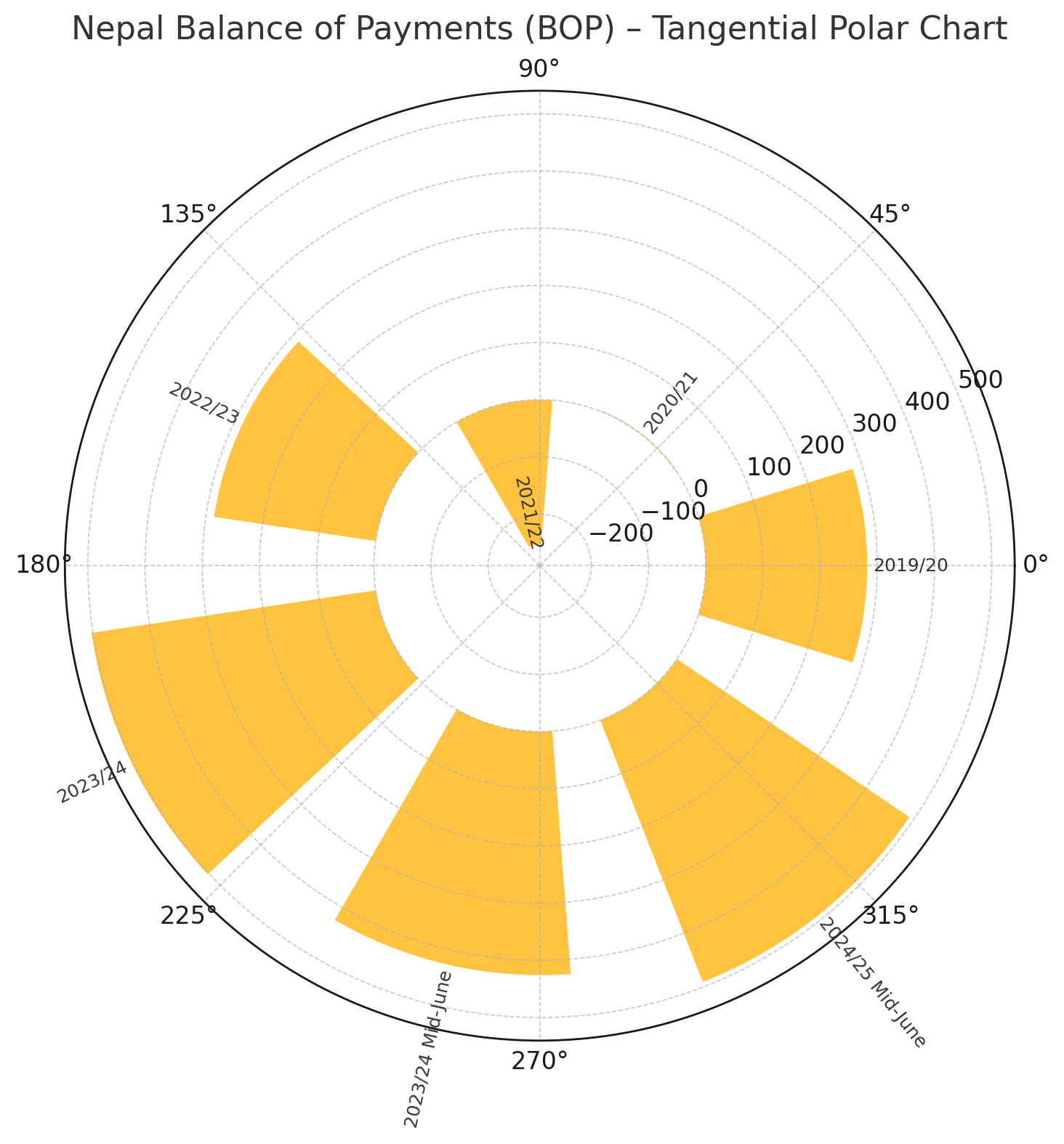
BOP1 min readNepal's Balance of Payments Shows Strong Recovery Despite Past DeficitNepal’s Balance of Payments (BOP) has shown a strong and consistent recovery over the past few fiscal years. After recording a sharp deficit of Rs. 252.4 billion in FY 2021/22, the situation reversed positively, with the BOP reaching a surplus of Rs. 285.8 billion in FY 2022/23. This upward trend continued in FY 2023/24, with an annual surplus of Rs. 502.5 billion. By mid-June 2025, the BOP surplus stood at Rs. 491.4 billion, indicating sustained improvement in Nepal’s external sector. The rebound reflects improved remittance inflows, controlled imports, and stronger foreign exchange reserves, contributing to overall macroeconomic stability. Sandeep Chaudhary·8 Jul, 2025
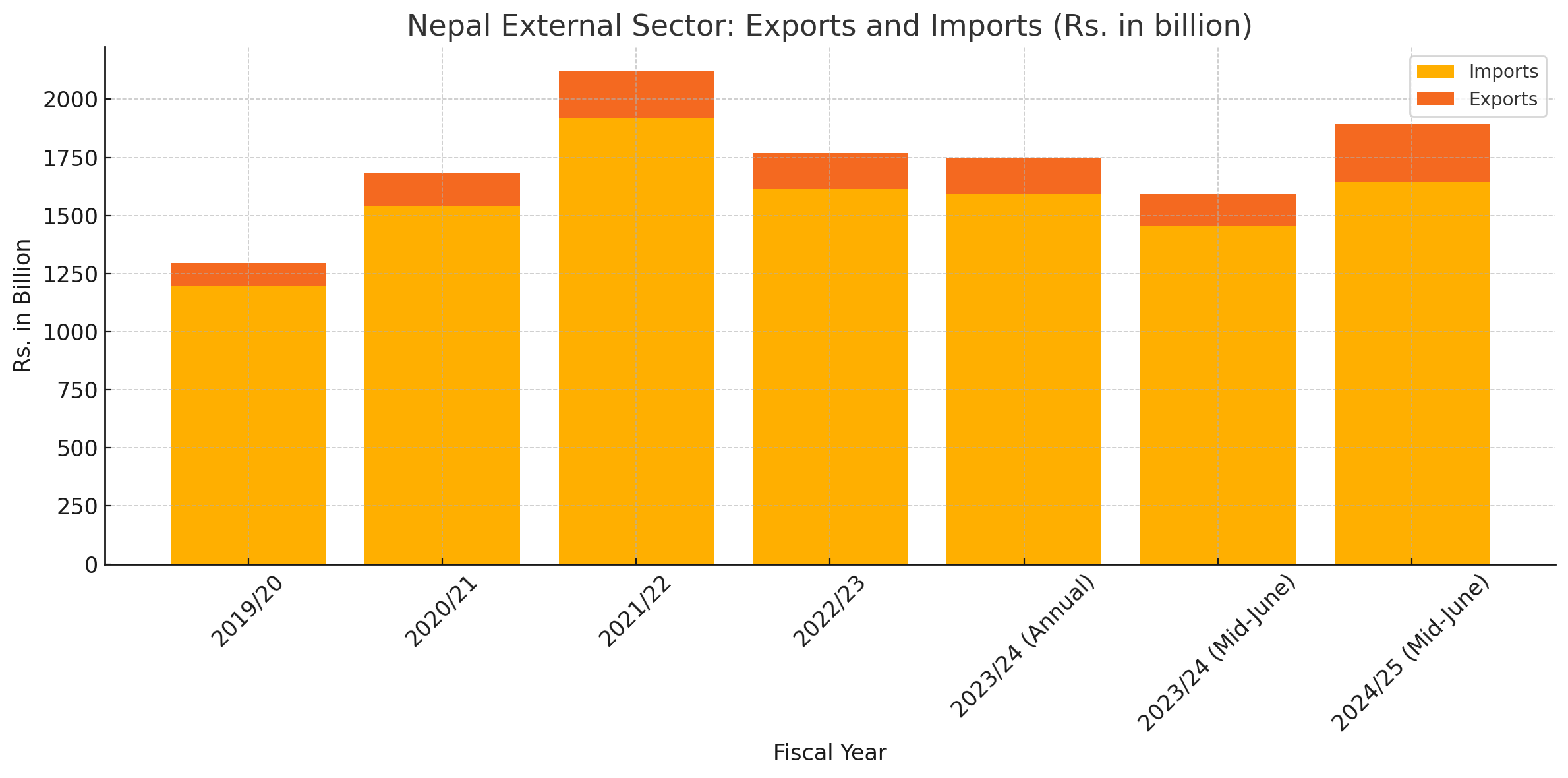
Export1 min readNepal's External Sector Rebounds in Mid-June 2024/25 with Record Export GrowthBy mid-June 2024/25, Nepal’s exports jumped by 77.8% to Rs. 247.6 billion, while imports rose 13.1% to Rs. 1,644.8 billion. This marks a strong recovery in export performance after years of decline, signaling improving trade dynamics despite a continued trade deficit.Sandeep Chaudhary·8 Jul, 2025
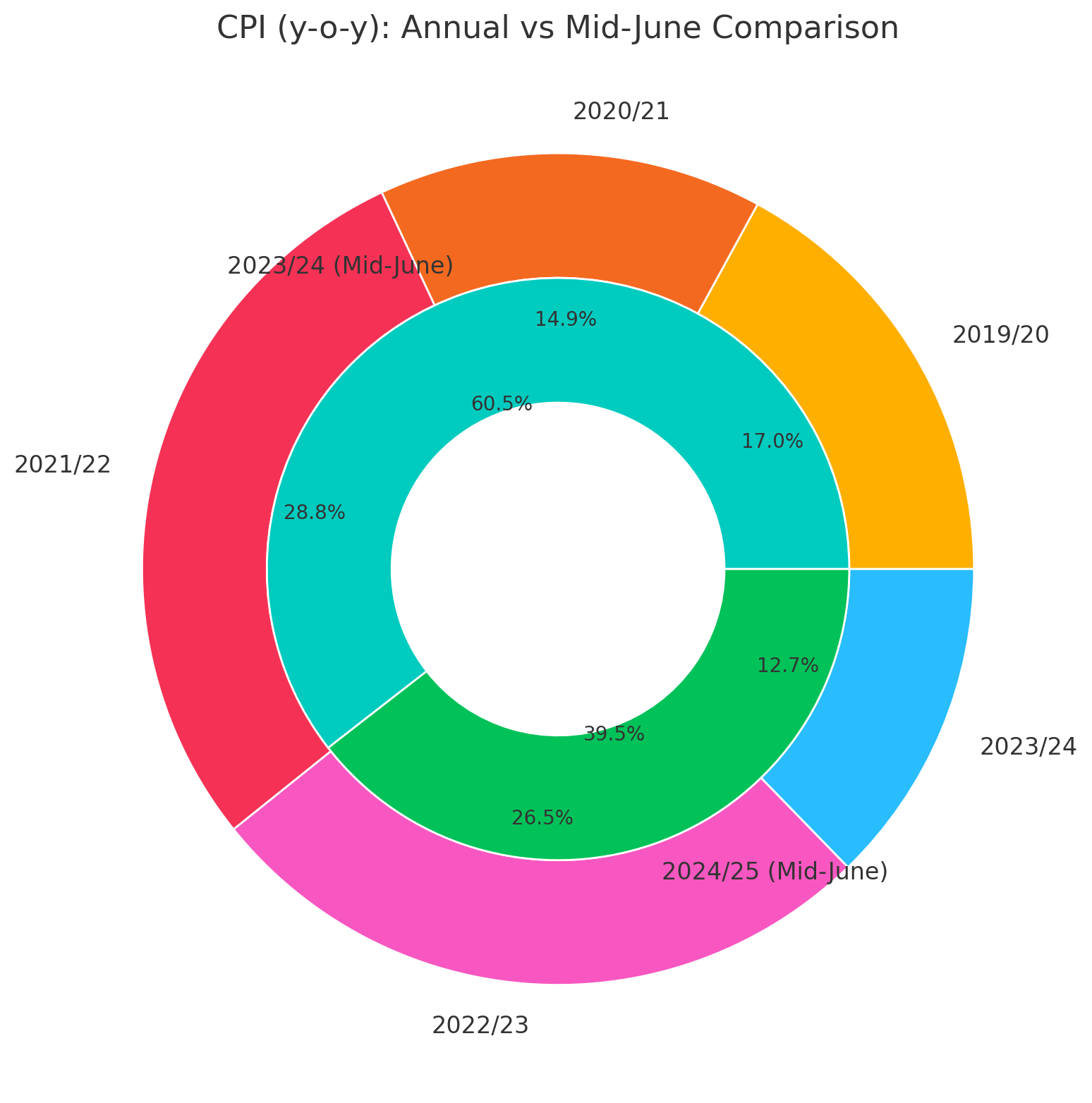
Inflation1 min readNepal's Inflation Falls to 2.72% in Mid-June 2025, Lowest in Five YearsNepal’s year-on-year CPI inflation has steadily declined from a peak of 8.08% in 2021/22 to 2.72% by mid-June 2025, the lowest in five years. Annual CPI fell to 3.57% in 2023/24, showing strong inflation control. The consistent drop reflects improved economic stability and effective monetary policy.Sandeep Chaudhary·8 Jul, 2025
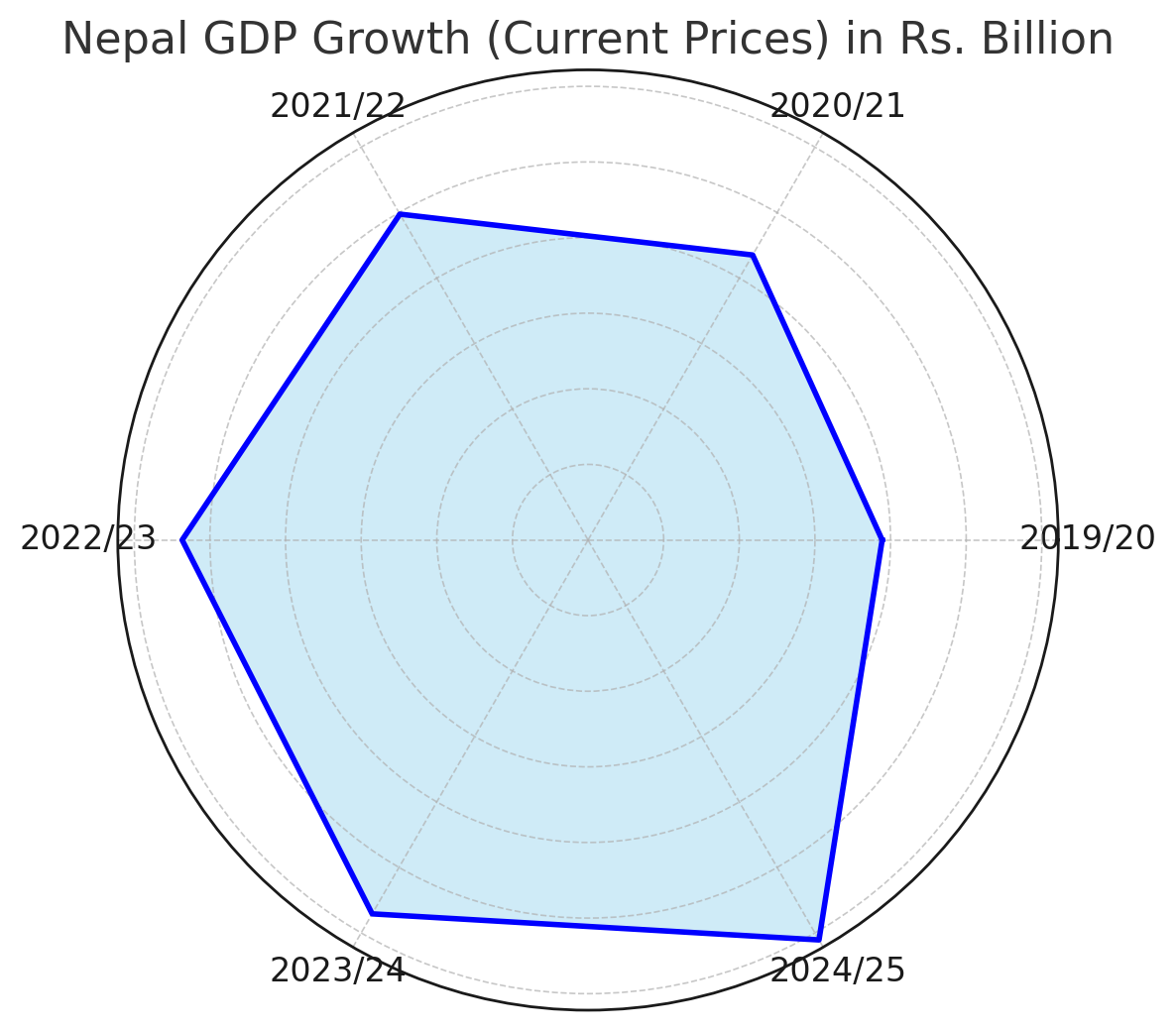
GDP1 min readNepal’s GDP Growth Shows Steady Recovery Post-COVIDNepal’s nominal GDP has shown consistent growth over six fiscal years, increasing from Rs. 3,888.7 billion in FY 2019/20 to a projected Rs. 6,107.2 billion in FY 2024/25. Despite the pandemic in FY 2020/21, GDP rose steadily each year, indicating resilience and gradual economic recovery. The average annual increase is around Rs. 443 billion, driven by remittance, government spending, and recovery in trade and services. The radar chart clearly visualizes this upward economic momentum.Sandeep Chaudhary·8 Jul, 2025
Top4 min readNepal’s Economic Performance Reflects Stability and Positive Momentum: NRB's 11-Month ReportNepal’s Economic Performance Reflects Stability and Positive Momentum: NRB's 11-Month Report Nepal Rastra Bank (NRB) has published the macroeconomic and financial report covering the first 11 months of the current fiscal year 2081/82 (July 2024 – June 2025). The data paints an optimistic picture of the economy, with notable improvements in external sector indicators, inflation control, and remittance inflows. However, structural challenges in public finance and domestic investment persist. The following is a detailed overview of the economic indicators and their implications.Dipesh Ghimire·8 Jul, 2025
Popular News2 min readOver NPR 3 Billion Recovered for Victims of Troubled Cooperatives; NPR 34 Billion Still PendingThe Office of the Problematic Cooperative Management Committee has successfully returned and reconciled a total of NPR 3.71 billion (3,716,605,654) to victims of troubled cooperatives. According to Committee Chairperson Mr. Shreeman Kumar Gautam, a total of 61,094 depositors had filed complaints stating that their savings amounting to NPR 38.42 billion (38,429,632,730) were embezzled, misused, or misappropriated by various cooperatives. As per the Committee, NPR 34.71 billion (34,713,027,076) is still pending to be returned to depositors. The Committee has taken on the responsibility of managing assets and settling liabilities of cooperatives declared problematic for acting against cooperative principles and misusing savers' funds. So far, 23 cooperatives have been declared problematic, and the Committee is currently in the process of settling accounts and returning funds for three of them.Dipesh Ghimire·7 Jul, 2025
Top2 min readMonetary Policy 2082/83: Call for Structural and Policy Reforms to Restore Private Sector ConfidenceCNI Urges Structural and Policy Reforms in Upcoming Monetary Policy to Restore Private Sector Confidence The Confederation of Nepalese Industries (CNI) has submitted a detailed set of recommendations to Nepal Rastra Bank (NRB) ahead of the upcoming monetary policy announcement. Despite signs of partial recovery in the economy, CNI President Rajesh Kumar Agrawal noted that full normalization is yet to be achieved. The recommendations were formally presented to NRB Governor Dr. Bishnu Prasad Paudel.Dipesh Ghimire·6 Jul, 2025
Top2 min readAI in Stock Trading: Nepal’s Cautious Steps Toward a Global Financial RevolutionAI in Stock Trading: Nepal’s Cautious Steps Toward a Global Financial Revolution AI in Stock Trading: Nepal’s Cautious Steps Toward a Global Financial Revolution Artificial Intelligence (AI) is rapidly transforming the global financial and capital markets. From executing trades in milliseconds to predicting market trends, AI has become an indispensable tool in high-speed, high-volume trading environments. In developed markets, AI-driven systems analyze vast amounts of data, including price movements, news sentiment, and economic indicators, to make accurate and timely decisions that far outperform human capabilities. One of the most popular applications of AI in the financial world is algorithmic trading. These systems follow predefined rules—such as price, volume, and market trend—to automatically buy or sell stocks. This automation enables traders, especially day traders and institutional investors, to execute thousands of trades with precision and speed. Machine learning models, a subset of AI, can also identify historical patterns and forecast future price movements based on large datasets.Dipesh Ghimire·3 Jul, 2025
Top3 min readForeign IT Companies’ Tax Jumps Over 7-Fold in Nepal,– Mixed Signals in Nepal's 11-Month Tax PerformanceForeign IT Companies’ Tax Jumps Over 7-Fold in Nepal,– Mixed Signals in Nepal's 11-Month Tax Performance Nepal’s tax authority has recorded a striking 7.2-fold surge in the collection of Digital Service Tax (DST) from global IT giants such as Meta, X (formerly Twitter), Netflix, Google, and TikTok. According to the Inland Revenue Department (IRD), Nepal collected NPR 49 million in DST during the first 11 months of the fiscal year 2081/82 (2024/25), compared to only NPR 6.8 million during the same period last year. This massive leap is attributed to stricter enforcement of the Electronic Services Tax Procedure 2079, which mandates registration and tax compliance from foreign digital service providers operating in Nepal. The growing compliance by major international platforms, in response to Nepal’s new regulatory push, has translated into stronger revenue performance in the digital domain.Dipesh Ghimire·3 Jul, 2025