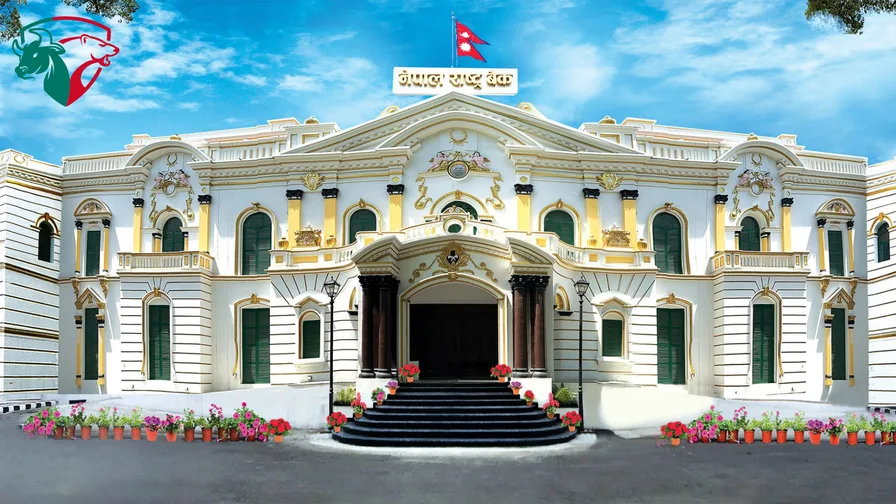
Nepal Rastra Bank1 min readNRB Takes Action Against Six Microfinance Institutions for Regulatory BreachesSimilarly, the central bank imposed cash fines on two other microfinance companies for failing to maintain their mandatory Cash Reserve Ratio. Win Nepal Laghubitta was fined Rs 58.38 for failing to meet the CRR requirement in the month of Chaitra, 2082. Meanwhile, Sanjeevani Laghubitta faced consecutive fines for failing to maintain its cash reserves for four straight months. NRB slapped fines of Rs 713.88 for Chaitra, Rs 1,067.40 for Baisakh, Rs 1,412.91 for Jestha, and Rs 1,410.78 for Asadh on Sanjeevani Laghubitta.Dipesh Ghimire·23 Sep, 2026
Cheaper Interest Rates3 min readCheaper Interest Rates Fail to Spur Credit Demand: Energy and Construction See Growth While Agriculture and Consumption ShrinkThis overarching scenario demonstrates that while there is absolutely no scarcity of resources for lending within the banking system, the market is suffering from a severe drought of 'quality and reliable' credit demand. Although the growth in energy, construction, and real estate loans provides a positive signal that certain economic components are trying to move, the decline in agriculture and consumption highlights deep-seated structural weaknesses in the economy. The current necessity goes beyond simply advertising cheaper bank interest rates; it demands urgent policy reforms and the creation of a conducive business environment to restore the lost confidence of entrepreneurs and the general public.Dipesh Ghimire·21 Sep, 2026
Real Estate Expo 2 min readReal Estate Expo Concludes with 80,000 Attendees, Signaling Market Rebound; Stakeholders Urge Policy OverhaulOrganized to mark the 75th Diamond Jubilee of the NCC, the expo was hosted by the Nepal Land and Housing Developers' Association and Federation. Bishnu Prasad Ghimire, representing the organizing committee, revealed that several apartments and residential units were booked and sold "on the spot" during the four-day fair. This immediate transaction volume paints a clear picture: the dark clouds that have been hovering over the economy are dispersing, and consumer purchasing power, along with investment confidence, is steadily recovering. The ball is now firmly in the government’s court—whether to harness this renewed private-sector enthusiasm through policy facilitation or to keep the economy trapped in outdated legal red tape.Dipesh Ghimire·21 Sep, 2026
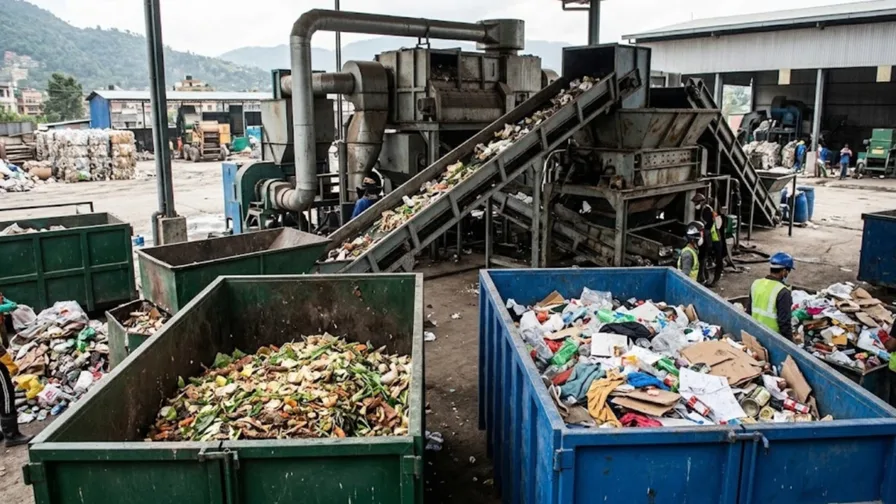
From Trash to Treasure2 min readFrom Trash to Treasure: Govt Tables Landmark Bill to Turn Waste into a Multi-Billion Rupee IndustryAt the grass-roots level, the bill introduces innovative mechanisms such as community-based "waste banks," recycling centers, and mandatory buy-back schemes requiring manufacturers to repurchase reusable packaging and products from consumers. If passed and vigorously implemented through multi-tiered government coordination, this legislative reform promises not only to resolve the chronic garbage crises plaguing Nepal's major urban hubs, but also to establish a sustainable economic model where waste becomes a continuous source of national revenue.Dipesh Ghimire·21 Sep, 2026
Nepal’s Economy 3 min readBeyond Relief: Stakeholders Advocate Public-Private Partnerships for Resilient Post-Disaster HousingFacilitated by Architect Pramila Shilpakar from Khwopa Engineering College, the discourse sent a clear message: disaster management must become an inseparable core of urban development. The expo, jointly organized by the Nepal Land and Housing Developers Association, its federation, and the Nepal Chamber of Commerce, began on mid-September and showcases innovative construction technologies, housing solutions, and infrastructure practices.Dipesh Ghimire·20 Sep, 2026
A Tale of Two Economies4 min readA Tale of Two Economies: Record External Indicators, but Domestic Market StagnatesOverall, the mid-August data confirms that the Nepali economy remains trapped in a cycle of "importing goods with remittance money." While a robust external sector provides crucial macroeconomic stability, the general public is unlikely to see relief from the vicious cycle of inflation and unemployment until domestic investment picks up, capital expenditure accelerates, and local jobs are created. The sluggish credit expansion clearly proves that slashing interest rates is not a magic bullet to get the economy moving again.Dipesh Ghimire·20 Sep, 2026
Nepal’s Banking3 min readNepal’s Banking Paradox: Flush with Cash, but Starved for BorrowersNepal has made phenomenal strides in financial inclusion. With 53 BFIs operating through 6,343 branches, the system boasts over 63.6 million deposit accounts and upwards of 30.3 million mobile banking users. However, the ultimate challenge lies in leveraging this massive network. The data reveals a stark reality: the pressing economic question has shifted from "Where is the money?" to "Why isn't the money moving?" Until the overall investment climate improves and entrepreneurial morale is restored, cheap credit and overflowing bank vaults alone will not be enough to turn the wheels of the economy.Dipesh Ghimire·20 Sep, 2026
STOCK2 min readThe Supply Paradox: NEPSE Market Capitalization Shrinks Despite Influx of New SecuritiesThe current scenario highlights a clear imbalance: the continuous surge in the supply of tradable securities is heavily outpacing investor demand in the secondary market. The traditional metric of measuring market expansion solely by counting the number of listed companies is fundamentally flawed. Genuine market expansion and sustainable wealth creation require more than just new IPOs; they demand a vibrant economy, robust corporate earnings, and a corresponding surge in investor demand capable of absorbing the heightened supply of shares.Dipesh Ghimire·20 Sep, 2026
1 min readSEBON Proposes Strict IPO Rules: Artificial Profits Banned, Directors' Backgrounds to be ScrutinizedTo prevent the misuse of funds raised from the general public, the Board has proposed that a clear plan for capital utilization must be endorsed by the company's Annual General Meeting (AGM). Funds collected through an IPO cannot be diverted to areas other than the pre-approved objectives, and companies must mandatorily implement an internal risk management system. Once these guidelines are implemented, it will ensure that only financially robust and well-governed companies gain entry into the capital market.Dipesh Ghimire·18 Sep, 2026
Mutual Funds1 min readRBB Declares Dividends for Two Mutual Funds, Book Closure on Ashwin 12For the purpose of dividend distribution, the company has fixed the book closure date for Ashwin 12. This means that investors must purchase or hold their units by Ashwin 11 to be eligible for the announced dividends. Only those who remain registered as unitholders by that date will be entitled to receive the returns.Dipesh Ghimire·18 Sep, 2026