Top
Prioritising the Brick Industry Is Key to Reviving Nepal’s Construction Sector
Prioritising the Brick Industry Is Key to Reviving Nepal’s Construction Sector Nepal’s brick industry represents more than a construction input—it is a continuation of a civilisation that has endured for thousands of years. Archaeological excavations in Kapilvastu have revealed bricks dating back more than three millennia, produced using techniques strikingly similar to those still in use today. The durability and artistic quality of Nepal’s red bricks have shaped temples, monuments, and settlements for centuries, making the industry both an economic and cultural asset. Despite this legacy, the sector is under growing strain. Around 1,100 brick kilns are currently operational across the country, down from nearly 1,300 just two years ago. A slowdown in public infrastructure spending, restrictions on land plotting, economic stagnation, and declining private housing construction have reduced demand. In some local governments, concrete blocks are being promoted over traditional bricks, even though their long-term durability has not been scientifically established.
Dipesh Ghimire
5 min read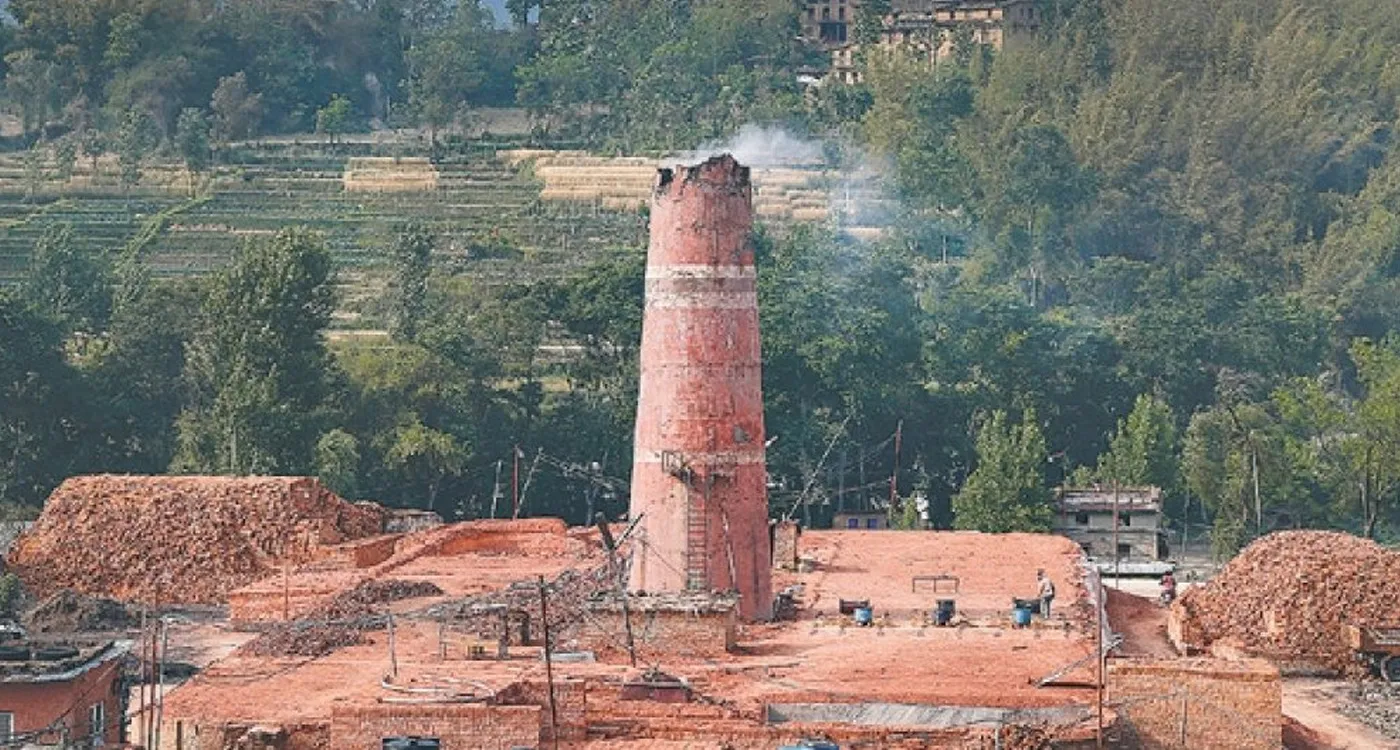
Nepal’s brick industry represents more than a construction input—it is a continuation of a civilisation that has endured for thousands of years. Archaeological excavations in Kapilvastu have revealed bricks dating back more than three millennia, produced using techniques strikingly similar to those still in use today. The durability and artistic quality of Nepal’s red bricks have shaped temples, monuments, and settlements for centuries, making the industry both an economic and cultural asset.
Despite this legacy, the sector is under growing strain. Around 1,100 brick kilns are currently operational across the country, down from nearly 1,300 just two years ago. A slowdown in public infrastructure spending, restrictions on land plotting, economic stagnation, and declining private housing construction have reduced demand. In some local governments, concrete blocks are being promoted over traditional bricks, even though their long-term durability has not been scientifically established.
A Major Employer Facing Structural Pressure
The brick industry remains a significant source of employment. Each kiln employs more than 200 workers on average, providing direct jobs to an estimated 250,000 people nationwide. Nearly half of this workforce consists of women, making the sector an important contributor to inclusive employment. Annual production capacity stands at around five billion bricks, while estimated domestic demand is approximately 4.3 billion units.
Yet the industry continues to rely heavily on skilled labour from India due to a shortage of trained domestic workers. To address this gap, industry stakeholders, in collaboration with international organisations and Nepal’s technical education authorities, have introduced a structured vocational curriculum aimed at producing certified kiln technicians. This initiative is expected to gradually reduce dependence on foreign labour and strengthen local skills.
Technology Transition and Environmental Pressures
Brick producers are increasingly shifting away from traditional firing methods toward modern, cleaner technologies. The transition to zig-zag kiln systems has gained momentum, offering improved fuel efficiency, reduced emissions, and better product quality without compromising traditional craftsmanship. This shift reflects growing awareness within the industry of environmental responsibility and cost control.
However, fuel remains the largest expense, accounting for nearly half of total production costs. Coal imports drain significant foreign currency reserves, raising concerns about long-term sustainability. While foreign investment has begun flowing into advanced kiln technologies such as hybrid Hoffman and tunnel kilns, reliance on imported fuel limits national benefit. Industry leaders argue that transitioning toward biomass and electricity-based alternatives would retain value within the domestic economy.
Policy Ambiguity in a Federal Structure
One of the industry’s most pressing challenges is regulatory uncertainty following Nepal’s transition to federal governance. Brick kilns were previously registered under small and cottage industry offices, but the division of authority among federal, provincial, and local governments remains unclear. While provinces are tasked with overseeing smaller industries, key policies related to environment, labour, taxation, and quality control remain under federal jurisdiction.
This overlap has created confusion, particularly regarding raw material sourcing. Provincial authorities have often misclassified clay used in brickmaking as industrial mineral, leading to excessive taxation that exceeds the value of the material itself. The lack of technical understanding and institutional capacity at the provincial level has delayed approvals and increased costs, reinforcing calls for a coherent national policy framework for the sector.
From Kilns to Recognised Industry
Industry associations are advocating for formal recognition of brickmaking as a core industrial activity rather than a marginal or seasonal enterprise. Estimates suggest the sector contributes around two to three percent of Nepal’s GDP and generates close to NPR 10 billion annually in government revenue. Total investment in brick production is believed to exceed NPR 14 billion.
Despite its economic contribution, the sector receives little targeted policy support. While provincial governments are nominally responsible, they have yet to introduce comprehensive policies addressing fuel use, labour standards, environmental compliance, or technology upgrades. As a result, industry stakeholders are urging the federal government to include brickmaking explicitly in national industrial policy.
Conflict Between Industry and Urban Expansion
Brick kilns are traditionally located in rural areas with limited infrastructure. Over time, roads, electricity, and settlements expand around these sites. While this growth is a natural development process, it has increasingly led to conflict. Communities that settle near existing kilns often raise concerns about pollution and health impacts, demanding closures or relocation.
Industry representatives argue that clear legal standards are needed to protect existing enterprises from post-settlement disputes. Without such safeguards, long-term investment becomes risky, and operational continuity is threatened.
Financing Constraints and Working Capital Gaps
Access to finance has emerged as another critical barrier. Rising land prices, technology upgrade costs, and lower profit margins have discouraged new investment. Establishing a brick kiln today requires at least NPR 50 million—more than double the cost a decade ago.
Unlike steel manufacturers, brick producers are rarely allowed to use stored inventory as collateral for working capital loans, despite holding substantial stock on-site. Industry leaders argue that enabling inventory-backed lending and refinancing mechanisms would significantly improve cash flow and operational stability.
Export Potential and Emerging Opportunities
Amid domestic challenges, Nepal’s brick industry has begun exploring export markets. Artisanal red bricks from the Kathmandu Valley are being exported in small quantities to destinations such as Tibet and Southeast Asia. Although volumes remain modest, the trend signals potential for value-added exports in a country grappling with a widening trade deficit.
Scaling up exports will require government facilitation in logistics, standards certification, and trade promotion. Industry stakeholders see export growth as both an economic opportunity and a validation of Nepal’s traditional craftsmanship on the global stage.
Regional Leadership in Clean Brick Technology
Nepal has also taken a leadership role in regional collaboration. A South Asian federation dedicated to clean brick technology and standardisation was established in 2019, with Nepal as a founding member and current chair. The organisation brings together brick industry associations from South Asia to harmonise technology, labour standards, and environmental practices.
By hosting the federation’s secretariat, Nepal has positioned itself as a regional hub for knowledge-sharing and skills development in the brick sector. This platform is expected to enhance workforce training and expand international market access for Nepali bricks.
The brick industry sits at the intersection of heritage, employment, and infrastructure development. While demand has softened in the short term, the sector remains vital to Nepal’s construction ecosystem. Clear national policy, access to finance, cleaner energy solutions, and regulatory clarity are essential to unlock its full potential.
If supported strategically, the brick industry can not only sustain itself but also contribute meaningfully to economic recovery, export diversification, and cultural preservation.
Advertisement
Written by
Dipesh Ghimire