Top
Rice Output Projected to Decline as Area and Productivity Shrink
Rice Output Projected to Decline as Area and Productivity Shrink Nepal’s rice production is expected to fall this year, reflecting a combination of reduced cultivated area and lower productivity, according to the Ministry of Agriculture and Livestock Development. The ministry has projected that total paddy output in the current year will be 250,350 metric tons lower than last year, highlighting growing structural and climatic challenges facing the country’s most important food crop. Officials estimate that rice production this year will reach 5.705 million metric tons, down from 5.955 million metric tons recorded last year. This represents a 4.2 percent decline year-on-year, a significant drop for a crop that remains central to Nepal’s food security and rural economy. The ministry attributes the decrease primarily to a contraction in both cultivated land and yield per hectare.
Dipesh Ghimire
2 min read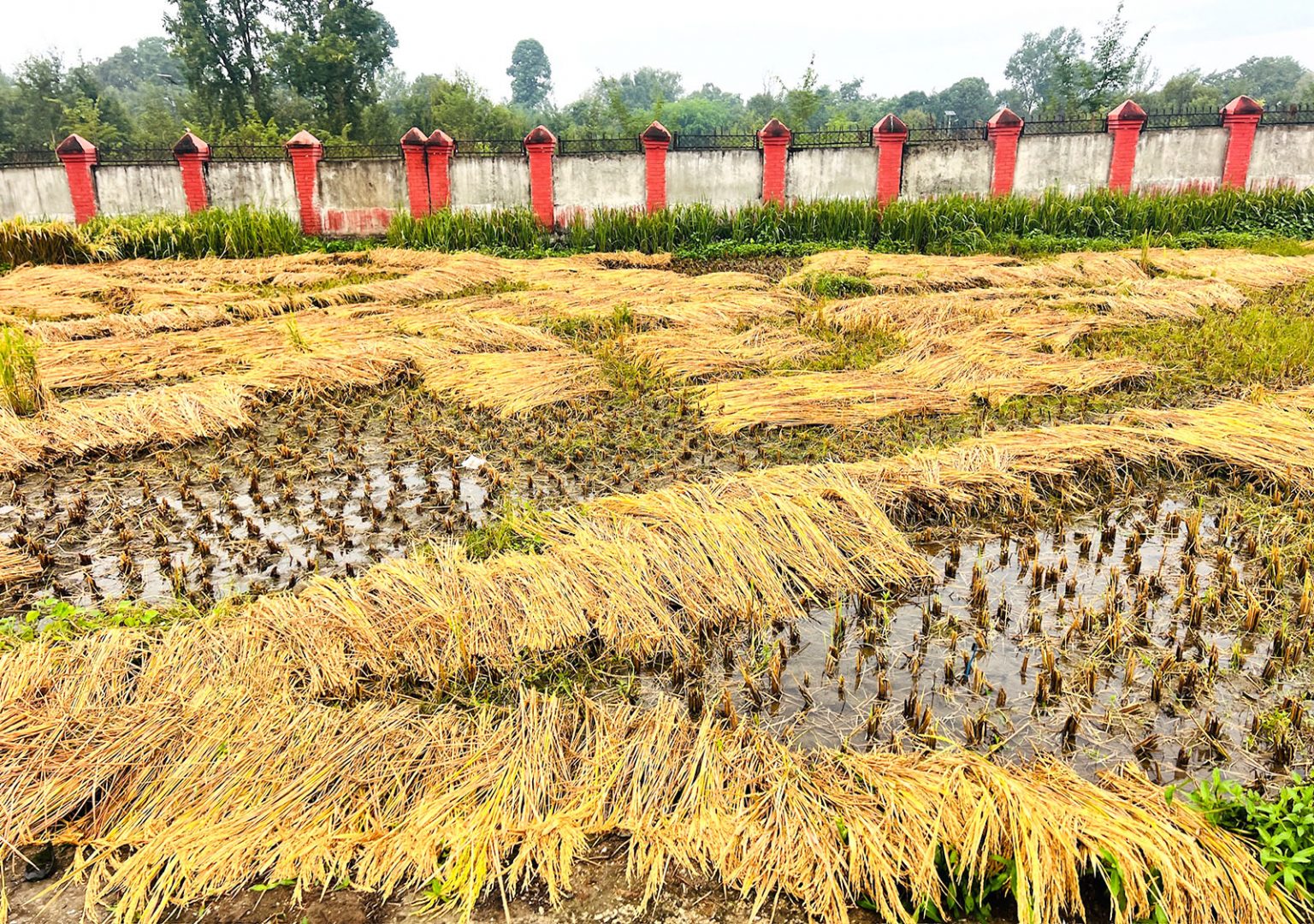
Nepal’s rice production is expected to fall this year, reflecting a combination of reduced cultivated area and lower productivity, according to the Ministry of Agriculture and Livestock Development. The ministry has projected that total paddy output in the current year will be 250,350 metric tons lower than last year, highlighting growing structural and climatic challenges facing the country’s most important food crop.
Officials estimate that rice production this year will reach 5.705 million metric tons, down from 5.955 million metric tons recorded last year. This represents a 4.2 percent decline year-on-year, a significant drop for a crop that remains central to Nepal’s food security and rural economy. The ministry attributes the decrease primarily to a contraction in both cultivated land and yield per hectare.
Data provided by the ministry show that the total area under rice cultivation has shrunk notably. While 1.42 million hectares of land were planted with paddy in the last fiscal year, the area has declined by 3.8 percent in the current year to 1.377 million hectares. This reduction in acreage has directly limited overall output, even before accounting for productivity-related factors.
Productivity has also come under pressure. Last year, average rice yield stood at 4.19 metric tons per hectare, but officials say unfavorable weather conditions have weakened yields this season. This has occurred despite improved access to better-quality seeds and fertilizers, underscoring the increasing influence of climatic variability on agricultural performance.
According to the ministry, several long-term socio-economic trends are contributing to the decline in rice cultivation. Youth migration abroad, internal migration from rural to urban areas, and the expansion of fruit farming and cash crops have gradually reduced the land allocated to paddy. In addition, fertile agricultural land—particularly in the Tarai and expanding urban centers—is increasingly being converted for industrial use and physical infrastructure development.
The situation has been further aggravated in Madhesh Province, where drought conditions during the planting season reduced the area planted with rice. The ministry notes that delayed or insufficient rainfall at the critical transplantation stage discouraged farmers from planting paddy on time, resulting in a measurable drop in overall cultivated area nationwide.
Despite policy efforts to ensure the availability of improved seeds and fertilizers, adverse weather has offset many of these gains. Ministry spokesperson Mahanand Joshi said that climate-related stress remains a key factor behind the decline in productivity, signaling the need for stronger climate-resilient farming strategies.
The projected fall in rice production raises broader concerns about food security and agricultural sustainability. While Nepal has made progress in diversifying crops and improving input supply, the latest figures suggest that without effective adaptation to climate risks and stronger incentives to retain land in food-grain production, rice output may continue to face downward pressure in the coming years.
Advertisement
Written by
Dipesh Ghimire