NEPSEtrading

Live NEPSE data, charts, broker analysis and portfolio tools for investors in Nepal.

Subscribe to our newsletter

Weekly insights from the NEPSE market in your inbox.

Marketminds Investment Group Private Limited

Registration
DOIB certificate no. 4680-2081/2082
Editor-in-chief
Dipesh Ghimire, Director
9802363868, 9851119988
Office
Koteshwor 32, Kathmandu
Phone
01-5253221, +977 9709066745
Email

Contact support

Market

  • Stocks
  • Sectors

Company

  • About Us
  • Our Team
  • Terms of Use
  • Our Policy
  • Training
  • Contact Us

Help

  • Support
  • Report
  • FAQ

Get the app

Markets, signals and alerts on your phone.

Get it onGoogle Play

More from NEPSE Trading

  • Stock EducationFree share market courses
  • EconomyNepal and world economic data
  • BFIS CompareBank rates, loans and insurance
  • Nepal's CapitalsMutual fund NAV and dividends
  • JobsNepalJobs in Nepal

nepsetrading.com is an online news portal that provides insights into trading and investment by analyzing the stock market and the global economy. We create charts based on the analysis of various indicators. Please do not rely solely on this information for investment decisions. Self-study is crucial. Use this information only as an educational and informational resource.

© 2026 nepsetrading.com. All rights reserved. Owned and operated by Marketminds Investment Group Private Limited.·Charts powered by TradingView

  • Portfolio
  • Explore
  • Calendar
  • Chart
  • Social
  • News
  • Account
  1. News
  2. Investor
  3. Commercial Banks Reduce Fixed Deposit Rates Slightly in Jetha; Liquidity Pressure Remains ...

वाणिज्य बैंकहरूको मुद्दति ब्याजदरमा सामान्य गिरावट — ऋण प्रवाह सुस्त हुँदा ब्याजदर घट्दैCommercial Banks Reduce Fixed Deposit Rates Slightly in Jetha; Liquidity Pressure Remains High

NEPSE trading Published on May 14, 20253 min read
वाणिज्य बैंकहरूको मुद्दति ब्याजदरमा सामान्य गिरावट — ऋण प्रवाह सुस्त हुँदा ब्याजदर घट्दै

नेपाली वाणिज्य बैंकहरूले व्यक्तिगत मुद्दति निक्षेपमा दिने ब्याजदर २०८२ सालको जेठ महिनामा औसतमा ५.९४ प्रतिशत कायम गरेका छन्। अघिल्लो महिना अर्थात् वैशाखमा यो दर ५.९८ प्रतिशत थियो। यद्यपि यो सानो गिरावट हो, तर यसले मुलुकको बैंकिङ प्रणालीमा गहिरो संकेत दिइरहेको छ — अत्यधिक तरलता, कमजोर कर्जा प्रवाह, र नीतिगत अवरोधहरू।

ब्याजदरमा ०.०४ प्रतिशत बिन्दुको गिरावट देखिएको छ। यो गिरावट खासै ठूलो नभए पनि यसले बैंकहरू ब्याज घटाउने क्रममै रहेको सन्देश दिन्छ। ब्याजदर घटाउने यो ट्रेन्ड पछिल्लो केही महिनादेखि नै चलिरहेको छ, जुन बैंकहरूको आन्तरिक तरलता व्यवस्थापन र नीति अनुकूलनसँग सम्बन्धित छ।
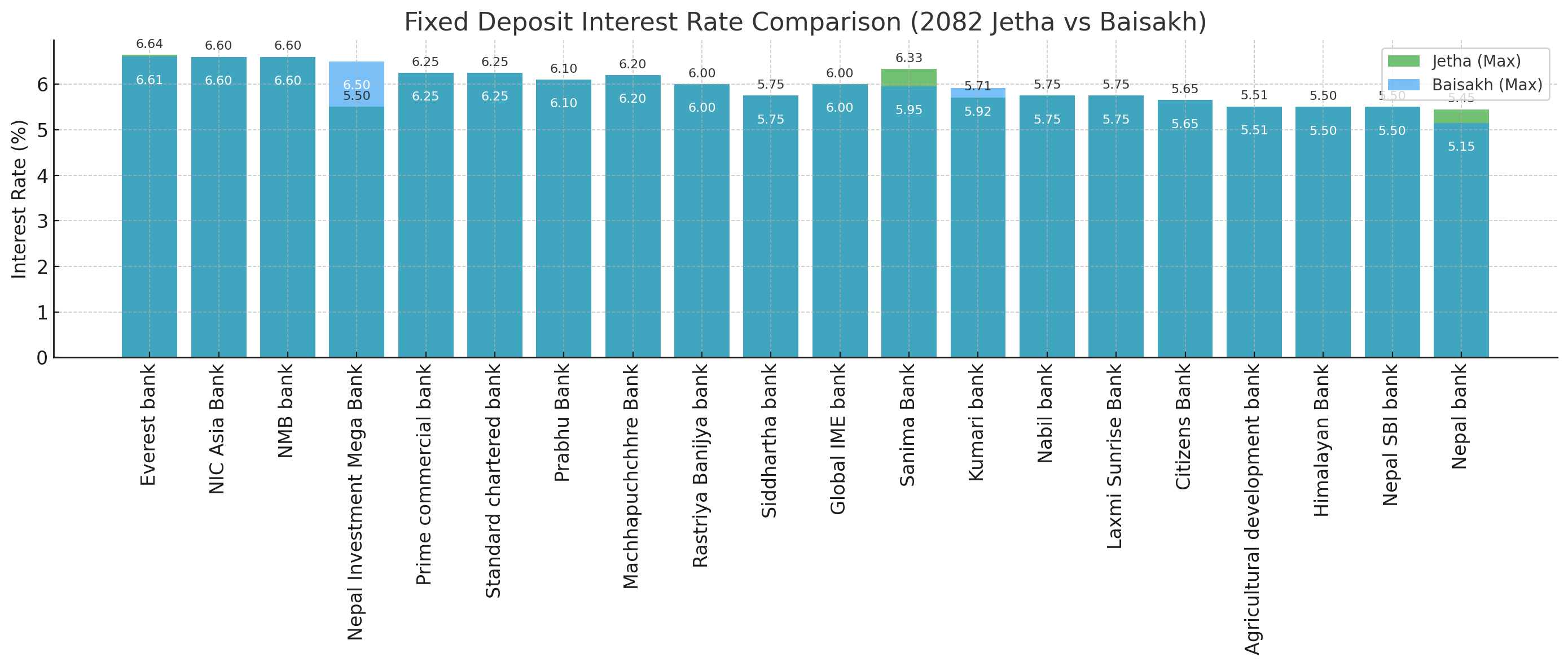
वाणिज्य बैंकहरूको मुद्दति ब्याजदरमा सामान्य गिरावट — ऋण प्रवाह सुस्त हुँदा ब्याजदर घट्दै

२० वटा प्रमुख वाणिज्य बैंकहरूको विश्लेषण गर्दा:

  • ३ वटा बैंकले ब्याजदर घटाएका छन्।

  • १४ वटा बैंकले वैशाखकै दरलाई यथावत राखेका छन्।

  • ३ वटा बैंकले ब्याजदर बढाएका छन्।

ब्याजदर घटाउनेमा नेपाल इन्भेष्टमेन्ट मेगा बैंक सबैभन्दा अगाडि रहेको छ, जसले ६.५० प्रतिशतबाट एकैपटक ५.५० प्रतिशतमा ल्याएको हो। यो पूर्ण १ प्रतिशतको गिरावट हो — हालसम्मकै सबैभन्दा ठूलो।

ब्याजदर वृद्धि गर्ने बैंकहरूमा सनिमा बैंक प्रमुख देखिएको छ। यसले ५.९५ प्रतिशतबाट ६.३३ प्रतिशत मा पुर्‍याएको छ। यसबाहेक नेपाल बैंकले पनि ब्याजदर ५.१५ प्रतिशतबाट ५.४५ प्रतिशत मा बढाएको छ। एभरेस्ट बैंकले सानो वृद्धीसहित ६.६१ बाट ६.६४ प्रतिशत बनाएको छ।

उता, NIC Asia Bank, NMB Bank, Prime Commercial Bank, Standard Chartered Bank, Global IME Bank लगायत १४ वटा बैंकले ब्याजदर यथावत राखेका छन्। यी बैंकहरू सम्भवतः आफ्नो तरलता अवस्था सन्तुलनमा भएको देख्दै ब्याजदर स्थिर राख्न उचित ठानिरहेका छन्।

हाल नेपाली बैंकिङ प्रणालीमा अत्यधिक तरलता (excess liquidity) छ। निक्षेप थपिँदै गएको छ, तर ऋण प्रवाह भने कमजोर अवस्थामा छ। नयाँ कर्जा प्रवाह गर्न कठिन भएको बैंकहरू बताउँछन्, जसमा नियामक कडाइ, नीतिगत अस्पष्टता र समग्र आर्थिक वातावरण जिम्मेवार छन्।

जब ऋण प्रवाह घट्छ, बैंकहरूलाई थप निक्षेप आवश्यक पर्दैन। यस्तो अवस्थामा उच्च ब्याजदर दिँदा ब्याज खर्च (interest cost) बढ्छ, जुन उनीहरूको मुनाफामाथि असर पार्न सक्छ। त्यसैले बैंकहरू ब्याजदर घटाएर "cost of fund" कम गर्न प्रयासरत देखिन्छन्।

मुद्दति निक्षेपमा ब्याजदर घट्दा बेस रेट (base rate) पनि घट्नेछ। बेस रेट घटेपछि बैंकहरूले दिने कर्जाको ब्याजदर पनि घट्न सक्छ, जसले बजारमा ऋण लिन चाहनेहरूलाई राहत मिल्ने सम्भावना हुन्छ।

यद्यपि, यदि कर्जाको माग आफैं कमजोर रहिरह्यो भने, ब्याजदर घटाएर मात्र बैंकहरूले कारोवारमा सुधार गर्न सक्दैनन्। यसले दीर्घकालीन रूपमा बैंकहरूको नाफा घटाउने जोखिम पनि ल्याउन सक्छ।

ब्याजदर घटाउने यो सानो अंकको फेरबदलले नेपाली बैंकिङ प्रणालीमा गहिरो आर्थिक समस्या देखाइरहेको छ। जबसम्म कर्जा प्रवाह र लगानी वातावरण पुनर्जीवित हुँदैन, ब्याजदर घटाउने रणनीति एक प्रकारको "cost control" मात्र हो, विकासको संकेत होइन।

औसत ब्याजदर (जेठ): ५.९४%

औसत ब्याजदर (वैशाख): ५.९८%

सबैभन्दा धेरै घटाउने बैंक: नेपाल इन्भेष्टमेन्ट मेगा बैंक (-१.००%)

सबैभन्दा धेरै बढाउने बैंक: सनिमा बैंक (+०.३८%)

१४ बैंकको ब्याजदर यथावत
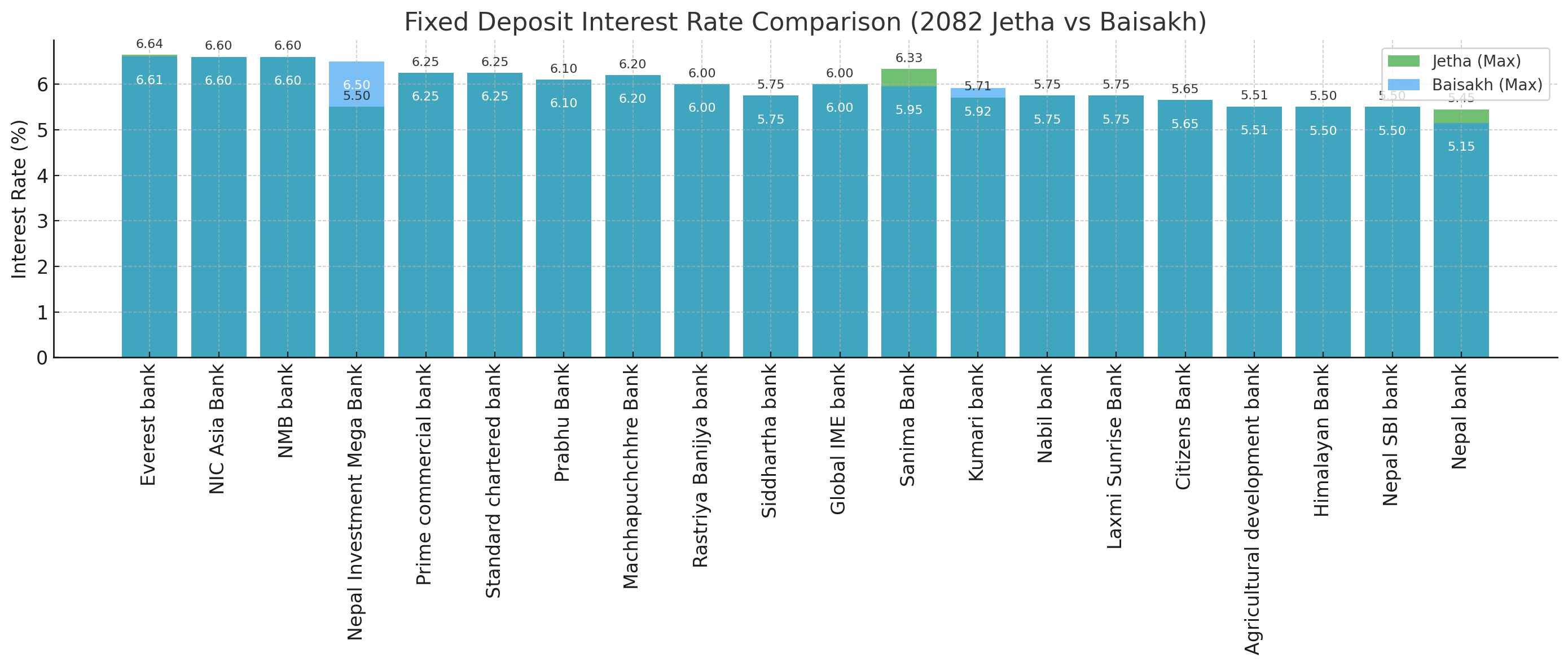
Nepal's commercial banks have slightly reduced the interest rates offered on individual fixed deposits for the month of Jetha 2082. According to recent data, the average fixed deposit rate has dropped to 5.94%, down from 5.98% in Baisakh 2082. While the decline of just 0.04 percentage points may appear minor, it reflects deeper economic signals — including excess liquidity, sluggish credit growth, and policy-related constraints.

Commercial Banks Reduce Fixed Deposit Rates Slightly in Jetha; Liquidity Pressure Remains High

Paragraph 1: Average Rate Has Decreased

The fixed deposit rate drop, though marginal, is part of a consistent trend observed in recent months where banks are gradually reducing deposit rates. This reflects their current strategy to manage surplus liquidity while minimizing funding costs in a market where loan disbursement remains low.


Paragraph 2: How Banks Responded – Who Cut, Who Raised?

Out of 20 major commercial banks analyzed:

  • 3 banks lowered their fixed deposit rates.

  • 14 banks kept their rates unchanged.

  • 3 banks increased their rates slightly.

This mix of responses suggests that while some banks are actively managing their cost of funds, most are maintaining caution — neither aggressively increasing nor cutting rates too drastically.


Paragraph 3: Major Rate Changes – The Highest Cut and Hike

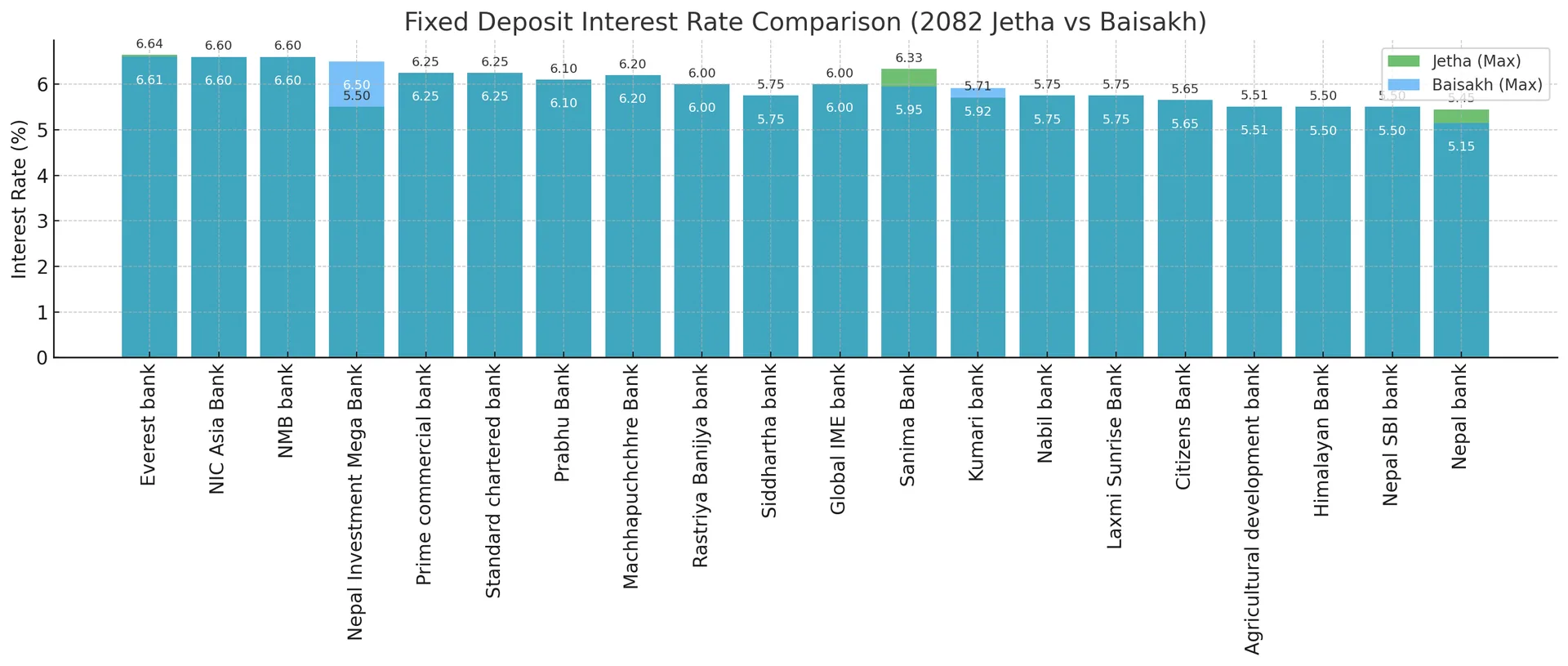
Nepal Investment Mega Bank made the most aggressive cut, slashing its rate from 6.50% in Baisakh to 5.50% in Jetha, a full 1 percentage point drop — the highest among all banks.

On the flip side, Sanima Bank raised its rate from 5.95% to 6.33%, marking the largest increase. Similarly, Nepal Bank raised its rate from 5.15% to 5.45%, and Everest Bank made a minor hike from 6.61% to 6.64%.


Paragraph 4: Majority Hold Steady

Banks such as NIC Asia, NMB, Prabhu Bank, Standard Chartered, Global IME, and others held their interest rates constant. A total of 14 out of 20 banks opted to maintain the same rate in Jetha as in Baisakh. This suggests these institutions are currently balanced in terms of liquidity and see no immediate need to adjust their deposit rates.


Paragraph 5: Why Are Banks Reducing Rates?

The primary driver of this downward trend is excess liquidity in the banking system. Deposits are growing, but credit demand remains weak. Banks report that policy and regulatory hurdles have slowed down loan approvals, especially in sectors hit hard by economic stagnation.

Since there's limited demand for new loans, banks don’t need additional deposits. Offering high interest rates only increases their interest expense, which directly affects profitability. To control this, banks are strategically trimming their rates to manage costs.


Paragraph 6: How This Impacts the Lending Market

A drop in fixed deposit rates typically leads to a decrease in the base rate, which is used to calculate loan interest rates. As base rates fall, borrowers may benefit from lower loan costs, making credit more attractive.

However, if loan demand does not recover, reducing interest rates alone won’t help banks boost revenue. In fact, it could further compress their profit margins, posing long-term sustainability concerns.


Paragraph 7: What’s the Road Ahead?

Banks are currently in a "wait and watch" mode. They are waiting for signs of economic revival, regulatory clarity, and a potential boost in credit demand. If the upcoming fiscal budget or monetary policy introduces incentives for businesses and borrowing, we might see a reversal or stabilization of deposit rates. Otherwise, the downtrend is likely to persist.


Conclusion

The small dip in Jetha’s average fixed deposit rate may seem negligible on paper, but it is a clear sign that Nepal’s banking system is still grappling with deep-rooted structural challenges. Until credit flow resumes and the economy shows signs of acceleration, banks will likely continue to focus on cost-cutting and liquidity management, rather than aggressive deposit or lending operations.


Quick Summary:

  • 🟢 Average rate in Jetha: 5.94%

  • 🔵 Average rate in Baisakh: 5.98%

  • 🔻 Biggest cut: Nepal Investment Mega Bank (-1.00%)

  • 🔺 Biggest hike: Sanima Bank (+0.38%)

  • ⚖️ 14 banks held rates unchanged

  • 📉 Overall trend: Slight decline; caution prevails

Trending News

  • नेपाल–भारत उच्चस्तरीय वार्ताः २ खर्ब ४० अर्बको प्याकेजसहित ऊर्जा, पारवहन र प्रविधिमा नयाँ साझेदारीNepal-India High-Level Talks: New Partnership in Energy, Transit, and Technology Alongside Rs 240 Billion Package

    NEPSE TRADING23 Nov, 2026

  • व्यापारिक अवरोध हटाउन र लगानी बढाउन भारतसँग नेपाली व्यवसायीको आग्रहNepali Business Leaders Urge India to Lift Trade Barriers, Boost Investment at New Delhi Roundtable

    NEPSE TRADING23 Nov, 2026

  • कोप–३१ मा निर्णय पारित हुन नसक्नु निराशाजनक, कार्यान्वयनको युगमा प्रवेश गरिसक्यौँ : साइमन स्टिलFailure to Pass Decision at COP-31 Disappointing; We Have Entered the Era of Implementation: Simon Stiell

    NEPSE TRADING23 Nov, 2026

Related News

  • नेपाल–भारत उच्चस्तरीय वार्ताः २ खर्ब ४० अर्बको प्याकेजसहित ऊर्जा, पारवहन र प्रविधिमा नयाँ साझेदारीNepal-India High-Level Talks: New Partnership in Energy, Transit, and Technology Alongside Rs 240 Billion Package
  • व्यापारिक अवरोध हटाउन र लगानी बढाउन भारतसँग नेपाली व्यवसायीको आग्रहNepali Business Leaders Urge India to Lift Trade Barriers, Boost Investment at New Delhi Roundtable
  • कोप–३१ मा निर्णय पारित हुन नसक्नु निराशाजनक, कार्यान्वयनको युगमा प्रवेश गरिसक्यौँ : साइमन स्टिलFailure to Pass Decision at COP-31 Disappointing; We Have Entered the Era of Implementation: Simon Stiell
  • प्रधानमन्त्री शाह र भारतीय समकक्षी मोदीबीच आज भेटवार्ता हुँदै, तल्लो अरुणको शिलान्यास गरिनेPM Shah and Indian Counterpart Modi to Hold Bilateral Talks Today; Lower Arun Hydropower Project to be Inaugurated
  • नेपाली बजारमा आजको विदेशी मुद्रा विनिमय दर सार्वजनिक, अमेरिकी डलर १४८ रुपैयाँ ५८ पैसामा कारोबार हुँदैForeign Exchange Rates Announced for Nepali Market; US Dollar Trades at NPR 148.58