Top
Government Spending Falls Behind Schedule as Development Expenditure Stays Below 20 Percent
Government Spending Falls Behind Schedule as Development Expenditure Stays Below 20 Percent Nepal’s public spending performance during the first eight months of the current fiscal year 2025/26 (FY 2082/83) has raised serious concerns about fiscal management and development implementation. Despite the passage of two-thirds of the fiscal year, the government has spent less than half of the allocated budget, while development expenditure remains particularly weak. At the same time, the country’s budget deficit has crossed Rs 161 billion, reflecting an imbalance between government income and expenditure.
Dipesh Ghimire
5 min read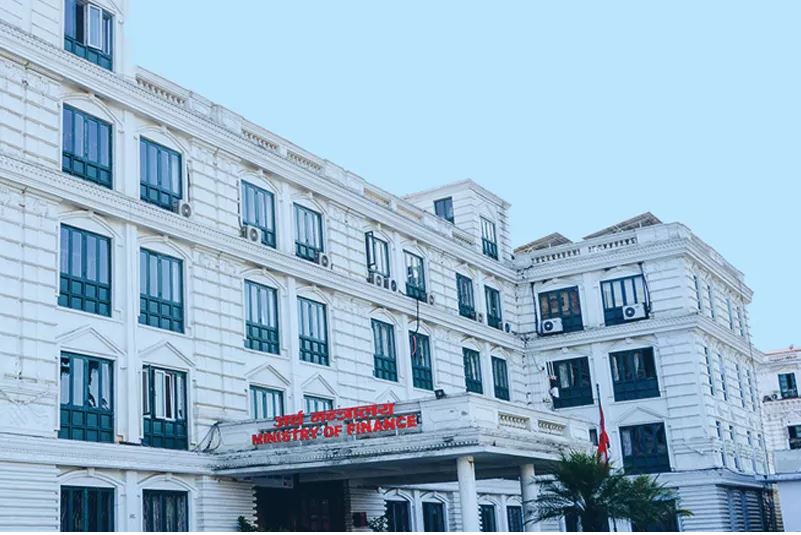
Nepal’s public spending performance during the first eight months of the current fiscal year 2025/26 (FY 2082/83) has raised serious concerns about fiscal management and development implementation. Despite the passage of two-thirds of the fiscal year, the government has spent less than half of the allocated budget, while development expenditure remains particularly weak. At the same time, the country’s budget deficit has crossed Rs 161 billion, reflecting an imbalance between government income and expenditure.
According to data from the Ministry of Finance and the Financial Comptroller General Office (FCGO), the government had announced a budget of Rs 1.964 trillion for the current fiscal year. However, by the end of Falgun (mid-March), only Rs 926 billion had been spent. This represents 47.18 percent of the total allocated budget. The data shows that most of the spending has gone toward recurrent expenditure, while development-related spending has remained significantly behind schedule.
Recurrent expenditure, which includes government salaries, allowances, pensions, office operations, social security allowances and administrative expenses, continues to dominate the budget structure. Out of the Rs 1.18 trillion allocated under the recurrent heading, the government has already spent Rs 642.14 billion, equivalent to 54.37 percent of the allocated amount. This relatively higher spending reflects the unavoidable nature of administrative and operational expenses that must be paid regularly throughout the fiscal year.
In contrast, capital expenditure — the portion of the budget that finances infrastructure development and long-term investment — remains alarmingly low. The government had allocated Rs 407 billion under the capital expenditure heading for the current fiscal year. However, by the end of Falgun, only Rs 78.48 billion had been spent, which amounts to just 19.24 percent of the allocated amount. Capital expenditure typically funds projects such as roads, bridges, hydropower plants, airports, hospitals, and school buildings — investments that directly contribute to economic growth and long-term development. The slow pace of such spending indicates significant implementation challenges within the government system.
Economists and policy observers argue that the persistent weakness in development spending reflects deeper structural problems rather than temporary administrative delays. Issues such as poor project preparation, inefficient procurement processes, weak contract management, and bureaucratic bottlenecks have repeatedly hindered effective budget execution. The fact that development spending has declined for the third consecutive year further reinforces concerns about the government's ability to implement infrastructure projects efficiently.
Compared with the same period last fiscal year, the pace of capital expenditure in the current fiscal year appears even slower. Analysts believe the problem lies not only in delayed project execution but also in the selection and planning of projects themselves. Many development projects reportedly begin without adequate preparation, feasibility studies, or procurement readiness, leading to delays once implementation begins.
Spending under the financial management heading, which primarily covers public debt servicing and financial liabilities, shows a moderate pace. Out of Rs 375 billion allocated, the government has spent Rs 205 billion, representing 54.89 percent of the allocated amount. Since debt servicing obligations must be met regularly, expenditures under this category tend to progress steadily throughout the fiscal year.
While recurrent spending has crossed the halfway mark, the weak performance in capital expenditure indicates that the overall budget structure is increasingly shifting toward consumption rather than investment. Economists warn that such a pattern could undermine Nepal’s long-term economic growth potential, as insufficient investment in infrastructure and productive sectors limits future economic expansion.
The Ministry of Finance has attributed the slow development spending partly to external and administrative disruptions. Officials claim that the Gen-Z protests and related administrative disruptions in Bhadra (September) affected government operations for nearly six weeks. In addition, delays in resolving problematic or stalled contracts have also slowed the pace of infrastructure development. According to the ministry, several projects could not move forward on schedule due to contractual disputes and implementation obstacles.
However, many analysts argue that similar explanations are presented almost every year, suggesting deeper institutional weaknesses. They believe that unless structural reforms are implemented in project planning, procurement management, and monitoring mechanisms, the government will continue to struggle with low development spending.
Despite the slow spending, revenue collection has shown modest improvement compared with last year. During the first eight months of the fiscal year, the government collected Rs 747.28 billion in revenue, compared with Rs 720.34 billion during the same period last year. This represents 50.49 percent of the annual revenue target, indicating some progress in tax mobilization.
However, government income still falls short of expenditure levels. According to the Financial Comptroller General Office, the government recorded a budget deficit of more than Rs 161.48 billion during the first eight months of the fiscal year. Total government income during this period stood at Rs 765.10 billion, while total spending reached approximately Rs 926 billion.
The government has set an annual target of Rs 1.533 trillion in total revenue collection for the fiscal year. So far, it has achieved about 49.89 percent of that target. Tax revenue has performed relatively better, with Rs 676.58 billion collected, representing 51.04 percent of the annual tax target of Rs 1.325 trillion. Meanwhile, non-tax revenue collection stands at Rs 70.69 billion, which is 45.78 percent of the annual target of Rs 154.41 billion.
Similarly, the government had targeted Rs 53.44 billion in foreign grants for the fiscal year. However, by the end of Falgun, only Rs 13.24 billion, or 24.78 percent of the target, had been received. Other miscellaneous sources contributed an additional Rs 4.57 billion in income during the review period.
Despite the modest improvement in revenue collection, the weak performance in development spending and the growing fiscal deficit have raised serious concerns about the effectiveness of government fiscal policy. Although government officials remain optimistic that spending will accelerate during the second half of the fiscal year, past experience suggests that such expectations may not always materialize.
Facing difficulties in both spending implementation and revenue mobilization, the government has already revised the size of the current fiscal year's budget. Through the mid-year budget review, the Ministry of Finance reduced the original Rs 1.964 trillion budget by Rs 275 billion, bringing the revised budget size down to Rs 1.688 trillion.
According to Finance Minister Rameshwar Khanal, the revision was necessary because the government realized that both expenditure and revenue targets set at the beginning of the fiscal year were unlikely to be achieved. The government also cited the upcoming election environment as one of the factors affecting spending capacity.
Under the revised budget framework, Rs 1.125 trillion has been allocated for recurrent expenditure, Rs 243.30 billion for capital expenditure, and Rs 319 billion for financial management. The government has significantly reduced capital expenditure, mainly due to weak spending performance and implementation challenges.
The government has also announced plans to suspend projects that lack adequate preparation or immediate returns and instead prioritize projects of national importance and strategic significance. According to the revised projections, 95.34 percent of recurrent expenditure, 59.65 percent of capital expenditure, and 85.02 percent of financial management expenditure are expected to be utilized by the end of the fiscal year.
The government has maintained its macroeconomic targets of achieving 6 percent economic growth and keeping inflation within 5.5 percent during the current fiscal year. However, analysts believe that achieving these targets will depend largely on whether development spending accelerates in the remaining months of the fiscal year and whether the government can improve overall fiscal management efficiency.
Advertisement
Written by
Dipesh Ghimire